
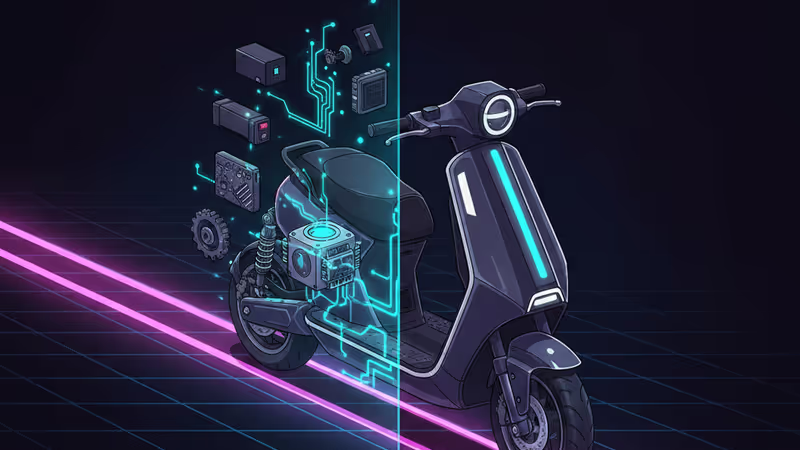
The E-Scooter Paradox: Why Your Next Ride is a Bet on Repairability, Not Range
Beyond speed and range, the e-scooter market is now a battle over repairability and safety. Discover the critical factors that define a smart investment.
The Lede: The Market Has Matured Beyond the Hype
The electric scooter market has quietly entered its second act. The initial gold rush of venture-backed rental fleets has given way to a more discerning and permanent fixture of urban life: personal ownership. But as the dust settles, a new reality is emerging. The winning brands of tomorrow won't be defined by top speed or maximum range, but by a far more critical, and often overlooked, factor: their commitment to serviceability, safety, and a sustainable ecosystem. The modern e-scooter is no longer a toy; it's a vehicle, and the buying decision has become a long-term investment in a mobility platform, not just a piece of hardware.
Why It Matters: The Shift from Disposable Tech to Durable Transport
This maturation signals a fundamental shift in the micro-mobility landscape with significant second-order effects. While first-generation owners chased performance specs, today's savvy commuter understands the true cost of ownership. A $1,200 scooter with no available spare parts or a non-certified battery is a disposable gadget, destined to become a 50-pound paperweight in 18-24 months.
This evolution impacts three key areas:
- Consumer Rights: The e-scooter is now a frontline in the 'Right to Repair' movement. The ability to source a new battery or replace a brake controller is the difference between a sustainable vehicle and e-waste.
- Market Dynamics: The industry is bifurcating. On one side are premium brands like Apollo, which are building ecosystems with app integration, direct-to-consumer parts, and robust support. On the other are anonymous, white-label importers competing solely on price, offering little to no post-purchase support.
- Urban Planning: As high-quality, long-lasting scooters become more common, cities can no longer treat them as a novelty. They must be integrated into transport infrastructure with the same seriousness as bicycles, forcing a rethink of bike lanes, parking, and public safety regulations.
The Analysis: Deconstructing the New Ownership Era
From 'Wild West' Rentals to a Service-Based Economy
The initial e-scooter boom, fueled by companies like Bird and Lime, treated the hardware as disposable. Scooters were often abused, poorly maintained, and had short operational lifespans. This model proved financially challenging. The personal ownership market, however, demands the opposite. Consumers spending their own money expect longevity. This is why features previously considered niche, like self-healing tubeless tires, comprehensive UL safety certifications (for the entire system, not just the battery), and user-replaceable parts, are now key differentiators. The market has learned that the hardware is just the table stake; the real value lies in the support and service ecosystem that keeps the vehicle on the road.
The Unspoken Risk: The Regulatory Minefield
Most buying guides offer a cursory 'check your local laws' warning. This advice dramatically understates the risk. E-scooter regulations are a chaotic patchwork that varies not just by state, but by city and even by neighborhood. A change in local government or a single high-profile accident can lead to an overnight ban on private scooter use, rendering a significant personal investment useless for its intended purpose. Prospective buyers aren't just purchasing a product; they are taking a position on the future of local urban policy. A brand's engagement with regulators and its presence in markets with stable legal frameworks is becoming an implicit feature of the product itself.
PRISM Insight: The Modern E-Scooter Buyer's Checklist
For consumers and investors, evaluating an e-scooter requires a new framework that moves beyond basic performance metrics. The real questions aren't about miles per hour, but about years of service.
Actionable Guidance for Consumers:
Before purchasing, conduct due diligence on the brand's operational maturity:
- The Ecosystem Audit: Go to the manufacturer's website. Can you easily find and purchase spare parts like batteries, tires, and controllers? Do they have a clear warranty and repair process? A lack of a spare parts store is a major red flag.
- The Certification Deep-Dive: Don't settle for 'UL-certified battery'. Demand proof of a UL 2272 certification for the entire electrical system. This standard tests how the battery, motor, and charger work together, dramatically reducing fire risk.
- The Regulatory Risk Assessment: Research your city's current *and proposed* micro-mobility laws. Are local officials supportive or hostile? Is there an active debate that could change the rules? Choose a vehicle that complies with current speed and power limits to future-proof your investment.
PRISM's Take
The e-scooter has graduated from tech gadget to a legitimate class of personal vehicle, and the consumer mindset must evolve with it. The market is rapidly consolidating around brands that understand they are selling a long-term transportation solution, not a disposable toy. Focusing on top speed or flashy design while ignoring the fundamentals of repairability, safety certification, and regulatory stability is a recipe for buyer's remorse. The future of personal urban mobility will be won by companies that build trust through robust, transparent, and serviceable ecosystems. For the modern commuter, the smartest bet is not on the fastest scooter, but on the most resilient platform.
関連記事

SpaceX初のロケット着陸成功。その裏には壮絶な打ち上げ失敗があった。書籍『Reentry』が明かす、絶望から革新を生む組織文化の秘密とは。

トランプ氏のメディア企業が核融合ベンチャーと60億ドルで合併。AIが引き起こす電力危機への大胆な一手か。政治とディープテックが融合する新時代の幕開けを分析します。

2026年のF1技術革命を徹底解説。DRSに代わる新システム、前後アクティブエアロがレースをどう変えるか。PRISM独自の視点で未来を読み解きます。

10万円超えスマホはもう古い?2025年はミッドレンジが主役に。性能、AI、価格の最適なバランスが市場を変える理由を専門家が徹底分析します。