
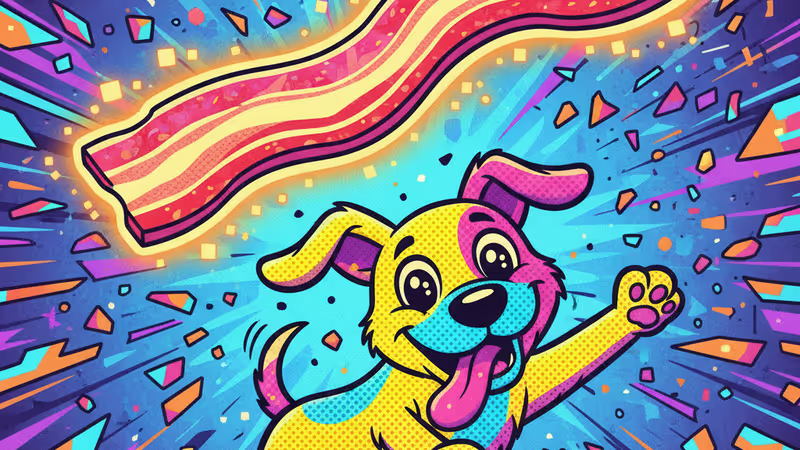
The 'Dogs Love Bacon' Effect: How Niche Creators Are Rewriting the Rules of Media
A simple webcomic reveals a powerful blueprint for the creator economy. We analyze how micro-niche content and authenticity are disrupting traditional media.
The Lede: The Micro-Brand Blueprint
A part-time webcomic about two rescue dogs, 'Dogs Love Bacon,' offers a more potent lesson in modern brand building than most corporate case studies. While executives chase scale, this solo creator demonstrates the immense power of a radically different strategy: building an intensely loyal, micro-niche community through authentic, relatable content. This isn't just a comic; it's a playbook for winning attention and building cultural capital in a fragmented digital landscape, a model that legacy brands and venture-backed startups alike should be dissecting.
Why It Matters: The Authenticity Moat
The core business of 'Dogs Love Bacon' is not illustration; it's emotional resonance. The creator's stated goal is to make people "smile" and feel "familiarity." In an era where AI can generate technically perfect but soulless content, this human-centric approach creates a powerful competitive moat. The key impacts are:
- Community as a Service: The comic fostered a community so engaged that when the creator's real-life dog faced a health issue (hearing loss), readers organically provided support and advice. This transforms a passive audience into an active, value-adding network—a feat multi-million dollar marketing campaigns often fail to achieve.
- The End of Monoculture: Mass media is being unbundled by an army of creators serving hyper-specific niches. 'Dogs Love Bacon' doesn't compete with Disney or Netflix. It competes for the 10 minutes a dog owner spends scrolling during their coffee break, and it wins by being more relatable and specific to their lived experience.
The Analysis: The New Syndication Model
Historically, a comic strip's success depended on syndication deals with major newspapers. Today, platforms like Bored Panda, Instagram, and Reddit are the new syndicates, but with a crucial difference. These are algorithmic gatekeepers, offering massive discovery potential at the cost of direct audience ownership. The creator's father discovering the comic on Bored Panda is a perfect illustration of this dynamic: a viral hit on an aggregator platform can create powerful real-world connections.
This reveals a central tension for the modern creator: leveraging large platforms for reach while simultaneously cultivating a core audience on an owned property (the official website). The 'Dogs Love Bacon' creator, like many in the passion economy, balances a full-time job with this endeavor. This is not a hobby; it's a lean, agile media operation built on personal passion and scalable through digital tools. The creator's desire to experiment with diverse art styles (from Korean manhwa to 'Jojo's Bizarre Adventure') isn't just artistic whim; it’s a form of R&D, testing content formats to keep the audience engaged without requiring a corporate budget.
PRISM Insight: The Rise of Verifiable Human Creativity
The investment thesis here is not in the comic itself, but in the ecosystem that enables it. As generative AI floods the internet with synthetic media, a premium will be placed on verifiable human creativity. The backstory, the real dogs, the creator's personal journey—these elements are the asset. They cannot be convincingly faked at scale.
Expect to see a surge in platforms and technologies that certify or highlight human-origin content. This creates opportunities in tools that help creators manage their multi-platform presence, deepen community engagement, and establish direct monetization channels that are independent of algorithmic whims. The value chain is shifting from content creation to community cultivation and authenticity verification.
PRISM's Take: Your Brand Is Your Story
'Dogs Love Bacon' is a microcosm of a fundamental shift in media. The model—turning a personal, authentic story into a relatable content engine—is deceptively simple and profoundly effective. While large corporations are optimized for reach, these micro-creators are optimized for trust. In the coming decade, the ability to foster genuine connection within a niche will be a more durable asset than the ability to simply blast a message to the masses. The future of media isn't just bigger; it's smaller, more personal, and infinitely more engaged.
関連記事
エプスタイン文書の部分的公開は、国民の不信感を煽っている。これは単なるスキャンダルではなく、政府の透明性と情報管理を巡る新たな戦いの始まりだ。
毎日使う「Goodbye」。その語源は「神と共に」でした。一つの挨拶から言語の進化を解き明かし、AIが未来のコミュニケーションをどう変えるかを深く分析します。

NY州の学校でのスマホ禁止が、学力向上だけでなく、生徒間の対面コミュニケーションを復活させる予期せぬ効果を生んでいます。その深層と未来のトレンドを分析します。
「町に救急車を寄贈した」伝説の遊園地アクション・パーク。その破天荒な歴史から、現代の安全文化と未来の体験型エンターテイメントの進化を読み解きます。