
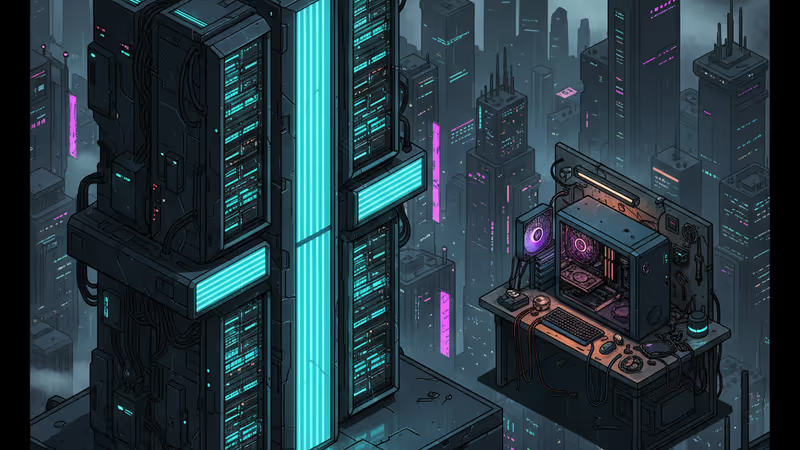
The AI Tax: How Data Centers Are Killing the DIY PC Market
Unprecedented price spikes in RAM and SSDs are not a temporary blip. PRISM analyzes how the AI boom is structurally reshaping the PC component market.
The Lede: This Isn't Just Another Price Bump
Forget seasonal fluctuations or temporary supply chain kinks. The staggering price hikes we're seeing in core PC components like RAM and SSDs represent a fundamental, structural shift in the global technology ecosystem. The insatiable demand for high-bandwidth memory (HBM) and enterprise-grade storage from the AI sector is siphoning off manufacturing capacity at an unprecedented rate. For the PC builder and tech enthusiast, this isn't a storm to be weathered; it's a climate change event. The data center is now the apex predator in the silicon food chain, and the consumer market is feeling the bite.
Why It Matters: The End of the DIY PC's Golden Age?
The core value proposition of building your own PC has always been superior performance-per-dollar. That equation is now breaking. When a 64GB DDR5 kit skyrockets from $190 to $800 in a single quarter, the economic advantage evaporates. This has several critical second-order effects:
- The Rise of Pre-Builts: System integrators who purchase components in massive volumes will have a significant cost advantage, making pre-built desktops and gaming laptops look far more attractive to the average consumer.
- Stagnating Upgrade Cycles: Faced with prohibitive costs for meaningful upgrades, consumers are likely to extend the life of their current systems, potentially slowing the adoption of new platforms and technologies like DDR6 or PCIe 6.0 in the consumer space.
- A Console Renaissance: The predictable, fixed pricing of gaming consoles like the PlayStation and Xbox becomes a safe harbor for gamers shocked by the volatility and expense of PC hardware.
The Analysis: A Structural Shift, Not a Supply Blip
It's tempting to compare this to the great GPU shortage during the crypto boom, but that comparison is flawed. The crypto-mining craze was driven by a volatile, decentralized, and often fleeting demand. The current situation is entirely different. The entities driving demand are hyperscalers and AI leaders—Amazon, Google, Microsoft, NVIDIA—with multi-trillion-dollar market caps and a strategic, existential need for this hardware. They can and will pay whatever it takes to secure their supply.
This creates a permanent two-tiered system. The bleeding-edge manufacturing capacity for DRAM and NAND flash will be increasingly allocated to high-margin HBM and enterprise SSDs. The consumer market will be left with the remainder, leading to higher prices, lower availability, and potentially a slower pace of innovation for consumer-grade products. Power is shifting decisively from consumer-facing brands like Corsair and TeamGroup to the core fab operators like Samsung, SK Hynix, and Micron.
PRISM Insight: The Great Reallocation of Silicon
What we are witnessing is the great reallocation of global silicon priorities. For decades, the consumer PC market was a primary driver of innovation in memory and storage. That era is over. Enterprise AI is the new engine, and its fuel is high-performance silicon. This has profound implications:
- Investment Signal: The true beneficiaries are the memory manufacturers. Their ability to pivot production to high-margin AI components will be a key indicator of financial health for the foreseeable future.
- Innovation Trajectory: Expect future consumer tech to be a trickle-down of de-featured enterprise technology, rather than a parallel track of innovation. The most exciting developments will happen behind the closed doors of the data center.
PRISM's Take: Adapt or Be Priced Out
The DIY PC market is facing an existential crisis. The casual builder who once enjoyed access to near-enterprise level performance for a reasonable price is now directly competing with the largest corporations on Earth for the same manufacturing resources—and it's a battle they cannot win. This isn't a call for panic, but a call for recalibration. Builders and enthusiasts must adjust their expectations for cost and performance, explore the pre-built market with an open mind, and understand that the 'AI Tax' on components is the new, non-negotiable cost of doing business in a world re-architected around artificial intelligence.
関連記事
韓国が150兆ウォン規模の公的成長ファンドを設立。AI、半導体、バッテリーに重点投資する国家戦略を分析し、投資家や業界への影響を読み解きます。
新型の円盤型衛星「DiskSat」が打ち上げ。20年にわたり標準だったCubeSatを超える存在となるか?宇宙産業の新たなパラダイムシフトを専門家が分析します。
AIデータセンターの需要爆発により、PC用メモリとSSDの価格が記録的に高騰。自作PCユーザーとゲーマーが直面する新たな現実と、専門家による対策を解説します。

YouTubeが200万登録のAI偽映画予告編チャンネルを閉鎖。AIコンテンツの許容範囲と「欺瞞」の境界線がどこにあるのか、プラットフォームの新たな姿勢を専門家が分析します。