
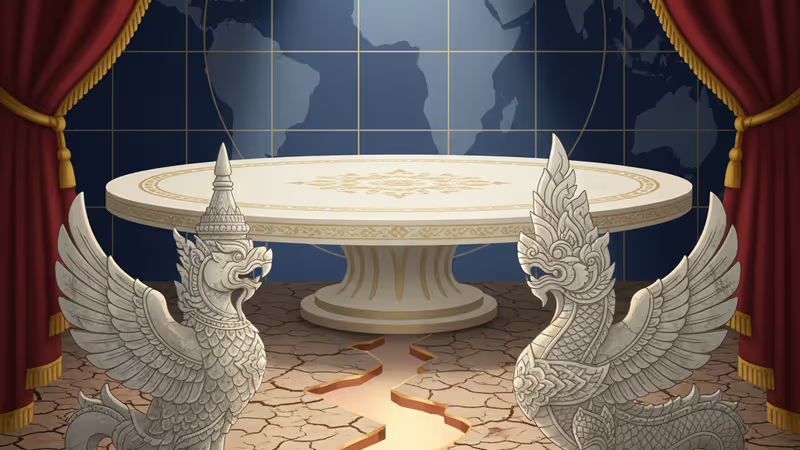
Thailand and Cambodia Agree to Ceasefire Talks, But Deep Distrust Lingers
Thailand and Cambodia have agreed to hold ceasefire talks on December 24 after an ASEAN-led meeting, following border clashes that killed over 40 people. However, deep mistrust and conflicting claims over landmines threaten the prospects for lasting peace.
Defense officials from Thailand and Cambodia have agreed to hold ceasefire talks on December 24, following an emergency meeting of Southeast Asian foreign ministers in Kuala Lumpur on Monday. The move comes after more than two weeks of border clashes that began on December 15 and have killed at least 41 soldiers and several civilians, while displacing upwards of 750,000 people. However, the ASEAN-led meeting itself stopped short of brokering an immediate end to the hostilities.
ASEAN Urges Restraint as Clashes Continue
In a chair’s statement, the ASEAN foreign ministers said they “welcomed the discussions on resumption of the ceasefire and cessation of hostilities.” While an immediate truce wasn't achieved, the statement announced that the General Border Committee (GBC), an existing bilateral mechanism, will convene on Christmas Eve “to discuss the implementation and verification of the ceasefire.” The ministers urged both Thailand and Cambodia to “exercise maximum restraint” and restore dialogue.
According to Thai Foreign Minister Maris Sangiampongsa, the GBC meeting will take place in Thailand’s Chanthaburi province, and both sides will take “as much time as needed” to reach an agreement. Singapore’s Foreign Minister Vivian Balakrishnan echoed the sentiment, stating, “As ASEAN, our collective future is brighter only if we stand united.”
Conflicting Narratives and 'Peace on Paper'
While the GBC meeting is a step forward, the chances of a breakthrough are slim. The two sides remain far apart, particularly over alleged landmine incidents. Thailand is resistant to returning to previous peace pacts, accusing Cambodia of violating them by planting new landmines that have killed and maimed its troops. In a statement, Bangkok said that “repeated breaches of the Joint Declaration – including landmine incidents... cannot be ignored.” The Thai foreign ministry concluded that it “hopes to see Cambodia’s sincerity reflected in concrete actions in pursuit of genuine and lasting peace, not merely peace on paper,” effectively placing the onus on Phnom Penh.
Cambodia has denied planting new mines, suggesting the explosions are from munitions left over from its civil war. Cambodian officials also accused Thailand of continuing attacks during the meeting, including F-16 strikes. Underscoring the skepticism, a commentary in the pro-government outlet Fresh News stated that “ASEAN’s diplomatic appeals were drowned out by the thunder of F-16 fighter jets dropping bombs on Cambodian territory.”
The agreement to hold talks is a procedural step to avoid diplomatic collapse, not a substantive breakthrough. The core issue is a complete breakdown of trust, with the landmine dispute serving as a proxy for deeper animosity. This conflict is a critical test of ASEAN's ability to manage internal crises, exposing the limits of its non-interference doctrine when member states are engaged in active hostilities.
本コンテンツはAIが原文記事を基に要約・分析したものです。正確性に努めていますが、誤りがある可能性があります。原文の確認をお勧めします。
関連記事
ASEAN外相会合を受け、タイとカンボジアが国境紛争に関する停戦協議を12月24日に開催することで合意。75万人以上が避難する中、地雷問題を巡る両国の主張は対立しており、和平への道は依然険しい状況です。

タイとカンボジアが国境での武力衝突を受け、今週の防衛協議開催に合意。ASEANが仲介する中、両国は互いに新たな攻撃を非難しており、停戦への道のりは依然不透明です。

タイとカンボジアが、死者41人、避難民100万人近くを出している国境紛争の終結に向け、12月24日に協議を再開する。トランプ前大統領が仲介した停戦が崩壊した背景と、国際社会の動きを解説。
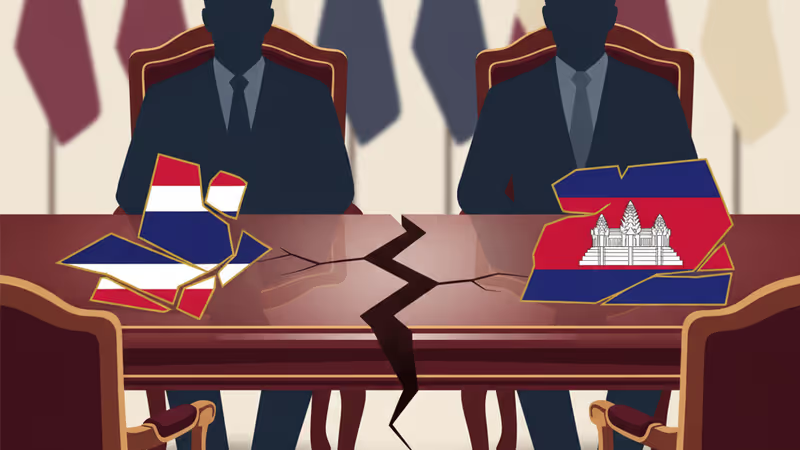
12月22日にクアラルンプールで開かれたASEAN特別外相会合で、タイとカンボジアは即時停戦に合意できなかった。両国は水曜日に協議を再開する予定で、外交努力が続いている。