
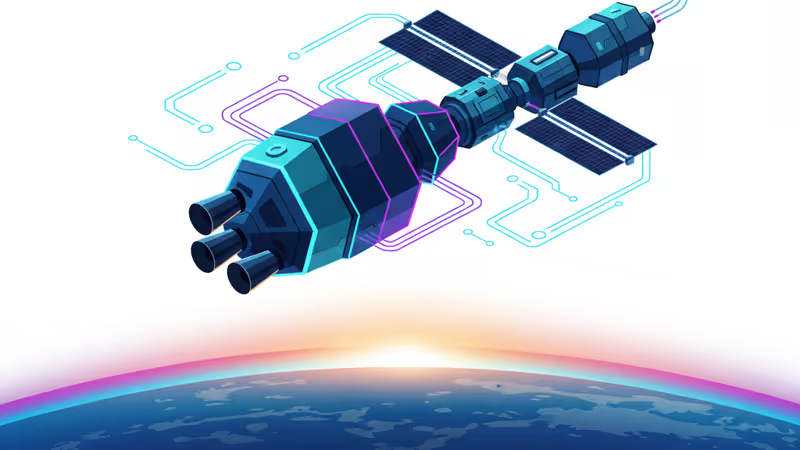
Stranded: How Boeing's Starliner Failure Left NASA Astronauts in Orbit for 9 Months
An in-depth look at the critical malfunctions on Boeing's Starliner that stranded two NASA astronauts on the ISS for nine months, forcing a rescue mission by rival SpaceX.
Two astronauts, launched aboard Boeing's much-delayed spacecraft in June 2024 for what was meant to be a week-long mission, were ultimately forced to return to Earth nine months later aboard a rival SpaceX Dragon capsule. A series of critical malfunctions on the Starliner made it too risky for the return journey, leaving the crew stranded on the International Space Station (ISS) and raising serious questions about Boeing's role in human spaceflight.
A Cascade of Failures En Route
The first crewed flight of the , carrying astronauts Butch Wilmore and Suni Williams, was a milestone over a decade in the making. But trouble began during its trip to the ISS. Engineers detected multiple, pernicious and, more alarmingly, several of the spacecraft's began to fail due to overheating.
The situation became critical as the capsule approached the station. For a short time, Starliner commander Wilmore lost the ability to control the spacecraft's movements. While engineers on the ground managed to recover most thruster functions to allow for a successful docking, the vehicle's reliability was now in serious doubt.
The Long Wait and a Rival's Rescue
After evaluating the thruster and leak issues, officials determined it was too risky to bring Wilmore and Williams home in the compromised Boeing capsule. Their planned one or two-week stay turned into a nine-month orbital marathon while the agency figured out a new ride home.
The solution came from Boeing's chief competitor. Last March, the two astronauts flew back to Earth aboard a spacecraft, a scenario that underscored the severity of the Starliner's problems. A subsequent safety advisory panel found that this uncertainty about the vehicle's health had also permeated NASA's own workforce during the crisis.
The Starliner incident is more than a technical failure; it's a critical stress test of NASA's Commercial Crew Program. It starkly contrasts Boeing's troubled development with SpaceX's operational dominance, raising serious questions about vendor reliability and the future of competition in human spaceflight.
本コンテンツはAIが原文記事を基に要約・分析したものです。正確性に努めていますが、誤りがある可能性があります。原文の確認をお勧めします。
関連記事
10年以上にわたりULAを率いてきたトリー・ブルーノCEOが電撃辞任。SpaceXとの熾烈な競争と、新型ロケット「ヴァルカン」の課題が背景にあると見られています。PRISMが詳しく解説します。
2024年6月、ボーイングのスターライナー宇宙船は初の有人飛行で深刻な技術的問題に直面。宇宙飛行士2名が9ヶ月間ISSに足止めされ、最終的にスペースXの宇宙船で帰還した経緯を解説します。
民間宇宙飛行士ジャレッド・アイザックマン氏がNASA長官に就任。新大統領令が示す商業宇宙と地政学の融合、そして『宇宙優位性』への新戦略を専門家が分析します。
SpaceX初のロケット着陸成功。その裏には壮絶な打ち上げ失敗があった。書籍『Reentry』が明かす、絶望から革新を生む組織文化の秘密とは。