
Russia Intensifies Odesa Assault, Squeezing Ukraine's Maritime Lifeline Amid Diplomatic Stalemate
Russia is intensifying its systematic attacks on Ukraine's key port city of Odesa, causing widespread power outages and threatening critical grain export routes. The escalation comes as diplomatic talks show no clear progress.
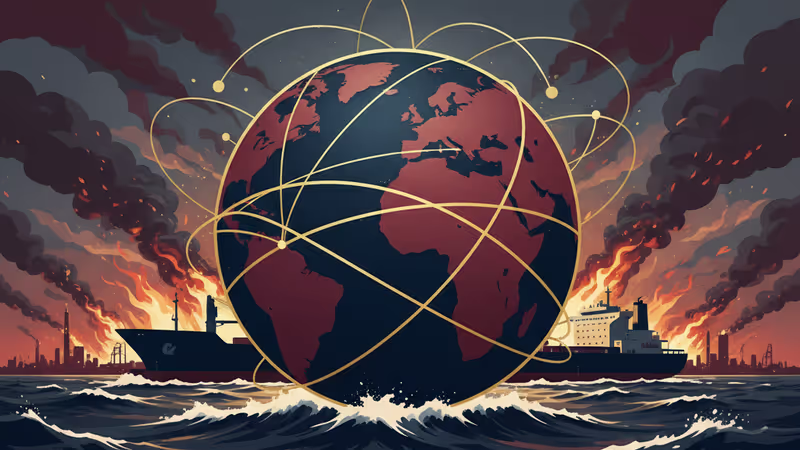
Russia has escalated its assault on Ukraine's southern Odesa region with what Ukrainian officials call “systematic” strikes, causing widespread power cuts and threatening the nation's critical maritime infrastructure. President Volodymyr Zelensky says the attacks are a deliberate attempt by Moscow to sever Ukraine's access to the sea, a military campaign that runs parallel to diplomatic efforts that have yielded no clear breakthrough.
As Ukraine's third-largest city, Odesa's port is an economic lifeline. With other major ports in Zaporizhzhia, Kherson, and Mykolayiv inaccessible due to Russian occupation, Odesa has become the primary gateway for Ukraine's exports. Since August 2023, it has been the starting point for a crucial corridor allowing the country, one of the world's top grain exporters, to ship its produce via the Black Sea.
According to Ukrainian Deputy Prime Minister Oleksiy Kuleba, the focus of the war “may have shifted towards Odesa.” The region has suffered hundreds of strikes over the past week, with significant consequences.
The military escalation on the ground contrasts sharply with the latest round of US-led diplomatic talks, which recently wrapped up in Miami. While the US held separate meetings with Ukrainian and Russian delegations, the talks concluded with optimistic statements but no tangible progress toward ending the nearly four-year war. US special envoy Steve Witkoff noted he worked on “aligning positions” with his Ukrainian counterpart on a 20-point peace plan, but Moscow's reaction was swift and dismissive.
The European and Ukrainian changes to the peace proposal would not improve the chances of peace being achieved.
Russian Deputy Foreign Minister Sergei Ryabkov went further, accusing EU countries of having a “firm aspiration” to derail potential Russia-US agreements. He claimed European nations were “possessed by a maniacal” fear of a Russian attack, reiterating President Putin's previous offer to confirm in a legal agreement that Russia has no intention of attacking the EU or NATO.
Russia's focused assault on Odesa appears to be a clear strategy of coercive diplomacy. By threatening Ukraine's economic jugular—its ability to export grain via the Black Sea—Moscow is attempting to weaken Kyiv's negotiating position and exert pressure on its international partners. The threat to global food supply chains serves as a powerful lever, suggesting that any future peace talks will be inextricably linked to the control of this vital maritime corridor.
本コンテンツはAIが原文記事を基に要約・分析したものです。正確性に努めていますが、誤りがある可能性があります。原文の確認をお勧めします。
関連記事
16日間の激しい戦闘で少なくとも86人が死亡したタイとカンボジアの国境紛争で、両国の軍当局が停戦再開に向けた協議を開始しました。ASEANや米国の仲介努力の行方と、現地の緊張状態を詳報します。

米民主党のジョイス・ビーティ議員が、ケネディ・センターを「トランプ・ケネディ・センター」に改名した理事会の決定は違法だとして提訴。ホワイトハウスとケネディ家が対立し、法廷闘争へ発展。

シリア内務省が12月24日、首都ダマスカス近郊でISISの重要人物タハ・アル=ズビを逮捕したと発表。米国主導の有志連合との「協力」があったとされますが、米中央軍は確認していません。

米司法省がジェフリー・エプスタイン事件に関連する可能性のある100万件超の未公開文書を発見したと発表。情報公開法に基づく開示が「さらに数週間」遅れる見通しで、議会からは批判の声が上がっている。
16日間の激しい戦闘で少なくとも86人が死亡したタイとカンボジアの国境紛争で、両国の軍当局が停戦再開に向けた協議を開始しました。ASEANや米国の仲介努力の行方と、現地の緊張状態を詳報します。
米民主党のジョイス・ビーティ議員が、ケネディ・センターを「トランプ・ケネディ・センター」に改名した理事会の決定は違法だとして提訴。ホワイトハウスとケネディ家が対立し、法廷闘争へ発展。
シリア内務省が12月24日、首都ダマスカス近郊でISISの重要人物タハ・アル=ズビを逮捕したと発表。米国主導の有志連合との「協力」があったとされますが、米中央軍は確認していません。
米司法省がジェフリー・エプスタイン事件に関連する可能性のある100万件超の未公開文書を発見したと発表。情報公開法に基づく開示が「さらに数週間」遅れる見通しで、議会からは批判の声が上がっている。