
U.S. Seizures Choke Venezuelan Oil Flow, Rattling Global Energy Markets
U.S. seizure and interception of Venezuelan oil tankers have choked the nation's crude exports, causing a spike in global oil prices and escalating geopolitical tensions in the energy market.
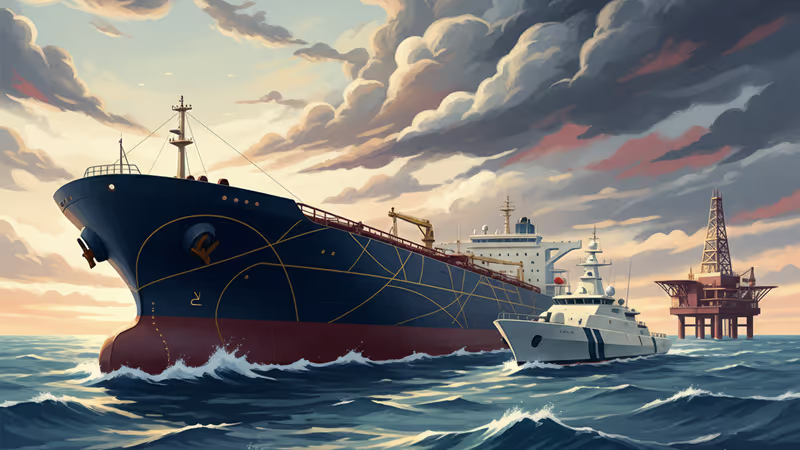
Venezuela's oil tanker loadings dwindled on Monday after the U.S. seized one vessel and intercepted others, a move that is disrupting the nation's crude exports and sending jitters through global energy markets. According to tracking data and sources cited by Reuters, most ships in Venezuelan waters are now confined to domestic port-to-port movements, as the U.S. tightens its blockade and state-run oil company PDVSA grapples with a recent cyberattack. The disruption pushed global oil prices up more than 2%.
The escalation follows direct action by the U.S. Coast Guard, which seized a supertanker carrying Venezuelan oil earlier this month and attempted to intercept two more vessels over the weekend. U.S. authorities said one of the intercepted ships was an empty, sanctioned tanker, while the other was a fully loaded, unsanctioned vessel bound for China.
#### Timeline: U.S. Pressure Campaign Intensifies
- Early December 2025: The U.S. Coast Guard seizes the supertanker *Skipper* for carrying Venezuelan oil. - Dec. 20-21 Weekend: U.S. authorities attempt to intercept two more tankers, *Centuries* and *Bella 1*. - Dec. 22 (Monday): Tanker loadings in Venezuela stall, and oil prices surge on supply fears.
The actions are part of President Donald Trump's announced blockade of sanctioned tankers, which has put vessel owners on high alert. Highlighting the risks, Panama's Foreign Minister, Javier Martinez-Acha, said on Monday that the intercepted supertanker *Centuries* had violated maritime rules by altering its name and disabling its transponder while flying the Panamanian flag. He suggested the country could cancel the ship's registration.
Washington's pressure campaign under President Trump has included a ramped-up military presence in the region. According to Reuters, the U.S. has conducted more than two dozen military strikes on vessels it alleges were transporting drugs in the Pacific and Caribbean, resulting in at least 100 deaths.
#### Official Statements
> U.S. Secretary of State Marco Rubio: "Washington's goal was to secure regional stability and security, adding that 'The current status quo with the Venezuelan regime is intolerable for the United States.'" > Venezuelan Foreign Affairs Minister Yvan Gil: The U.S. seizures are against international law and constitute "acts of piracy." > China's Foreign Ministry: The recent U.S. interceptions were a "serious violation of international law."
The vessel interceptions represent the most significant blow to PDVSA since 2020, when the U.S. Treasury imposed sanctions on two trading units of Russia's Rosneft. Compounding the external pressure, PDVSA is also struggling internally. The company is still reeling from a cyberattack last week, which has hobbled its administrative systems and reportedly delayed salary payments.
The market impact was immediate. On Monday afternoon, Brent crude futures rose 2.4% to $61.94 a barrel, while U.S. WTI crude also climbed 2.4% to $57.89. Fears of supply disruptions from both the Venezuelan situation and Russia's ongoing war against Ukraine fueled the rally.
However, not all shipments have stopped. Chevron, operating under a specific U.S. authorization, exported a 500,000-barrel cargo of Venezuelan oil to the U.S. Gulf Coast on Sunday. According to LSEG ship data, it marks the seventh cargo the U.S. major has shipped this month. Venezuela's Oil Minister, Delcy Rodriguez, confirmed that deliveries to Chevron have not been interrupted.
# [callout-info] PDVSA's Dual Crisis While facing a U.S. blockade externally, PDVSA is battling an internal crisis. The recent cyberattack has left it unable to fully restore its centralized administrative system, forcing it to use written records. This operational chaos means customers are demanding deeper discounts and contract changes to undertake the increasingly risky voyages out of the country's waters, leaving millions of barrels of oil stuck on tankers.
---
#### PRISM Insight: The Weaponization of Energy Logistics
The U.S. Coast Guard's interceptions signal a new phase in sanctions enforcement, moving from financial restrictions to direct kinetic intervention in global energy flows. This weaponization of maritime logistics highlights the fragility of supply chains, forcing global businesses to re-evaluate geopolitical risk not as a background factor, but as a core operational threat.
本コンテンツはAIが原文記事を基に要約・分析したものです。正確性に努めていますが、誤りがある可能性があります。原文の確認をお勧めします。
関連記事
KPMGの最新調査によると、米国のデカップリング圧力にもかかわらず、在中国多国籍企業の75%が2025年も投資を維持または拡大していることが明らかになりました。市場からの撤退準備はわずか1%に留まります。

トランプ大統領の2期目が1年を迎え、その外交政策が1期目と大きく異なると専門家は指摘しています。国際社会の反応と地政学的な影響を多角的に分析します。
トランプ前大統領が「史上最強」の軍艦建造計画を宣言。しかし米海軍は1カ月前、コスト超過を理由に別の新型艦計画を中止しており、野心的な公約と厳しい現実のギャップが浮き彫りになっています。
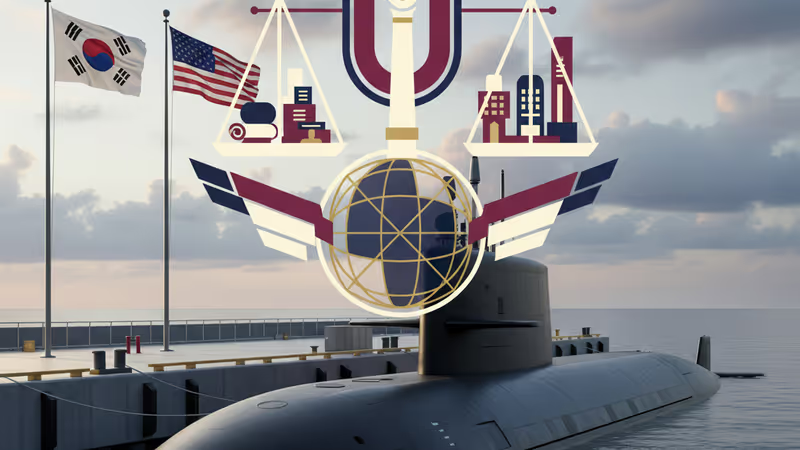
米国海軍のロサンゼルス級攻撃型原子力潜水艦「USSグリーンビル」が23日、韓国の釜山港に入港。韓国海軍は、今回の寄港が韓米の連携強化と連合防衛態勢の強化に繋がるとの声明を発表しました。