

China's New Taiwan Playbook for 2026: Why Beijing is Trading Military Drills for TV Dramas
Analysts suggest Beijing is recalibrating its Taiwan policy, shifting from overt military threats to a sophisticated 'soft power' campaign involving cultural propaganda and governance visions in late 2025.
In a significant recalibration of its Taiwan strategy, Beijing appears to be shifting tactics from overt military intimidation to a more sophisticated campaign of cultural and political influence. According to analysts cited by the South China Morning Post, recent months have seen China scale back military posturing while simultaneously ramping up a multi-pronged effort to win hearts and minds on both sides of the strait, signaling a potential new phase in its long-term goal of reunification.
This strategic pivot comes amid a complex geopolitical landscape, where Beijing may perceive a reduced likelihood of intervention from the United States, Taiwan's most critical international supporter. The new approach focuses on shaping public perception and outlining a vision for post-reunification governance, moving beyond simple threats of force.
For decades, Beijing has viewed Taiwan, a self-ruled democracy, as a renegade province to be unified with the mainland, by force if necessary. This has traditionally involved frequent military exercises and air-defense zone incursions to pressure Taipei.
The Cultural and Propaganda Offensive
Beijing has recently launched several high-profile initiatives aimed at normalizing its claim over Taiwan in the eyes of the mainland public and projecting a sense of shared identity. This includes:
- Satellite Imagery: A mainland Chinese commercial satellite, Jilin-1, released high-resolution images of Taiwan, including the critical Hsinchu Science Park. The images were widely promoted on Chinese social media with the narrative of viewing "home."
- State-Sponsored Media: The first state-supervised television drama detailing the history of communist spies in Taiwan was produced and aired, aiming to frame historical narratives.
- National Commemoration: The establishment of the first national commemoration day related to Taiwan, embedding the island into the mainland's official historical and national calendar.
Laying the Groundwork for Governance
Beyond cultural messaging, Beijing has also begun to articulate its vision for a post-reunification Taiwan more clearly. The report notes the unveiling of "fresh policy slogans" that outline potential governance models. This move suggests an attempt to create an impression of inevitability and to present a more concrete, albeit state-controlled, alternative to Taiwan's current democratic system.
Every inch of Taiwan belongs to mainland China.
— Beijing's official messaging, as reported by SCMP
本コンテンツはAIが原文記事を基に要約・分析したものです。正確性に努めていますが、誤りがある可能性があります。原文の確認をお勧めします。
関連記事
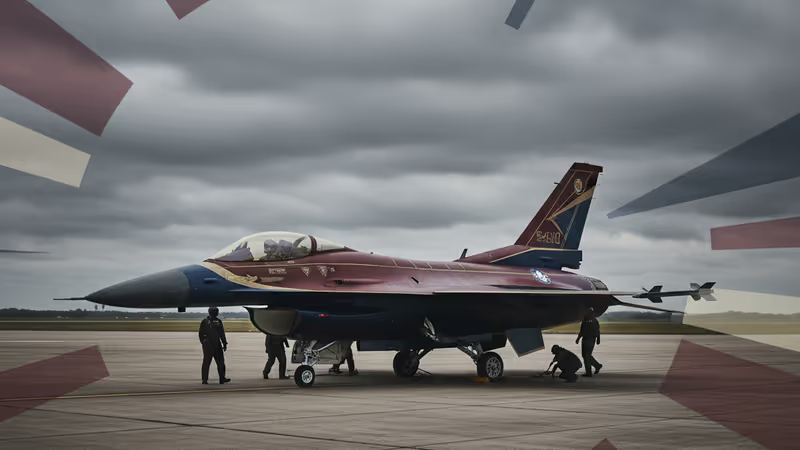
台湾が発注した新型戦闘機F-16Vが、度重なる納入遅延の後、米国で地上試験を開始したことが写真で確認されました。地政学的緊張が高まる中での重要な進展です。
トランプ米大統領がベネズエラのマドゥロ大統領に退陣を促す警告を発し、米沿岸警備隊が石油タンカーの拿捕を強化。ロシアと中国は米国の行動を「国際法違反」と非難し、国際的な緊張が高まっている。
2025年、米ドル中心の経済システムが転換期を迎え、AI時代を支えるエネルギーと水資源が新たな覇権の鍵に。IMFの報告書が示す米中ブロック化と、資源安全保障の重要性を解説します。
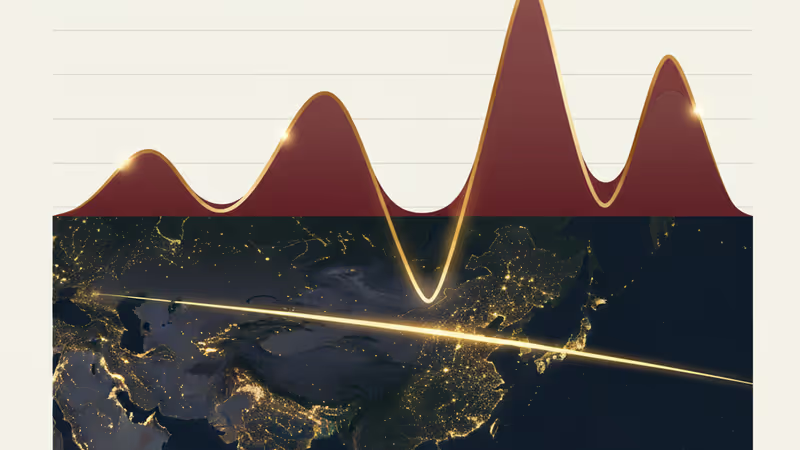
KPMGの最新調査によると、米国のデカップリング圧力にもかかわらず、在中国多国籍企業の75%が2025年も投資を維持または拡大していることが明らかになりました。市場からの撤退準備はわずか1%に留まります。