
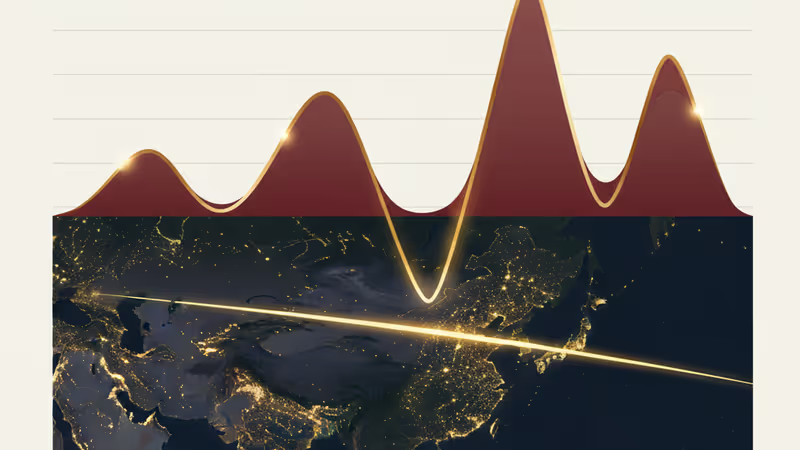
75% of Multinationals Maintain or Boost China Investment, Defying Decoupling Pressure: KPMG Report
A new KPMG report finds three in four multinational corporations in China maintained or increased investment in 2025, despite mounting political pressure from Washington to decouple.
Three in four multinational corporations (MNCs) operating in mainland China have either maintained or increased their investments in 2025, a stark contrast to the intensifying decoupling efforts led by Washington and its allies. According to a new survey from KPMG, the data suggests that despite geopolitical headwinds, global firms remain committed to the world's second-largest economy.
The Data Behind the Strategy
The report, published on Monday, polled 137 senior executives from global companies between June and September. It revealed that 75% of respondents maintained or increased their investments for 2025. Conversely, only 1% reported that they were preparing to exit the China market. While about 20% of companies did reduce their investment, this appears to be a strategic adjustment rather than a full-scale retreat.
Geopolitical Rhetoric vs. Economic Reality
These findings present a challenge to the political narrative pushed by Washington, which has been urging allies to reduce their economic reliance on Beijing through supply chain diversification and technology controls. It's clear that for many corporations, the sheer scale of the Chinese consumer market and its integrated supply chains present an economic reality that's hard to ignore.
The decisions reflect a calculated risk assessment by corporate leaders. Rather than full decoupling, many firms seem to be pursuing a 'China Plus One' strategy—maintaining their core operations in China while diversifying parts of their production to other countries to mitigate risk. This indicates a more nuanced, pragmatic approach than the binary choice often presented in political discourse.
The KPMG data highlights a significant divergence between geopolitical directives and on-the-ground business strategy. While governments talk of decoupling, corporations are making calculated bets on the resilience and scale of the Chinese market. This suggests that economic interdependence is proving more durable than anticipated, creating a complex challenge for policymakers.
本コンテンツはAIが原文記事を基に要約・分析したものです。正確性に努めていますが、誤りがある可能性があります。原文の確認をお勧めします。
関連記事
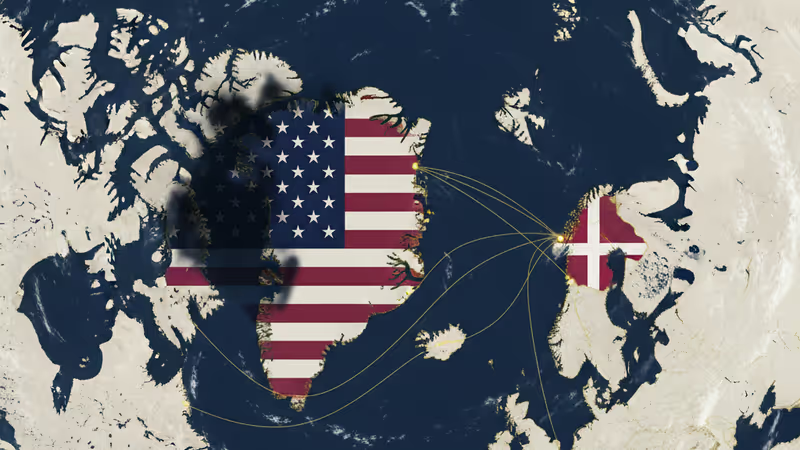
米トランプ大統領がグリーンランド買収のため特使を任命し、「国家安全保障に不可欠」と発言。デンマークとグリーンランドは「主権侵害」と強く反発し、EUもデンマーク支持を表明。北極圏をめぐる地政学的緊張が高まっています。
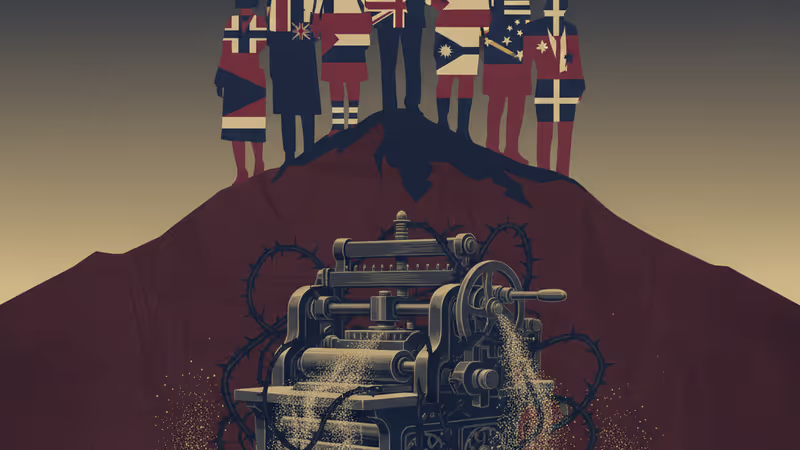
中南米15カ国がジャーナリスト保護と偽情報対策を目的とした「サンティアゴ宣言」に署名。5000万ドルの基金を設立する一方、ブラジルなどは国家主権を理由に不参加を表明し、域内の意見対立も浮き彫りになりました。
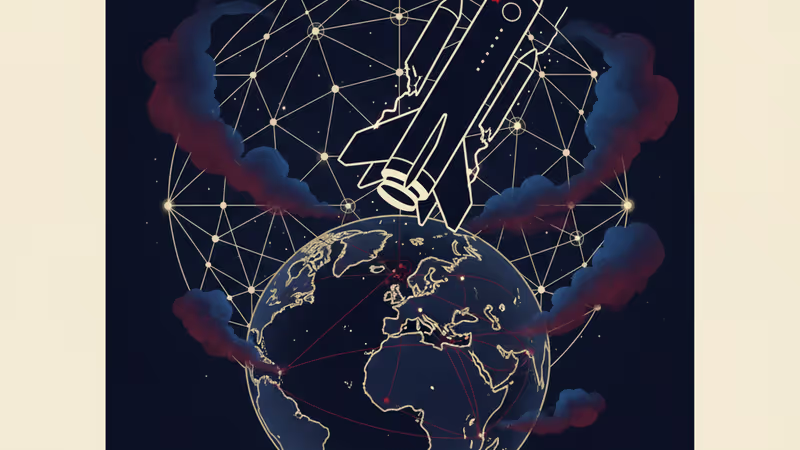
中国国営の再利用可能ロケット「長征12号A」が初打ち上げでブースター回収に失敗。今月2度目の失敗となり、スペースXなどが先行する米国との技術格差が浮き彫りになった。
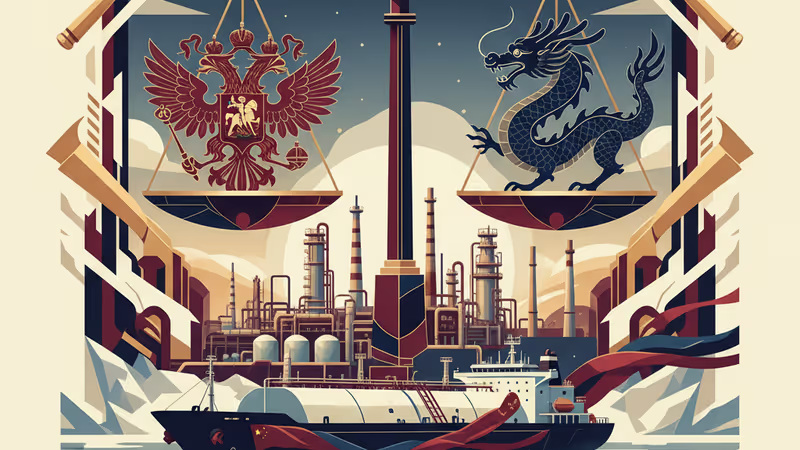
2025年11月、ロシアから中国へのLNG輸出が前年比142.6%急増し160万トンに達した。これによりロシアはオーストラリアを抜き、中国にとって最大のLNG供給国の一角となった。背景には制裁下のプロジェクト再開と両国の戦略的連携がある。