
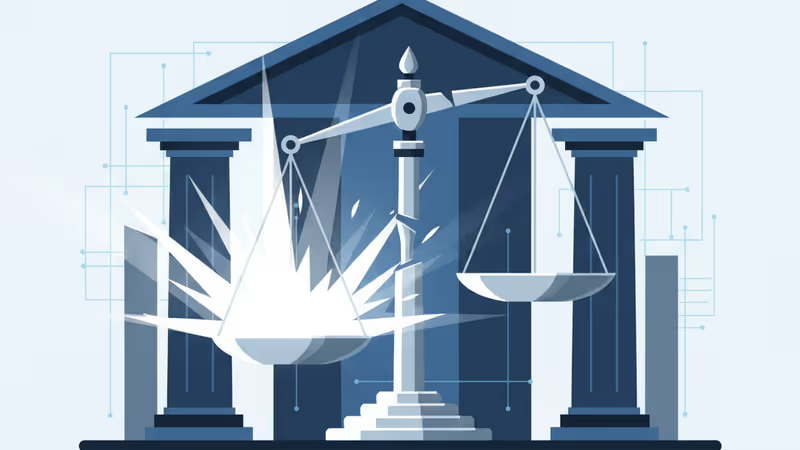
DOJ's Epstein Document Release: Unpacking the Global Litmus Test for Transparency and Elite Accountability
The DOJ's release of Epstein files sparks a global debate on transparency, elite power, and justice. Unpack the geopolitical ripples, tech implications, and future of accountability.
The Unfolding Saga: Why Elite Accountability Matters More Than Ever
The recent decision by the U.S. Department of Justice to begin releasing files related to the late financier and convicted sex offender Jeffrey Epstein marks more than just a procedural update in a high-profile case. For global executives and policymakers, this event is a crucial litmus test for institutional transparency, the influence of powerful networks, and the relentless march toward public accountability in an increasingly interconnected world.
Even with significant redactions, the very act of releasing these documents—which include interview transcripts and call logs—sends a ripple through the global corridors of power, challenging the long-held perception of untouchable elites and raising fundamental questions about the mechanisms designed to protect them.
Why This Matters: Eroding Trust and the Digital Scrutiny Imperative
The Epstein saga transcends national borders, embodying a global tension between the public's demand for justice and the opaque operations of wealthy, influential networks. The DOJ's release, regardless of its ultimate revelations, directly impacts public trust in judicial systems and governance. In an era defined by instant information dissemination and heightened social scrutiny, events like this have immediate and profound second-order effects:
- Erosion of Public Trust: Perceived delays or obfuscation in high-profile cases involving powerful figures can severely damage public confidence in legal and political institutions, not just in the US but globally, as international media amplifies the narrative.
- Precedent for Transparency: While the files are heavily redacted, the pressure to release them sets a precedent. It signals that even cases involving the most connected individuals are not immune from public oversight, albeit often delayed and incomplete. This can inspire similar calls for transparency in other nations facing issues of elite impunity.
- Impact on Global Power Dynamics: The potential for revelations, even partial ones, can destabilize existing power structures, exposing vulnerabilities within powerful financial, political, and social circles that span multiple countries.
The Analysis: Historical Echoes in a Digital Age
Historically, societies have grappled with the influence of powerful individuals and the challenge of holding them accountable. From monarchical decrees to modern legal frameworks, the ideal of 'justice for all' often collides with the reality of 'justice for some.' The Epstein case, however, unfolds in a uniquely digital landscape, transforming a traditional legal process into a global media spectacle where every detail, even a redaction, becomes a point of intense public debate.
The competitive dynamics here are multifaceted: on one side, a justice system attempting to navigate legal constraints, privacy concerns, and public pressure; on the other, a global public, empowered by digital platforms, demanding unfiltered truth. The ongoing redactions highlight the inherent tension: while necessary for protecting ongoing investigations or sensitive information, they also fuel skepticism and theories of cover-up, underscoring the delicate balance authorities must strike to maintain credibility.
Globally, the case contributes to a growing narrative around the accountability of transnational elites. It mirrors concerns in various countries where wealthy individuals and their networks have historically operated with perceived impunity, sparking movements for greater social justice and anti-corruption efforts.
PRISM Insight: The Tech Frontier of Transparency and Oversight
For tech leaders, the Epstein files spotlight several critical areas:
- Digital Forensics & Data Security: The sheer volume of digital data—call logs, emails, flight manifests—involved in cases like Epstein's underscores the paramount importance of advanced digital forensics and secure data management for justice departments worldwide. The future of investigations relies heavily on ethical AI and robust cybersecurity.
- Transparency Tools & Open Governance: The public's demand for transparency could drive innovation in 'open government' technologies. Blockchain for verifiable records, AI for anonymizing sensitive data without compromising context, and secure platforms for whistleblowers are all areas ripe for development.
- The 'Dark Web' & Elite Networks: The ability of illicit networks to operate in the digital shadows continues to be a challenge. The case implicitly highlights the need for governments and ethical tech firms to invest in intelligence tools and strategies to counter such operations, while respecting civil liberties.
PRISM's Take: A Persistent Call for Systemic Integrity
The release of the Epstein files, even in their censored form, serves as a potent reminder that the pursuit of justice for the powerful is a long, arduous, and increasingly public battle. It reinforces the global demand for systemic integrity, where wealth and influence do not equate to immunity.
As technology continues to shrink the world and amplify every whisper, the pressure on governments to deliver transparency will only intensify. Leaders, irrespective of their industry or geography, must recognize that public trust is a fragile commodity, easily fractured by perceived injustice and painstakingly rebuilt through genuine accountability. The Epstein saga, therefore, is not just about a single individual; it's a continuing global narrative about who holds power, who is protected, and whether justice truly is blind.
関連記事
世界の分断、ガザの人道危機、ウクライナ紛争、国内政治の課題を分析。地政学、人権、そしてテクノロジーが交差する現代のグローバル課題と、投資・技術トレンドをPRISMが解説します。
イスラエル軍のシリア領内進攻と1974年兵力引き離し合意の破棄は、アサド政権崩壊後のシリア情勢を不安定化させ、国際秩序に影響を与える。地政学リスクと技術・投資への波紋をPRISMが分析。

北朝鮮が国連憲章を盾に「西側の強制」に対抗を呼びかけ、グローバルサウスとの連携を強化。多極化する国際秩序における地政学的意味合いとビジネスへの影響を分析。

DRC東部紛争が米国仲介の和平を崩壊させ、国連安保理はルワンダを非難。地政学的リスクと重要鉱物サプライチェーンへの影響、今後の展望を分析。