
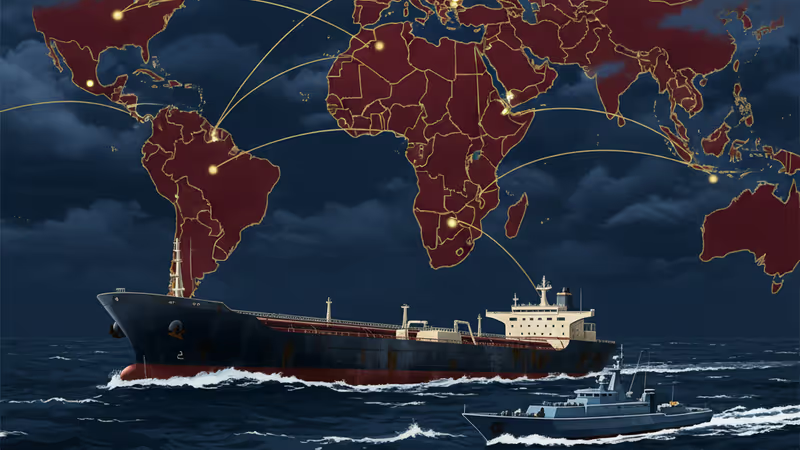
Sanction or Piracy? US Seizure of Venezuelan Oil Tanker Ignites International Legal Firestorm
The recent U.S. seizure of a Venezuelan oil tanker has sparked a fierce debate over international law, pitting claims of legitimate sanction enforcement against accusations of state-sponsored piracy. We analyze the legal and geopolitical fallout.
In the choppy waters of the Caribbean, a U.S. Coast Guard interception of a Venezuelan state-owned oil tanker has escalated into a full-blown international dispute. The incident puts a sharp focus on a critical question: Was it a legitimate enforcement of economic sanctions, or a modern-day act of piracy on the high seas?
According to reports, the confrontation occurred in early December 2025 in international waters. The Venezuelan-flagged tanker, 'El Libertador,' owned by state oil company PDVSA and bound for Asia, was stopped by a U.S. Coast Guard cutter. U.S. authorities claim the vessel was engaged in an illicit crude oil shipment, violating stringent sanctions against Venezuela. The tanker was subsequently seized and diverted to a port in Texas.
The seizure marks one of the most assertive actions taken by the Biden administration this year, following a period of re-tightening sanctions aimed at pressuring the Maduro regime. Washington's long-standing position is that cutting off the government's oil revenue is crucial for restoring democracy in the nation.
We will continue to use all available tools to prevent the illegitimate Maduro regime from using state assets to finance its oppressive activities. This action is part of our lawful and ongoing sanction enforcement efforts to uphold international norms.
Caracas's response was swift and furious. The Venezuelan government condemned the seizure as an act of 'economic terrorism' and 'imperialist aggression.' In a fiery statement, Venezuela's Ministry of Foreign Affairs accused the U.S. of flagrantly violating the UN Convention on the Law of the Sea (UNCLOS), which guarantees freedom of navigation, and called for international condemnation of the act.
The core of the dispute lies in a gray area of international law: the extraterritorial application of a nation's domestic sanctions. UNCLOS firmly establishes freedom of navigation on the high seas for all states. The right to board a foreign ship is strictly limited to exceptional cases like piracy, slave trading, or unauthorized broadcasting. Legal experts argue that unilaterally enforcing domestic sanctions in international waters is a highly contentious practice that risks undermining the rules-based maritime order. This seizure could set a significant precedent, potentially encouraging similar actions and escalating maritime tensions globally.
本コンテンツはAIが原文記事を基に要約・分析したものです。正確性に努めていますが、誤りがある可能性があります。原文の確認をお勧めします。
関連記事
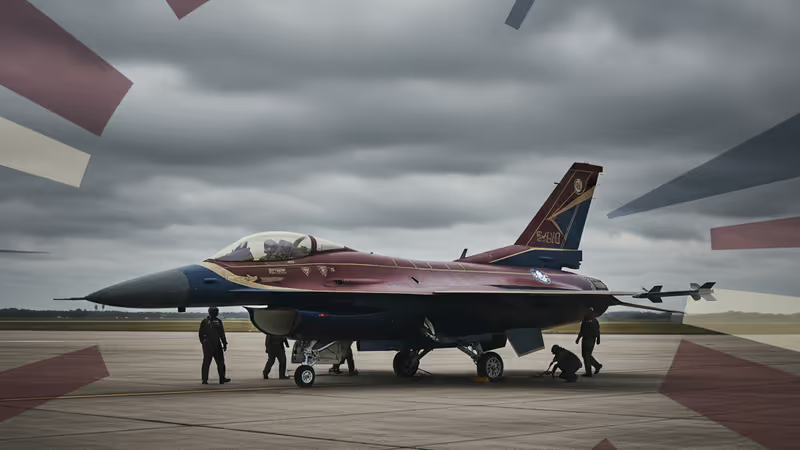
台湾が発注した新型戦闘機F-16Vが、度重なる納入遅延の後、米国で地上試験を開始したことが写真で確認されました。地政学的緊張が高まる中での重要な進展です。

トランプ米大統領がベネズエラのマドゥロ大統領に退陣を促す警告を発し、米沿岸警備隊が石油タンカーの拿捕を強化。ロシアと中国は米国の行動を「国際法違反」と非難し、国際的な緊張が高まっている。
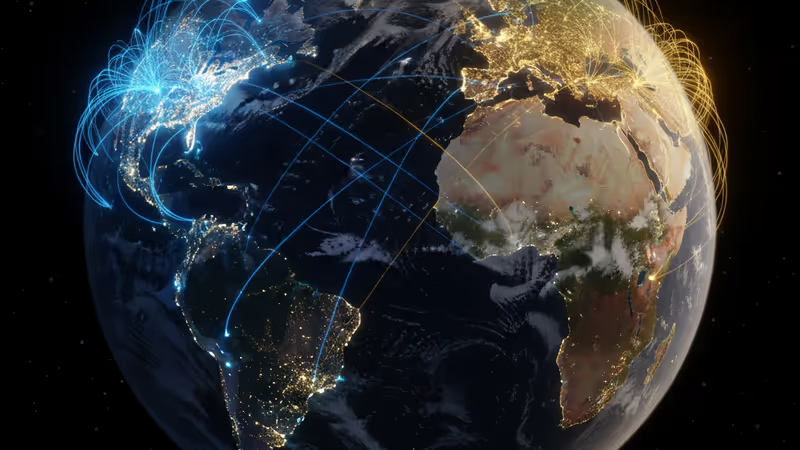
2025年、米ドル中心の経済システムが転換期を迎え、AI時代を支えるエネルギーと水資源が新たな覇権の鍵に。IMFの報告書が示す米中ブロック化と、資源安全保障の重要性を解説します。
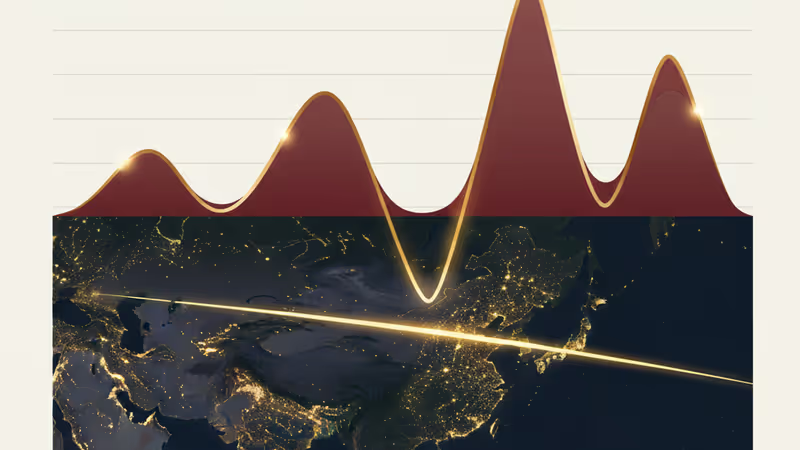
KPMGの最新調査によると、米国のデカップリング圧力にもかかわらず、在中国多国籍企業の75%が2025年も投資を維持または拡大していることが明らかになりました。市場からの撤退準備はわずか1%に留まります。