
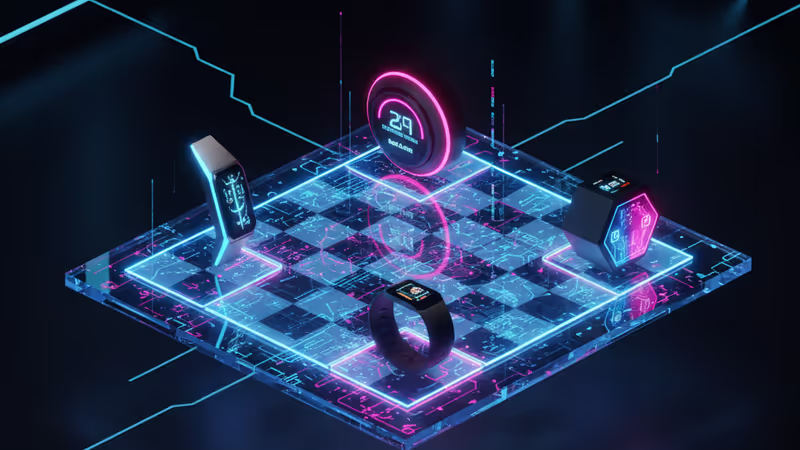
Decoding Apple’s Three-Watch Gambit: A Masterclass in Market Domination
Apple's SE, Series 11, and Ultra 3 aren't just choices; they're a calculated strategy to dominate the wearables market. Our expert analysis decodes the gambit.
The Lede: More Than Just Choice
Apple’s 2024 Watch lineup isn't a simple product refresh; it’s the culmination of a decade-long strategy to dissect and dominate the entire wearables market. The clear segmentation between the value-driven SE, the health-focused Series 11, and the performance-tier Ultra isn't about offering choice—it's a calculated assault designed to create an impenetrable moat around its ecosystem, leaving competitors to fight for scraps. For executives and investors, understanding this strategy reveals how Apple is transitioning the Watch from a hardware gadget into a recurring services gateway.
Why It Matters
This three-tiered strategy shifts the competitive battleground from hardware specifications to ecosystem value. While rivals like Samsung and Google (via Fitbit) focus on features, Apple is building distinct entry points for different consumer psychographics, each designed to funnel users deeper into its high-margin services. The second-order effect is a market squeeze: the SE undercuts the mid-range, the Series sets the standard for consumer health tech, and the Ultra creates a new premium ceiling that pulls aspiration and margins upward. This makes it exponentially harder for any single competitor to challenge Apple on all fronts.
The Analysis: A Three-Pronged Attack
The SE: The Ecosystem's Aggressive On-Ramp
The Apple Watch SE is arguably the most strategically important product in the lineup. The latest generation is no longer a stripped-down, compromised device. By inheriting flagship features like an always-on display and the S10 chip with its gesture controls, Apple has created a product that offers 80% of the core experience for 60% of the price. This is a deliberate act of market consolidation. Its mission is to eliminate competitors like Fitbit and Amazfit from consideration for first-time smartwatch buyers within the iPhone ecosystem. Furthermore, by positioning it as the ideal watch for kids via Family Setup, Apple is effectively acquiring its next generation of lifelong customers before they even own a smartphone.
The Series: The Cash Cow of Consumer Health
The minimal hardware evolution from the Series 10 to the Series 11 is not a sign of stagnation; it’s a signal of product maturity. The true value proposition of the Series line is now almost entirely in its software and sensor-driven health capabilities. With features like FDA-cleared hypertension notifications and advanced sleep apnea detection, the watch is transitioning from a fitness tracker to a mainstream, preventative health monitor. This pivot is critical. It positions Apple not against smartwatch makers, but as a key player in the multi-trillion dollar digital health industry. The ongoing patent dispute with Masimo over the blood oxygen sensor underscores how high the stakes are; this is a battle for legitimacy in the medical device space, a far more lucrative arena than consumer electronics.
The Ultra: Redefining the Premium Tier
The Apple Watch Ultra was a brilliant strategic move to both create and conquer a new market segment. Initially perceived as a Garmin-killer for extreme athletes, its true success lies in its appeal to the mainstream power user—the “Tech Dads” mentioned in initial reviews who crave maximum battery life and a larger, more durable screen. The Ultra serves two functions: it provides a high-margin upsell path for existing Watch users, and it acts as a “halo product” that elevates the perception of the entire brand. The incremental upgrades in the Ultra 3 are less important than its continued existence as an anchor at the top of the market, setting a price and performance ceiling that makes the standard Series watch appear more reasonably priced by comparison.
PRISM Insight: Actionable Guidance
- For Consumers & Investors: The key takeaway is that the hardware is becoming a commodity; the value is in the software and the ecosystem. Owners of recent models (Series 9/10, Ultra 1/2) should feel no pressure to upgrade, as the most significant new features will arrive via watchOS updates. For investors, this signals a stable, mature hardware business that is now a delivery mechanism for future health and subscription services. Monitor Apple's progress in securing further FDA clearances, as this is the true growth vector for the product line.
- For Competitors: Competing with Apple head-on is a losing proposition. The SE's value is too aggressive, and the Ultra's brand appeal is too strong. The only viable strategies are to exploit Apple's primary weakness: its iOS-only ecosystem. Success for Google, Samsung, and Garmin lies in superior cross-platform compatibility, deep integration with Android, or hyper-focusing on niche athletic communities where Apple's generalized approach is a disadvantage.
PRISM's Take
Apple's Watch strategy is no longer about winning the smartwatch war—that conflict is over. The current lineup represents the consolidation phase, meticulously designed to maximize user acquisition, retention, and lifetime value. Apple is not selling three different watches; it is selling three different subscription tiers to its vision of a connected, health-conscious future. The hardware on your wrist is merely the initial fee to join.
関連記事

韓国が150兆ウォン規模の公的成長ファンドを設立。AI、半導体、バッテリーに重点投資する国家戦略を分析し、投資家や業界への影響を読み解きます。
新型の円盤型衛星「DiskSat」が打ち上げ。20年にわたり標準だったCubeSatを超える存在となるか?宇宙産業の新たなパラダイムシフトを専門家が分析します。

AIデータセンターの需要爆発により、PC用メモリとSSDの価格が記録的に高騰。自作PCユーザーとゲーマーが直面する新たな現実と、専門家による対策を解説します。

YouTubeが200万登録のAI偽映画予告編チャンネルを閉鎖。AIコンテンツの許容範囲と「欺瞞」の境界線がどこにあるのか、プラットフォームの新たな姿勢を専門家が分析します。