

China's Largest Comic Con Bans Japanese Content, Citing "Social Environment"
A major Chinese comic convention in Hangzhou has banned all Japanese-themed works just a week before its opening, a stark reflection of the escalating geopolitical tensions between Beijing and Tokyo.
One of 's largest comic conventions has abruptly banned all Japanese-themed content and derivative works just a week before its launch, a move that signals a chilling new phase in the cultural fallout from escalating tensions between and .
A Sudden "Full-Scale Adjustment"
Organizers of the Comicup (CP) 32nd edition “Pre” event, scheduled for in , informed exhibitors on Friday of a "full-scale adjustment" to all displayed content. In a statement, the organizers cited "consideration regarding the current social environment and our cultural..." as the reason—a decision widely interpreted as a direct ban on Japanese pop culture, a dominant force in the anime, comics, and games (ACG) scene.
A Barometer of a Diplomatic Chill
The vague reference to the "social environment" is seen by observers as a direct nod to the spiraling diplomatic friction between and . The move is more than just an operational change for an event; it's a symbolic moment where state-level politics are visibly bleeding into and dictating the terms of grassroots cultural exchange.
The Soft Power Battlefield
The ban strikes at the heart of 's most successful cultural export and a passion for millions of young Chinese fans. It raises critical questions about the future of cultural exchange and the viability of soft power as a diplomatic bridge when state-level animosity runs high.
This move demonstrates how cultural spaces, once seen as buffers in geopolitical disputes, are increasingly becoming the front lines. As nations weaponize cultural policy, soft power is being reframed not as a tool for mutual understanding, but as a domain of national security and ideological competition.
本コンテンツはAIが原文記事を基に要約・分析したものです。正確性に努めていますが、誤りがある可能性があります。原文の確認をお勧めします。
関連記事

過去最大の122兆円予算案を策定する一方、一人当たりGDP順位は24位に後退した日本。12年ぶりの診療報酬引き上げなど、高齢化社会への対応と経済成長の課題を分析します。

韓国の与党「共に民主党」の金炳基(キム・ビョンギ)院内代表が、大韓航空から約160万ウォン相当の無償ホテル宿泊提供を受けていたことが発覚し謝罪。野党は不正請託禁止法違反の可能性を指摘し、政界に波紋が広がっています。

共和党のベテラン戦略家マーク・ショート氏がNPRのインタビューで党の現状と次世代リーダーについて語りました。2026年中間選挙を控え、党内の路線闘争の行方を探ります。
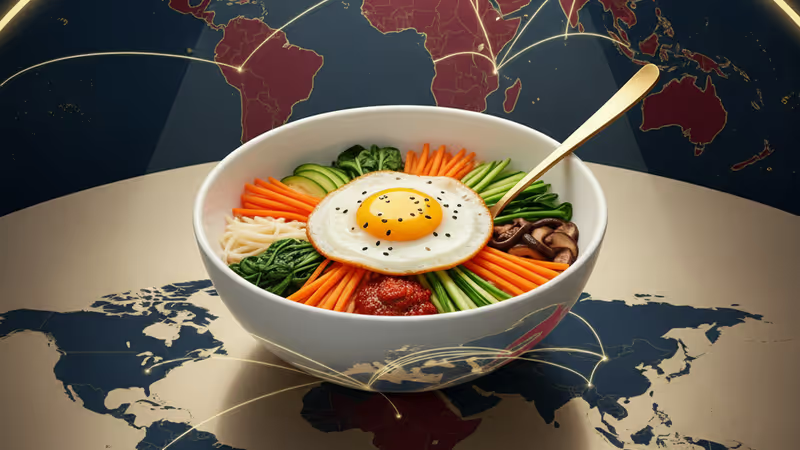
韓国政府が、世界的な韓流ブームを追い風に、2030年までに食品(Kフード)の年間輸出額を210億ドルに拡大する新戦略を発表。市場別商品開発や料理学校設立など、多角的な支援策を打ち出しました。