
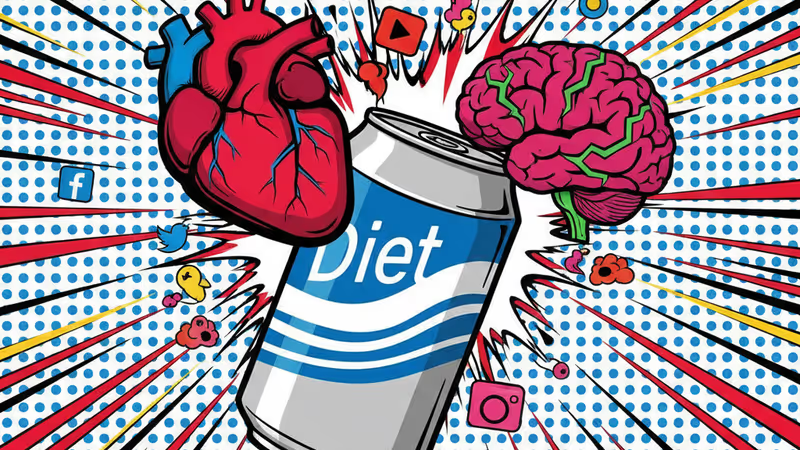
Aspartame's Hidden Cost: New Study Links Diet Soda Sweetener to Brain and Heart Damage
A new study links low-dose aspartame to potential heart and brain damage. PRISM analyzes the impact on the food industry and the future of sweeteners.
The Rundown
For decades, the implicit promise of diet soda and sugar-free snacks has been simple: all the sweetness with none of the caloric consequences. A new study shreds that narrative, suggesting the trade-off for zero calories might be levied against our most critical organs. Researchers found that even low doses of aspartame—equivalent to just a fraction of the FDA's recommended daily limit—were linked to cognitive decline, memory issues, and a dangerous stiffening of the heart muscle in mice. This isn't just another health headline; it's a direct challenge to the foundational logic of the multi-billion dollar "diet" industry.
Why It Matters
This study acts as a significant data point in the escalating war on ultra-processed foods. For giants like Coca-Cola and PepsiCo, it's another major blow following the WHO's classification of aspartame as a "possible carcinogen." They are now caught in a strategic vise: on one side, sugar taxes penalize their classic formulas, and on the other, mounting scientific evidence erodes trust in their "zero sugar" alternatives.
The second-order effects are even more profound:
- Erosion of Trust: The core value proposition of "diet" foods is consumer trust in their safety. This study, particularly because it used doses well within accepted human limits, strikes at the heart of that trust. Consumers will increasingly question the entire category.
- Market Opportunity: This is a massive tailwind for the natural sweetener industry. Companies specializing in stevia, monk fruit, and allulose can now position themselves not just as "natural" but as the safer, scientifically-backed alternative. Expect marketing campaigns to pivot aggressively on this point.
- Behavioral Shift: The ultimate outcome may not be a simple switch from Diet Coke to a stevia-sweetened rival. It could accelerate a broader consumer shift away from sweetened beverages altogether, towards water, seltzers, and unsweetened teas—a market that is already showing explosive growth.
The Analysis
The debate around artificial sweeteners is not new. From saccharin's cancer scares in the 1970s to the decades of controversy surrounding aspartame, consumers have been conditioned to a low-level hum of anxiety. What makes this different is the specificity and the dosage. Previous attacks focused on high-consumption cancer risks, which the industry could counter with a "moderation" defense. This new research undercuts that argument entirely by demonstrating measurable cardiac and neurological harm at levels far below the accepted safe daily intake for humans.
This shifts the battlefield from a general wellness debate to a specific, biological cost-benefit analysis. The study's findings of cardiac hypertrophy (a stiffened heart) and reduced cognitive performance are concrete, measurable harms that are harder to dismiss than nebulous long-term cancer risks. It reframes the consumer choice from "Am I saving calories?" to "Am I trading cognitive function for a sweet taste?"
PRISM Insight: The Rise of 'Ingredient Integrity'
We are witnessing a macro trend shift from "Calorie Counting" to "Ingredient Integrity." The sophisticated consumer is no longer just looking at the nutrition facts panel; they are becoming amateur toxicologists, scrutinizing ingredient lists for specific chemical compounds. This study will accelerate that trend.
The investment and technology play here is in the next generation of food science: precision fermentation and clean-label solutions. The future isn't another synthetic, lab-created molecule. It's using biotechnology to create nature-identical sweeteners or flavor modifiers that reduce the need for sugar without introducing controversial compounds. Companies that can scale these "bio-identical" solutions are poised to capture the market from legacy chemical sweetener manufacturers. This is the "Food as Software" thesis in action—debugging the industrial food system one ingredient at a time.
PRISM's Take
This single mouse study won't be the final nail in aspartame's coffin, but it's a critical signal of where the market is heading. The simple dichotomy of "sugar is bad, artificial is good" is collapsing. The new paradigm judges foods on their biological compatibility, not just their caloric load. For consumers, the actionable insight is to view any hyper-sweet, zero-calorie product with deep suspicion. The real cost is often hidden from the label. For the food and beverage industry, the mandate is clear: innovate beyond cheap, synthetic substitutes. The brands that win the next decade will be those that deliver taste and health not by tricking the body, but by working with it.
関連記事

エリザベス・オルセンとクリスティン・ミリオティ主演の新作『Seven Sisters』が始動。ストリーミング戦争の最前線でHulu/FXが放つ一手とその意味を徹底分析。

『エミリー、パリへ行く』シーズン6の可能性を徹底分析。Netflixの長期IP戦略、データが導く「ポスト・パリ」時代の展望、そしてエンタメ業界への影響を解説します。
アマゾンの新セール「スーパーサタデー」を徹底分析。単なる割引ではなく、年末商戦を支配するデータと物流を駆使したリテール新戦略の正体とは。

PEOPLE誌が選ぶ2025年ベスト映画リストを深掘り。ハリウッドが「脱フランチャイズ」へと舵を切り、スターと監督主導のオリジナル作品が主流になる新潮流を分析します。