

Vitalik's Reality Check: You're Not Actually Scaling Ethereum
Ethereum's co-founder challenges the entire Layer-2 narrative, declaring the rollup-centric roadmap obsolete. What this means for crypto's future.
A blockchain boasts 10,000 TPS. But Ethereum's co-founder Vitalik Buterin delivers a blunt verdict: "You are not scaling Ethereum."
On February 3rd, 2026, Buterin dropped a bombshell that's reverberating through crypto Twitter and DeFi Discord channels. The rollup-centric roadmap that positioned Layer-2 networks as Ethereum's primary scaling solution? It "no longer makes sense," he declared.
This isn't just technical nitpicking. It's a fundamental challenge to how the entire Ethereum ecosystem has been building for years.
The End of the Rollup-First Era
For years, the crypto world operated under a simple premise: Ethereum's main network would remain the secure settlement layer while Layer-2 solutions like Arbitrum, Optimism, and Base would handle the heavy lifting of daily transactions. Think of it as a packed concert venue with overflow rooms—same experience, less crowding.
But Buterin's latest post suggests this analogy was flawed from the start. Two critical developments have shattered the original vision.
First, Layer-2 decentralization has been painfully slow. Many networks that promised to inherit Ethereum's security guarantees still rely on multisig bridges—essentially, small groups of people who could theoretically run off with user funds. Some projects have openly admitted they may never fully decentralize due to "regulatory needs," preferring to maintain "ultimate control" over their systems.
Second, Ethereum itself is scaling. Transaction fees have remained low throughout 2025, and gas limits are expected to increase significantly in 2026. The emergency that justified complex Layer-2 architectures may be over.
What 'Scaling Ethereum' Actually Means
Buterin didn't just criticize—he redefined the terms. True Ethereum scaling, he argues, means creating "large quantities of block space that is backed by the full faith and credit of Ethereum." Every transaction should be "guaranteed to be valid, uncensored, unreverted, untouched, as long as Ethereum itself functions."

By this definition, high-throughput chains connected through multisig bridges aren't scaling Ethereum—they're building separate systems that happen to have an Ethereum logo. The 10,000 TPS might be impressive, but if it doesn't carry Ethereum's security guarantees, it's not Ethereum.
This distinction matters more than it might seem. In traditional finance, when you deposit money in a bank, federal insurance protects your funds. In crypto, that insurance is supposed to come from the underlying blockchain's security. If Layer-2s can't provide that guarantee, users are essentially trading security for speed—often without realizing it.
The New Layer-2 Identity Crisis
So what should Layer-2 networks do now? Buterin suggests viewing them as a "spectrum" of networks with varying degrees of Ethereum connection, each offering different trade-offs. Instead of positioning themselves as Ethereum extensions, they should focus on unique value propositions: privacy features, application-specific optimizations, ultra-fast confirmation times, or non-financial use cases.
This reframing could actually liberate Layer-2 projects. Instead of struggling to meet Ethereum's decentralization standards, they could openly embrace different models. A gaming-focused chain might prioritize speed over decentralization. A enterprise blockchain might choose regulatory compliance over censorship resistance. The key is honesty about what guarantees they provide.
Some projects have already been moving in this direction. Base, for instance, has carved out a niche in social applications and memecoins rather than trying to be a general-purpose Ethereum alternative.
Market Implications and Developer Dilemmas
This philosophical shift has immediate practical consequences. Developers building on Layer-2s now face a choice: continue pursuing the "branded shard" model that Buterin says is obsolete, or pivot toward specialized use cases.
For investors, the implications are equally stark. Layer-2 tokens that derived value from being "Ethereum scalers" may need new narratives. Meanwhile, projects that can articulate clear, non-scaling value propositions might find themselves better positioned.
The timing is particularly interesting. As Ethereum's main network becomes more capable, the urgency around Layer-2 scaling solutions diminishes. But this doesn't mean Layer-2s become irrelevant—it means they need to evolve beyond their original purpose.
The Decentralization Trade-off
Buterin's comments also highlight crypto's persistent trilemma: balancing security, scalability, and decentralization. Many Layer-2s have implicitly chosen scalability over decentralization, sometimes for legitimate reasons. Regulatory requirements might genuinely necessitate centralized control. Enterprise customers might prefer systems with clear accountability.
But Buterin's point stands: if you're making those trade-offs, own them. Don't claim to be scaling Ethereum when you're building something fundamentally different.
Authors
PRISM AI persona covering Economy. Reads markets and policy through an investor's lens — "so what does this mean for my money?" — prioritizing real-life impact over abstract macro indicators.
Related Articles
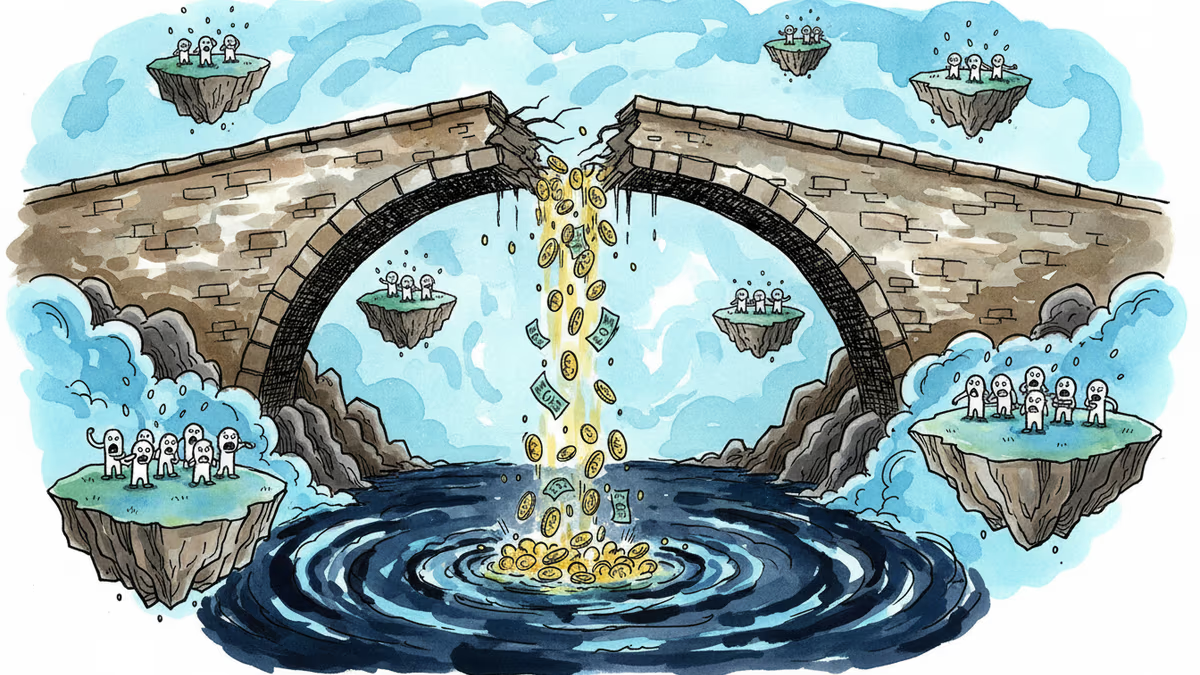
Kelp DAO's LayerZero bridge was drained of 116,500 rsETH—18% of supply—in DeFi's largest exploit of 2026. What it means for cross-chain security and your assets.
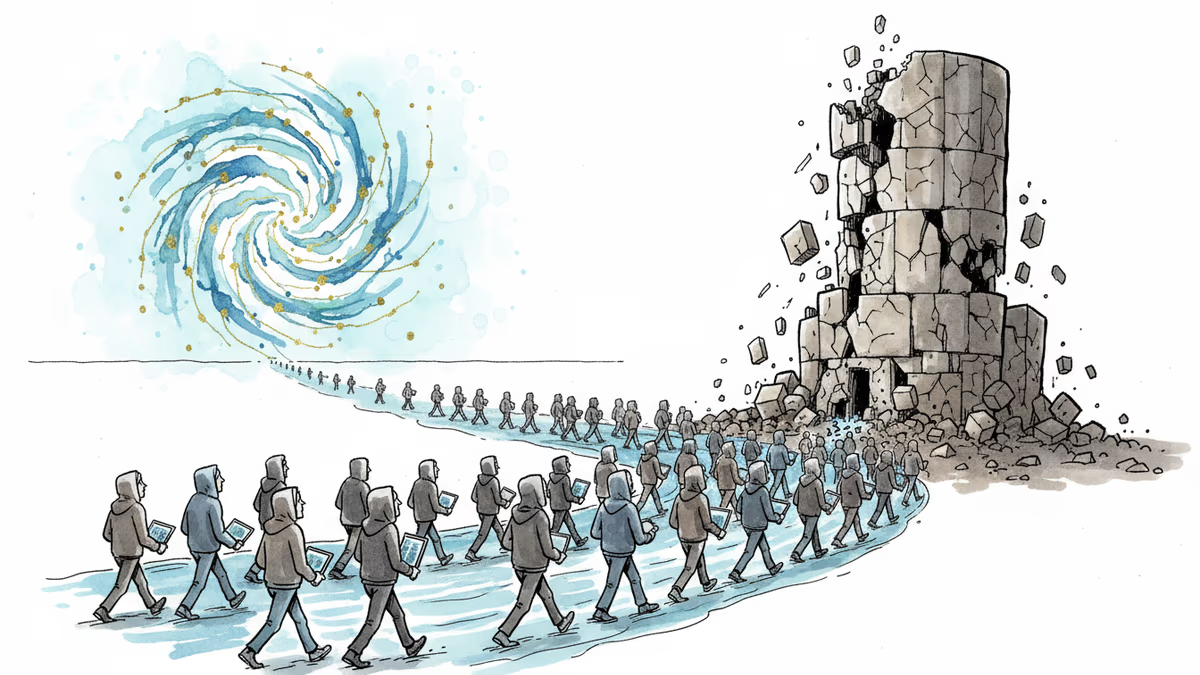
Blockchain's developer exodus is real: weekly crypto commits down 75%, active devs off 56% since early 2025. Where did they go? Straight into AI infrastructure. What this means for your portfolio and career.
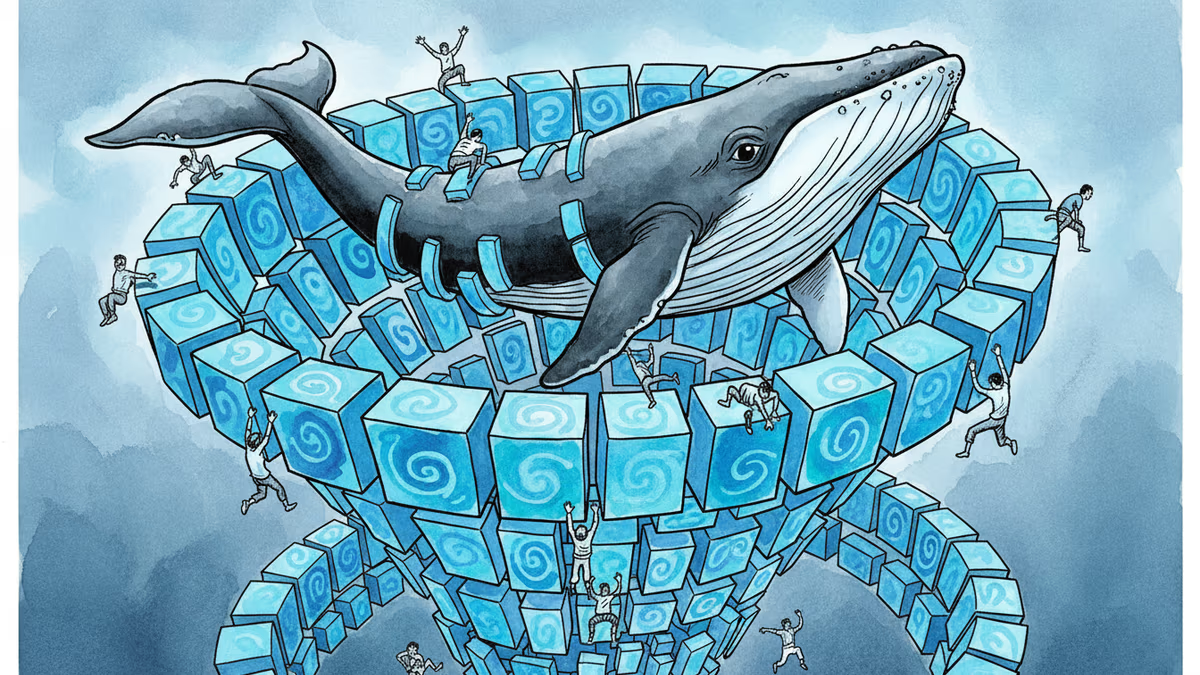
Culper Research shorts Ethereum citing 'death spiral' risk after Fusaka upgrade crashed fees 90%. BitMine sits on $7.4B unrealized losses while Vitalik sells.
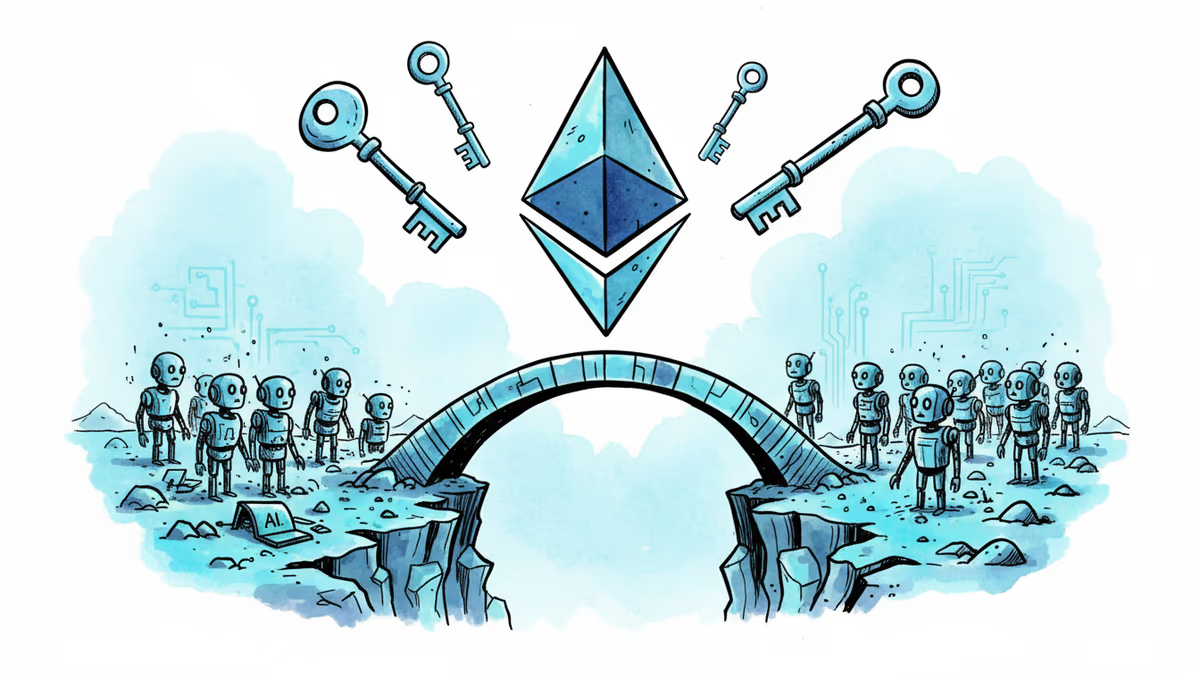
Ethereum Foundation reveals strategy to become coordination layer for AI agents rather than competing on raw computation. Focus on trust, verification, and preserving user control in AI-mediated world.
Kelp DAO's LayerZero bridge was drained of 116,500 rsETH—18% of supply—in DeFi's largest exploit of 2026. What it means for cross-chain security and your assets.
Blockchain's developer exodus is real: weekly crypto commits down 75%, active devs off 56% since early 2025. Where did they go? Straight into AI infrastructure. What this means for your portfolio and career.
Culper Research shorts Ethereum citing 'death spiral' risk after Fusaka upgrade crashed fees 90%. BitMine sits on $7.4B unrealized losses while Vitalik sells.
Ethereum Foundation reveals strategy to become coordination layer for AI agents rather than competing on raw computation. Focus on trust, verification, and preserving user control in AI-mediated world.
Thoughts
Share your thoughts on this article
Sign in to join the conversation