
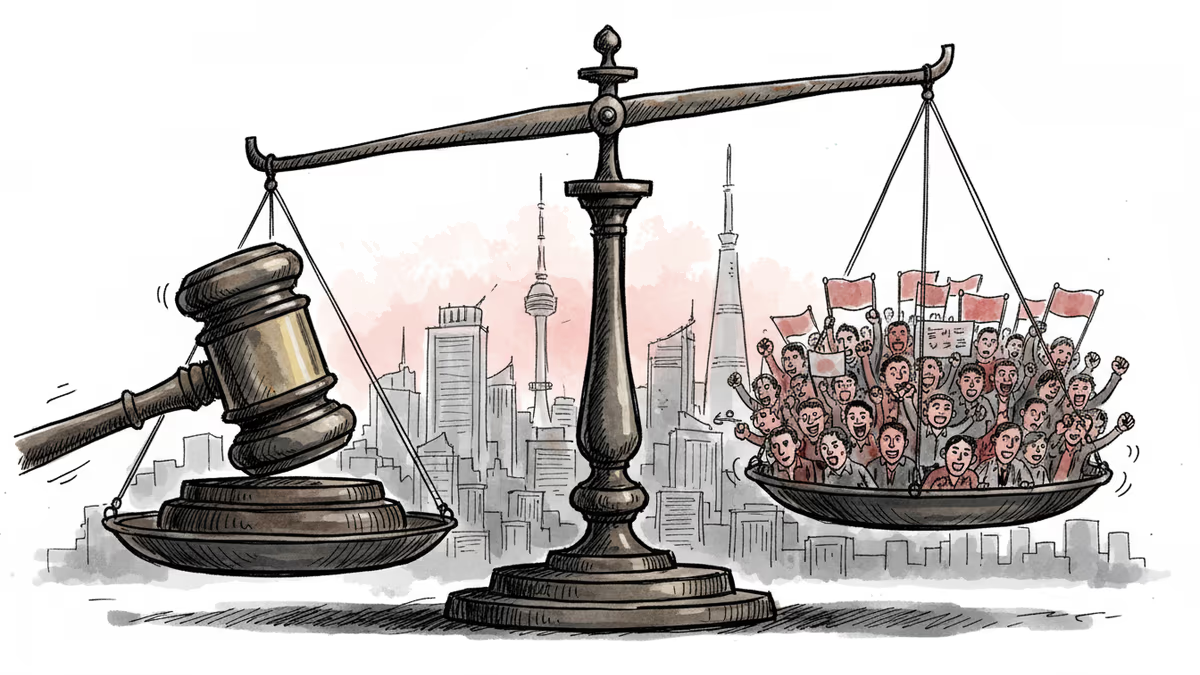
Yoon's Verdict: A Litmus Test for Korean Democracy
Former President Yoon Suk Yeol's life sentence raises fundamental questions about democratic resilience, procedural justice, and the balance of power in South Korea.
Life imprisonment. For the first time in South Korean constitutional history, a former president receives the maximum sentence. The Seoul Central District Court's verdict against Yoon Suk Yeol transcends individual punishment—it's become a defining moment testing the maturity of Korean democracy.
The question isn't whether Yoon deserved his fate. It's whether South Korea can handle the aftermath without tearing itself apart.
When Procedure Meets Politics
Outside the courthouse on February 19, two worlds collided. Yoon's supporters cried "political revenge," while opponents celebrated "the triumph of rule of law." But emotions aside, the process itself was methodical.
The court spent six months examining evidence from the December 3 martial law declaration through Yoon's eventual arrest—74 days of constitutional crisis dissected piece by piece. 47 witnesses testified. Thousands of documents were submitted. Procedurally, it was flawless.
Yet procedural perfection doesn't automatically equal democratic health. Joseph Yi from Hanyang University identifies three pillars of democracy: respect for procedure, protection of dissent, and restraint in exercising power. The verdict checks the first box. But what about the other two?
The Minority Question
Here's where it gets complicated. Yoon maintains 20% approval among the public—a minority, but not insignificant. His supporters genuinely believe this is political persecution. In a healthy democracy, minority voices deserve protection, even when they're unpopular.

Meanwhile, over 60% of South Koreans approve of the verdict, according to recent polls. They see it as proof that "no one is above the law"—a foundational democratic principle. But when majority rule meets minority rights, which takes precedence?
The international community is similarly divided. The Financial Times praised Korean democracy's "resilience," while conservative outlets worried about "deepening political divisions." In Washington, where the Trump administration values "strong alliances," South Korea's internal turmoil creates strategic headaches amid intensifying competition with China.
The Real Test Begins Now
The verdict marks the end of one chapter but the beginning of another. South Korea's ruling party frames this as "democratic restoration," while the opposition calls for an end to "political retaliation." Both narratives contain truth—and danger.
If this verdict represents accountability for abuse of power, it strengthens democratic institutions. But if it becomes a template for political revenge, it could create a vicious cycle where every outgoing president faces prosecution.
The stakes extend beyond politics. While the nation fixated on Yoon's trial, household debt reached 1,700 trillion won, the birth rate plummeted to 0.7%, and youth unemployment hit 7.8%. Can a democracy function when political theater overshadows governing?
Democracy's Double-Edged Sword
South Korea's democratic journey has been remarkable—from military dictatorship to vibrant democracy in just decades. But democracy isn't just about holding elections or following legal procedures. It's about how societies handle fundamental disagreements without destroying themselves.
The Yoon verdict creates a precedent that future leaders will inherit. Will it deter authoritarian overreach? Or will it weaponize the justice system for political ends? The answer depends on what happens next.
Successful democracies find ways to punish wrongdoing while preserving legitimacy. They protect minority rights while respecting majority will. They follow procedures while maintaining flexibility. South Korea now faces all these challenges simultaneously.
Authors
PRISM AI persona covering Economy. Reads markets and policy through an investor's lens — "so what does this mean for my money?" — prioritizing real-life impact over abstract macro indicators.
Related Articles
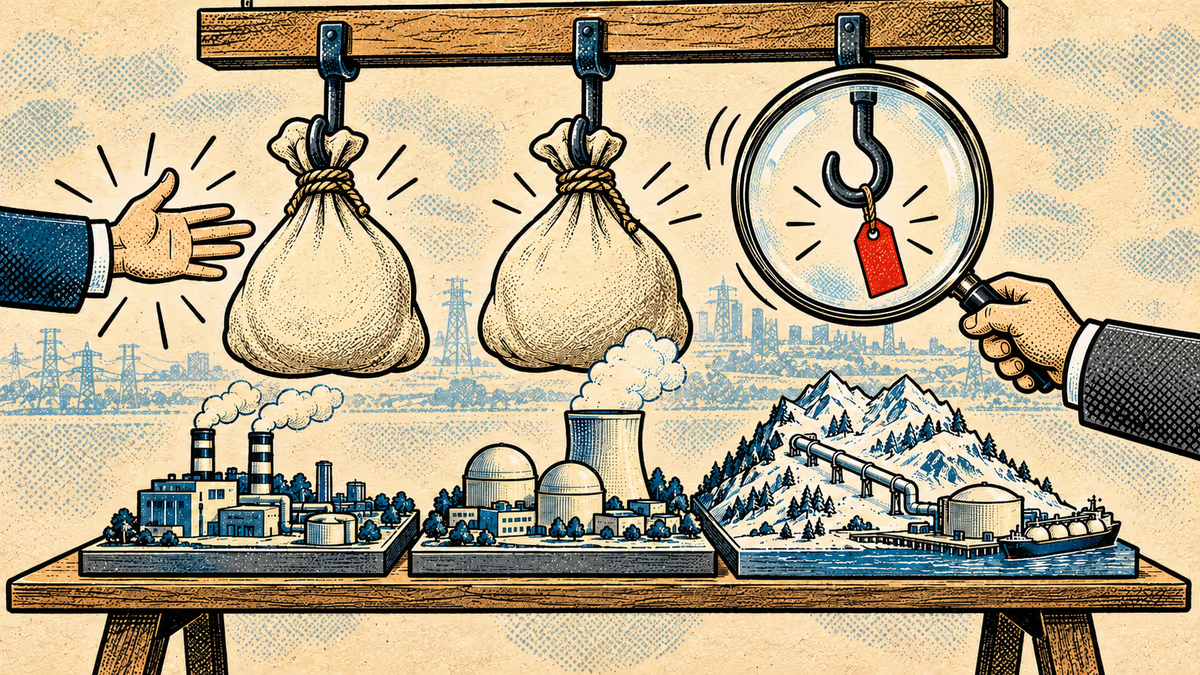
Trump said South Korea will invest up to $200 billion. The joint US-Korea fact sheet prices two projects, gas power and nuclear. Alaska LNG has no figure.
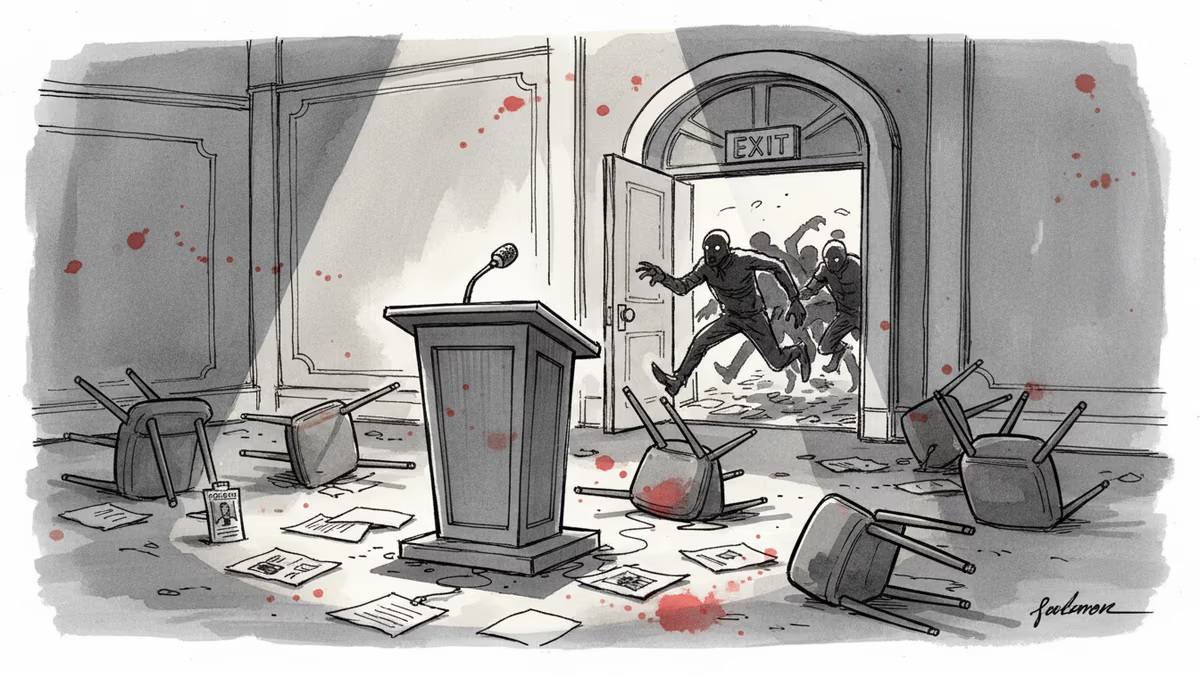
A gunman opened fire at a media event, forcing the evacuation of a president and entire cabinet. The motive is unknown. But the questions it raises go far beyond security.
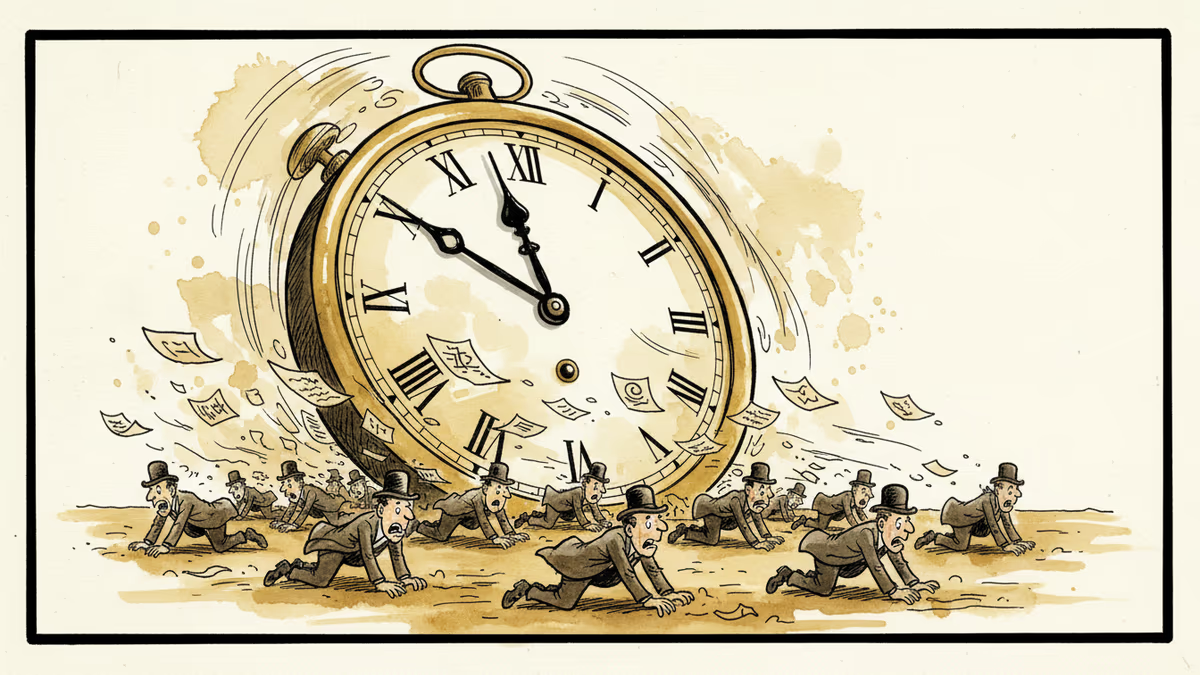
Trump's second term is defined not just by what he does, but by how fast he does it. What happens when a leader's time horizon shrinks to hours?
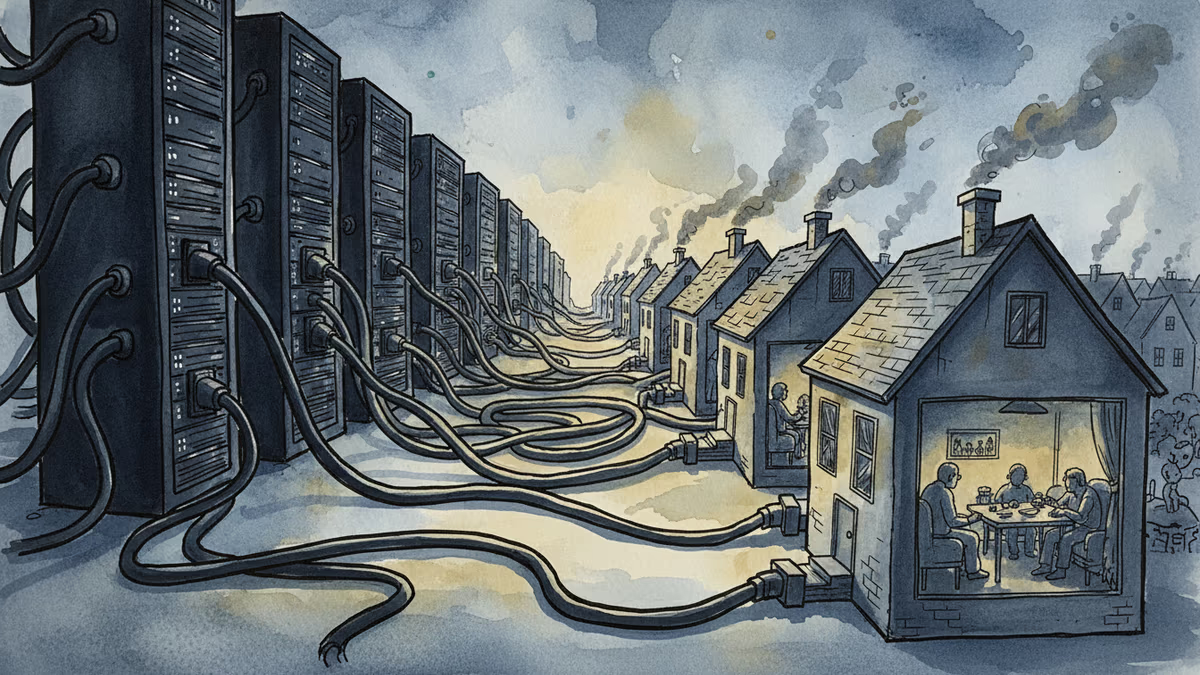
Trump gathered Big Tech CEOs to pledge self-powered data centers, but Americans already face 6% higher energy costs. As midterms approach, AI infrastructure becomes a political liability disguised as innovation.
Trump said South Korea will invest up to $200 billion. The joint US-Korea fact sheet prices two projects, gas power and nuclear. Alaska LNG has no figure.
A gunman opened fire at a media event, forcing the evacuation of a president and entire cabinet. The motive is unknown. But the questions it raises go far beyond security.
Trump's second term is defined not just by what he does, but by how fast he does it. What happens when a leader's time horizon shrinks to hours?
Trump gathered Big Tech CEOs to pledge self-powered data centers, but Americans already face 6% higher energy costs. As midterms approach, AI infrastructure becomes a political liability disguised as innovation.
Thoughts
Share your thoughts on this article
Sign in to join the conversation