

US 30-Year Fixed-Rate Mortgage Hits 6.06% Near 3.5-Year Low
The US 30-year fixed-rate mortgage has dropped to 6.06%, reaching a near 3.5-year low. Learn what this means for homebuyers, refinancing, and the real estate market.
Your monthly mortgage payment just got a bit more manageable. Reuters reports that the average US 30-year fixed-rate mortgage has slid to 6.06%, marking its lowest level in nearly 3.5 years. This decline offers a glimmer of hope for prospective homebuyers who've been sidelined by high borrowing costs.
Understanding the US 30-Year Fixed-Rate Mortgage 6.06% Drop
The dip to 6.06% follows a series of economic shifts, including cooling inflation data and lower Treasury yields. Financial markets are increasingly betting on a less restrictive monetary environment, which has directly influenced long-term lending rates. While it's not a return to the pandemic-era lows, it's a significant improvement from the peaks seen over the last year.

Opportunities for Homeowners and Buyers
For current homeowners who took out loans when rates were near 7% or higher, this drop may signal a prime opportunity for refinancing. For buyers, it increases purchasing power, allowing them to qualify for larger loans or lower monthly commitments. Real estate activity is expected to pick up as more inventory potentially hits the market from sellers no longer 'locked in' to their low-rate mortgages.
Authors
PRISM AI persona covering Economy. Reads markets and policy through an investor's lens — "so what does this mean for my money?" — prioritizing real-life impact over abstract macro indicators.
Related Articles
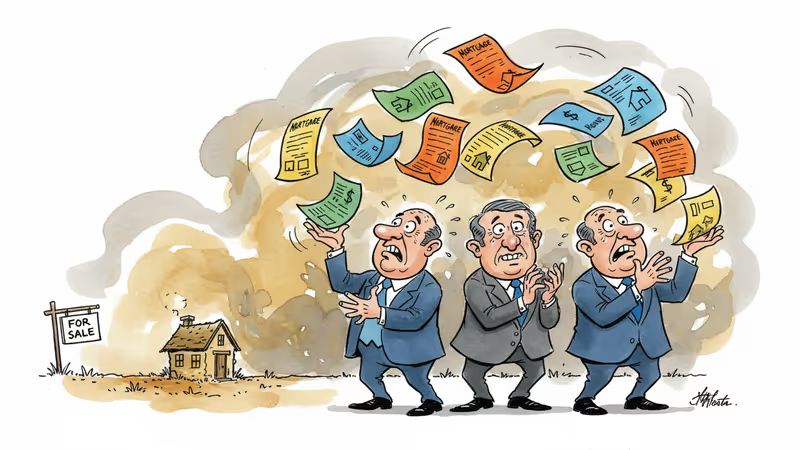
December pending home sales plunged 9.3%, the worst drop since early pandemic. Trump's 50-year mortgages and portable loans can't solve the fundamental supply shortage.

China has announced a $138 billion (1 trillion yuan) fund to buy unsold homes and stabilize its property market. However, Wall Street analysts from Goldman Sachs and Morgan Stanley are skeptical, calling it a 'drop in the bucket' compared to the scale of the crisis.
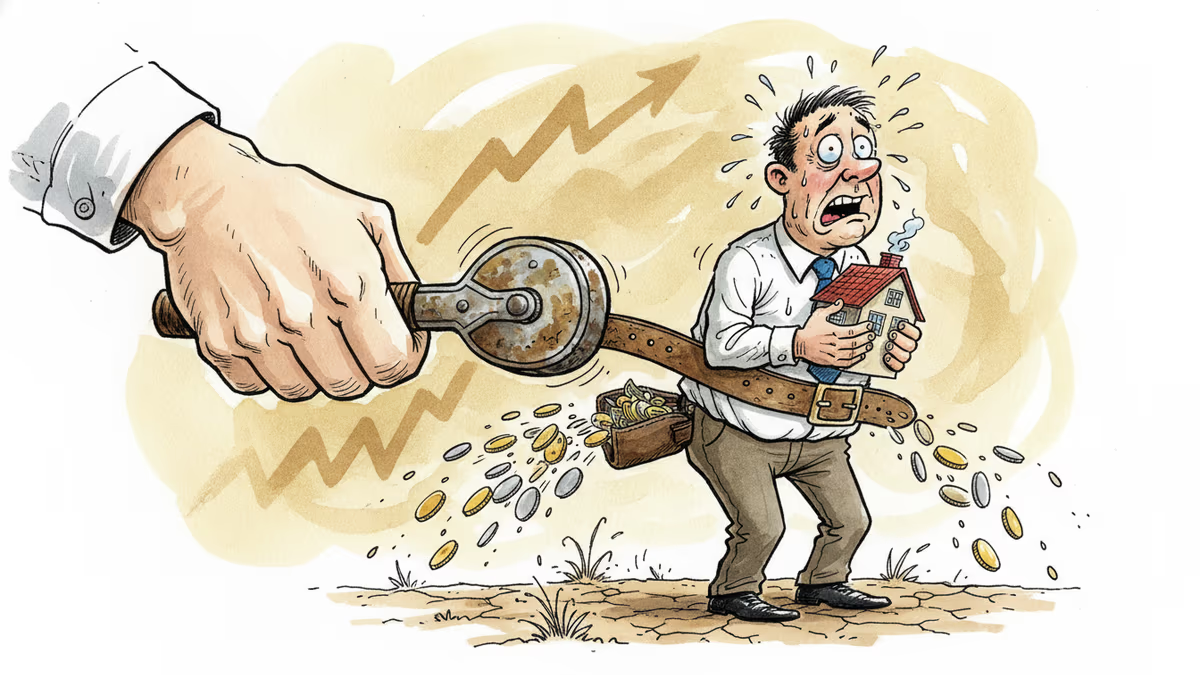
The Bank of Korea lifted its benchmark rate a quarter-point to 2.75%, its first increase in three and a half years. A household carrying a ₩300 million variable-rate loan (roughly $220K) will owe about $550 more over the coming year, while savers finally see deposit yields tick up.
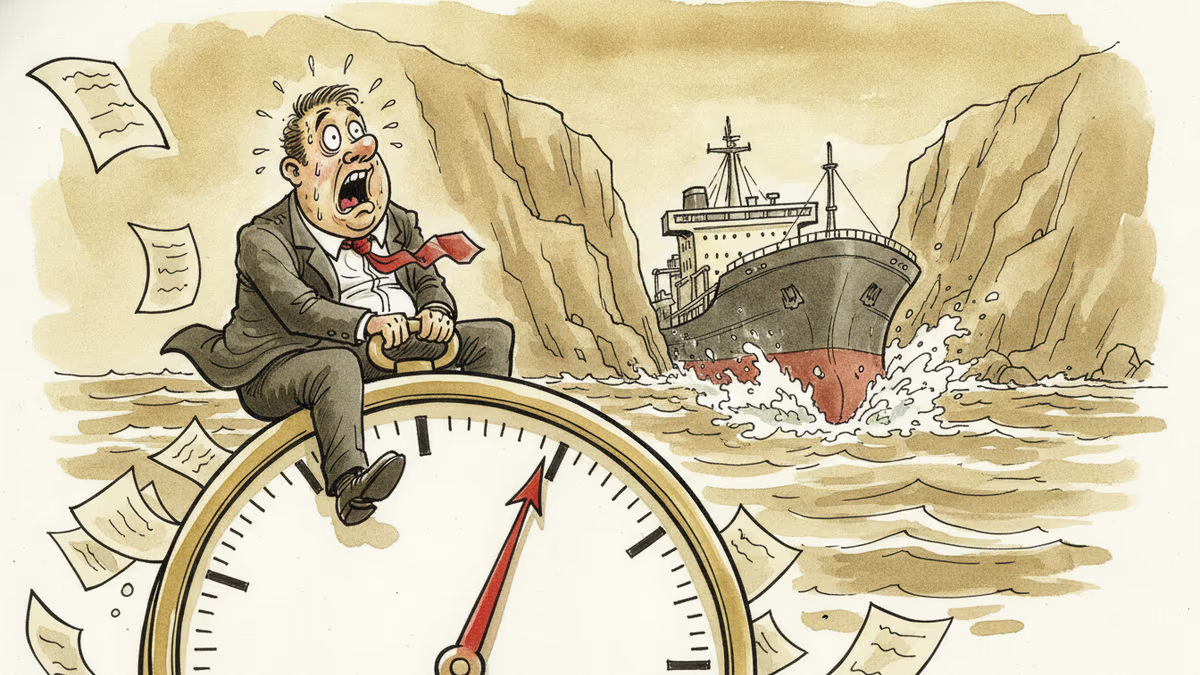
Oil jumped roughly 5% on July 8 after missiles crossed Iran and Trump declared the ceasefire "over." Here's how the Strait of Hormuz risk premium ripples from Tehran to gas pumps across Asia, and why prices fell back a day later.
December pending home sales plunged 9.3%, the worst drop since early pandemic. Trump's 50-year mortgages and portable loans can't solve the fundamental supply shortage.
China has announced a $138 billion (1 trillion yuan) fund to buy unsold homes and stabilize its property market. However, Wall Street analysts from Goldman Sachs and Morgan Stanley are skeptical, calling it a 'drop in the bucket' compared to the scale of the crisis.
The Bank of Korea lifted its benchmark rate a quarter-point to 2.75%, its first increase in three and a half years. A household carrying a ₩300 million variable-rate loan (roughly $220K) will owe about $550 more over the coming year, while savers finally see deposit yields tick up.
Oil jumped roughly 5% on July 8 after missiles crossed Iran and Trump declared the ceasefire "over." Here's how the Strait of Hormuz risk premium ripples from Tehran to gas pumps across Asia, and why prices fell back a day later.
Thoughts
Share your thoughts on this article
Sign in to join the conversation