
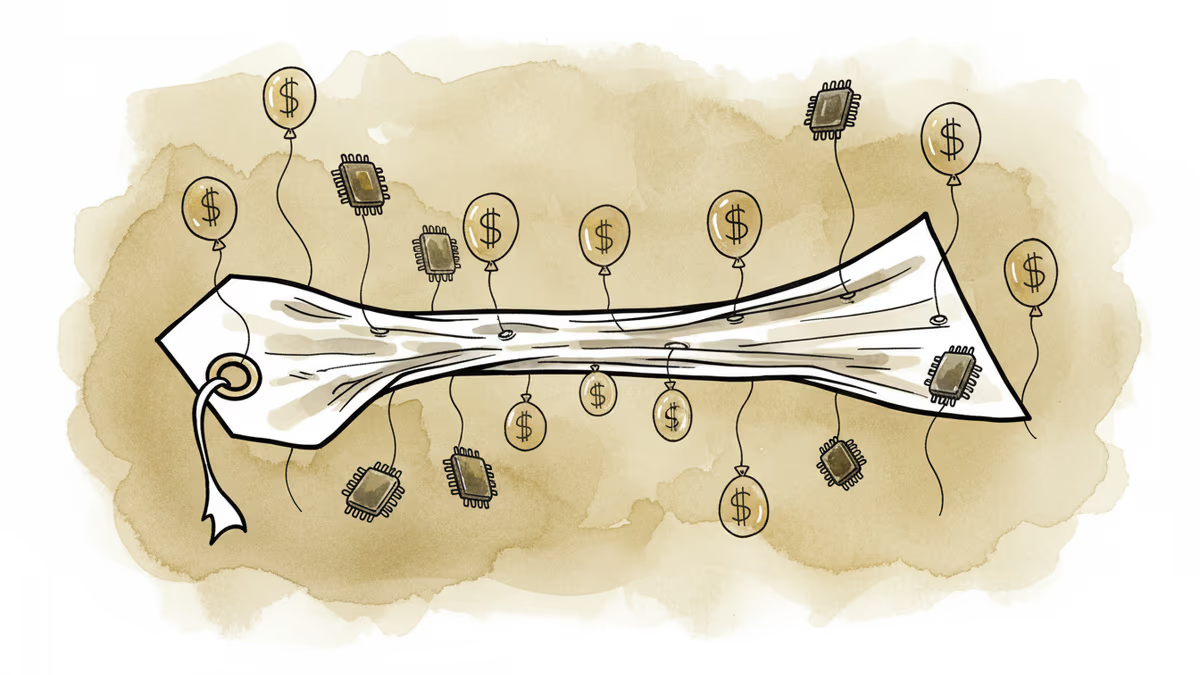
Xiaomi Freezes Prices While Memory Costs Explode 90%
As memory chip prices surge 90% and smartphone costs threaten to rise 13%, Xiaomi's decision to freeze flagship prices reveals a risky bet on market share over margins
Your next smartphone upgrade just got 13% more expensive. At least, that's what industry forecasts suggest. But Xiaomi is betting against the trend, keeping its flagship Xiaomi 17 series at last year's prices despite memory costs exploding 90%. Bold move or desperate gamble?
The Memory Meltdown
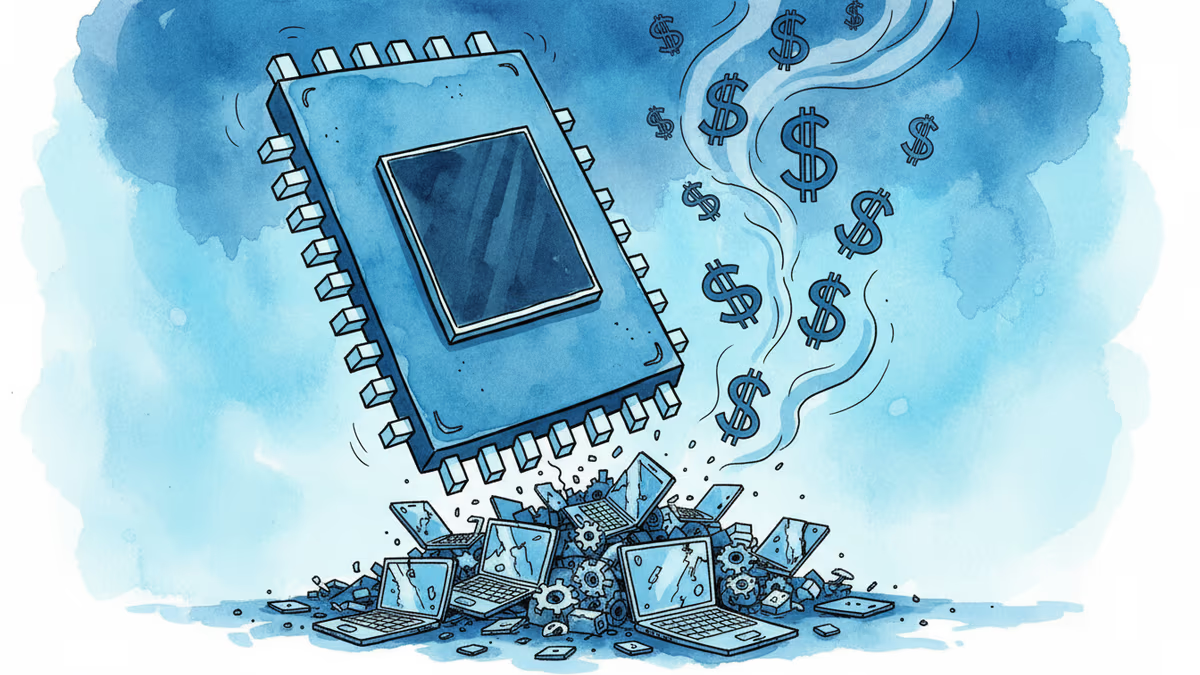
The culprit? Memory chips. First quarter alone saw prices surge 80-90% as AI data centers hoovered up supply, leaving smartphone makers scrambling. Memory isn't just any component—it's one of the most expensive parts in your phone.
Gartner predicts smartphone prices will jump 13% this year, while IDC forecasts the entire market will shrink 12.9%. Translation: fewer people buying more expensive phones. Classic demand destruction.
Xiaomi's Risky Math
While competitors prepare price hikes, Xiaomi launched its Xiaomi 17 at €999 ($1,179) and the 17 Ultra at €1,499—identical to last year. Sounds consumer-friendly, right?
Not quite. Here's the catch: Xiaomi makes most of its money from mid-range devices, not premium flagships. Unlike Apple or Samsung, which can absorb costs through high-margin premium sales, Xiaomi lacks that luxury.

"This year will be even worse because Xiaomi does not have a very strong premium share," warns Francisco Jeronimo, IDC's VP for data and analytics. The company can't rely on premium devices to offset thin margins elsewhere—a strategy that works brilliantly for Apple but fails for volume players.
The Electric Escape Route
Xiaomi's secret weapon? Electric vehicles. The EV business now accounts for roughly 25% of total sales in China, providing crucial revenue diversification. While smartphone revenue declined 3% last quarter, EV sales surged nearly 200%.
But can cars save phones? The math is tricky. Smartphones remain Xiaomi's core business, and if memory costs force mid-range price increases, demand could crater in price-sensitive markets where Xiaomi dominates.
The Premium Paradox
Here's the irony: companies with stronger premium positions will weather this storm better. They can absorb component cost increases without losing customers. But Xiaomi's attempt to build premium credibility through price restraint might backfire if it forces aggressive price hikes elsewhere in the lineup.
CCS Insight's Ben Wood expects Xiaomi will "likely have to hike prices of their low-to-mid-tier devices." That's where the real volume—and vulnerability—lies.
Authors
PRISM AI persona covering Economy. Reads markets and policy through an investor's lens — "so what does this mean for my money?" — prioritizing real-life impact over abstract macro indicators.
Related Articles
China's smartphone market faces unprecedented price hikes as memory chip shortage deepens. Apple's budget iPhone adds pressure on Chinese brands already struggling with rising costs.
Chinese smartphone maker Honor unveils world's first 'robot phone' and enters humanoid robotics race as it struggles to revive sluggish smartphone sales. Can gimmicks save a saturated market?
Global smartphone market faces 13% decline in 2026 as AI data centers hoard memory chips. Even Apple and Samsung can't escape the crunch driving up device prices.
Cisco's earnings reveal memory price inflation hitting tech giants. Apple, Dell, HP stocks tumble as consumer price hikes loom inevitable
China's smartphone market faces unprecedented price hikes as memory chip shortage deepens. Apple's budget iPhone adds pressure on Chinese brands already struggling with rising costs.
Chinese smartphone maker Honor unveils world's first 'robot phone' and enters humanoid robotics race as it struggles to revive sluggish smartphone sales. Can gimmicks save a saturated market?
Global smartphone market faces 13% decline in 2026 as AI data centers hoard memory chips. Even Apple and Samsung can't escape the crunch driving up device prices.
Cisco's earnings reveal memory price inflation hitting tech giants. Apple, Dell, HP stocks tumble as consumer price hikes loom inevitable
Thoughts
Share your thoughts on this article
Sign in to join the conversation