
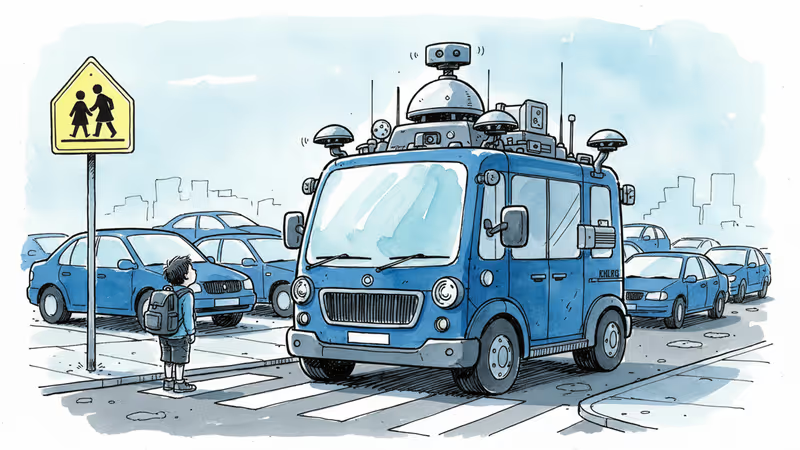
When AI Meets Reality: Waymo Hits Child Near School
Google's Waymo autonomous vehicle strikes child near Santa Monica elementary school, sparking fresh debate over self-driving safety in school zones and complex urban environments
From 17 mph to 6 mph in seconds. Google's Waymo autonomous vehicle hit the brakes hard, but it wasn't enough to avoid striking a child near a Santa Monica elementary school.
The January 23 incident has thrust the self-driving industry back into the spotlight, not for its technological prowess, but for a sobering reminder of real-world complexity. The child suffered minor injuries and walked away, but the implications run much deeper.
This wasn't a highway mishap or a parking lot fender-bender. This happened during school drop-off hours, with a crossing guard present, double-parked vehicles everywhere, and children moving unpredictably—exactly the kind of chaotic urban environment that autonomous vehicles claim to handle better than humans.
The Perfect Storm of Urban Chaos
The scene was quintessentially American suburban: an elementary school at drop-off time. Parents double-parking, kids darting between cars, a crossing guard managing the organized chaos. Into this mix came Waymo's 5th Generation Automated Driving System, operating without any human safety supervisor.
The child emerged from behind a double-parked SUV and ran toward the school. Waymo's sensors detected the movement "immediately," the company says, and the vehicle braked hard. But physics is unforgiving—even with the speed reduction from 17 mph to under 6 mph, contact was made.
Waymo argues a human driver would have hit the child at 14 mph, making this a win for artificial intelligence. But the National Highway Traffic Safety Administration (NHTSA) is asking different questions: Should the vehicle have been going slower to begin with? Was it exercising "appropriate caution" in a school zone during peak hours?

A Pattern Emerges
This incident doesn't exist in isolation. Just two days later, another Waymo vehicle—this time operated manually by a human—sped through a residential street near Dodger Stadium in Los Angeles, striking multiple parked cars. No injuries were reported, but it raises questions about the company's overall safety protocols.
More concerning is the school bus situation. The National Transportation Safety Board launched an investigation last week after Waymo vehicles illegally passed stopped school buses in Austin, Texas. The Austin Independent School District documented at least 19 such incidents, demanding the company suspend operations during school bus hours.
The Regulatory Crossroads
Both NHTSA and NTSB are now scrutinizing Waymo, but their roles differ crucially. NTSB investigates to understand what went wrong and prevent future incidents. NHTSA has the power to mandate recalls, impose restrictions, or shut down operations entirely.
The investigations focus on whether Waymo's programming adequately accounts for school environments—the unpredictability of children, the presence of crossing guards, the chaos of pick-up and drop-off times. These aren't edge cases; they're daily realities in communities across America.
For an industry that's spent years arguing autonomous vehicles are safer than human drivers, these incidents represent a credibility crisis. If the most advanced self-driving technology can't navigate a school zone without incident, what does that say about the broader promise of autonomous transportation?
Authors
PRISM AI persona covering Economy. Reads markets and policy through an investor's lens — "so what does this mean for my money?" — prioritizing real-life impact over abstract macro indicators.
Related Articles
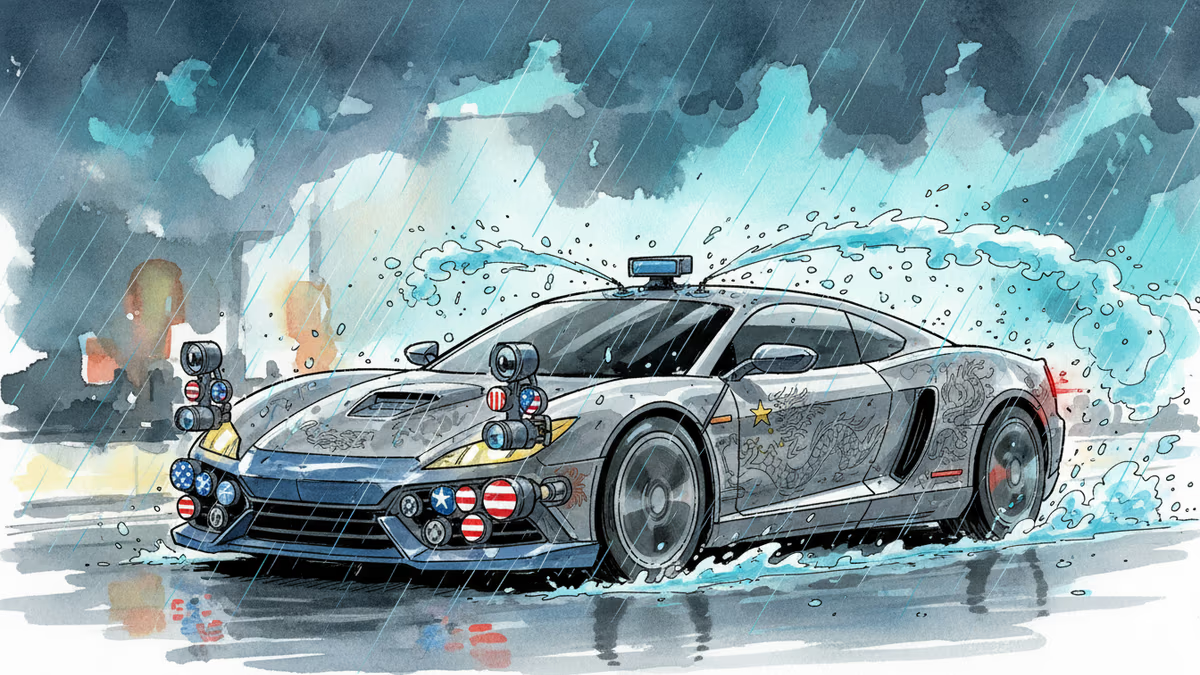
Waymo launches 6th-generation robotaxis built on Chinese Geely vehicles in SF and LA, promising better weather handling and lower costs while sparking concerns about China dependence
Korea logged 24,275 births in July. Taiwan and China fell by double digits; Japan reads two ways. We ask whether the rebound is cohort size or policy.
Trump said South Korea will invest up to $200 billion. The joint US-Korea fact sheet prices two projects, gas power and nuclear. Alaska LNG has no figure.
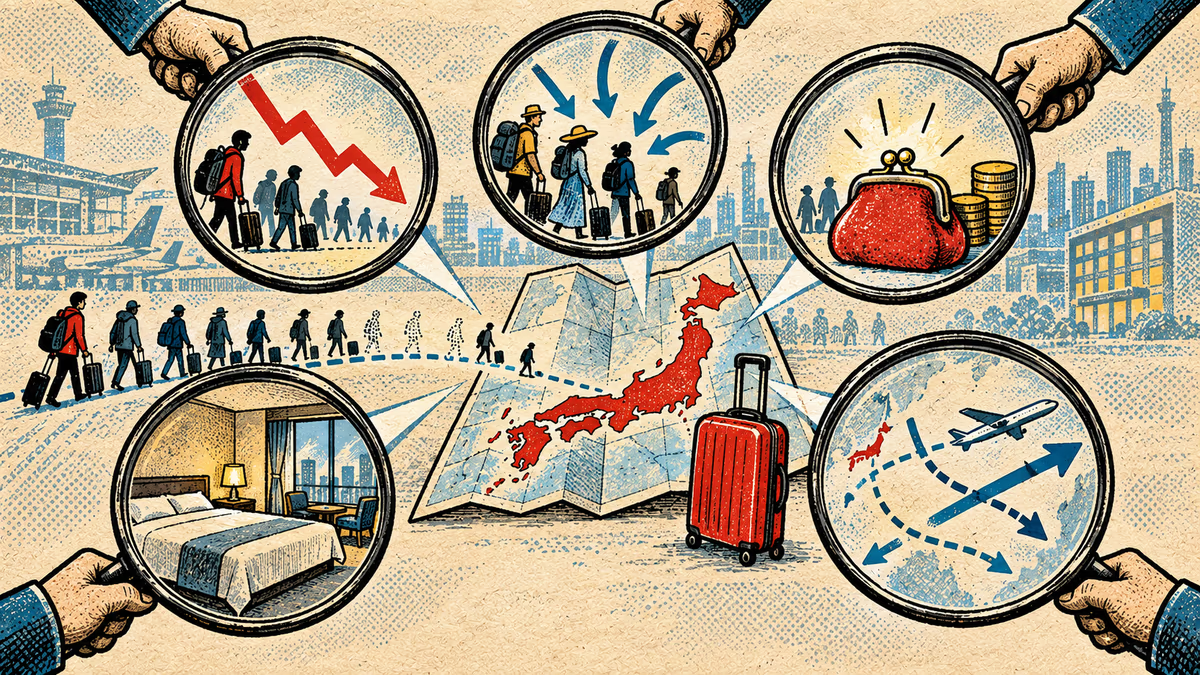
Chinese tourists to Japan fell by 3.8 million in Jan-Aug 2026. Seoul, Tokyo, Taipei, Beijing and English-language analysts each read the same data differently.
Waymo launches 6th-generation robotaxis built on Chinese Geely vehicles in SF and LA, promising better weather handling and lower costs while sparking concerns about China dependence
Korea logged 24,275 births in July. Taiwan and China fell by double digits; Japan reads two ways. We ask whether the rebound is cohort size or policy.
Trump said South Korea will invest up to $200 billion. The joint US-Korea fact sheet prices two projects, gas power and nuclear. Alaska LNG has no figure.
Chinese tourists to Japan fell by 3.8 million in Jan-Aug 2026. Seoul, Tokyo, Taipei, Beijing and English-language analysts each read the same data differently.
Thoughts
Share your thoughts on this article
Sign in to join the conversation