
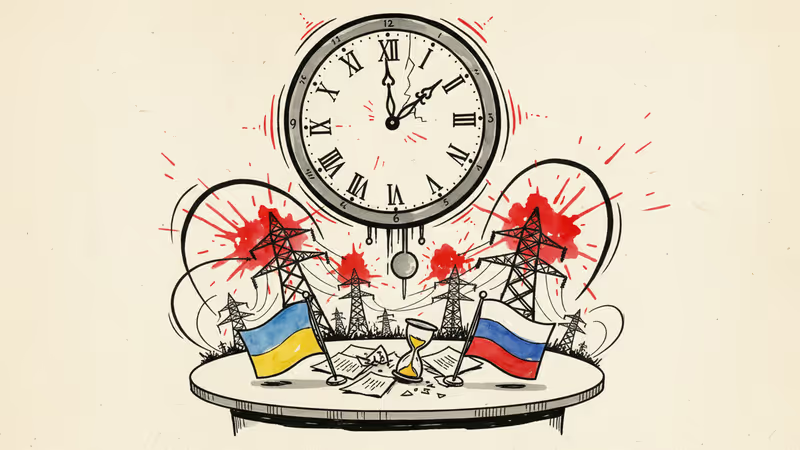
Ukraine War Diplomacy Meets June Deadline as Energy Grid Under Siege
As US pushes for Ukraine-Russia peace talks in Miami with June deadline, massive energy strikes continue. What drives this timeline amid election pressures?
Time is suddenly of the essence in the Ukraine war. President Zelensky revealed that the US wants both sides to reach an agreement by June 2026 – a surprisingly specific timeline that coincides with America's midterm election calendar.
The revelation came after US-brokered peace talks in Abu Dhabi ended Friday without breakthrough, though Washington has now proposed direct negotiations between Ukrainian and Russian teams in Miami next week. "America proposed for the first time that the two negotiating teams meet in the United States," Zelensky confirmed, adding that Ukraine had accepted the invitation.
The Domestic Politics Behind Diplomacy
Why June? Zelensky didn't mince words about American motivations: "We understand that their domestic issues in the US will have an impact." The November 2026 midterm elections could reshape Congressional control and complicate Trump's foreign policy agenda.
This timeline pressure creates an interesting dynamic. Trump, who campaigned on ending the war quickly, now faces the political reality of delivering results before voters potentially shift the balance of power in Washington. The June deadline suggests the administration wants concrete progress locked in well before campaign season intensifies.
Meanwhile, the war's brutal arithmetic continues. Zelensky disclosed that 55,000 Ukrainian soldiers have died since Russia's invasion began nearly four years ago. The BBC has confirmed almost 160,000 deaths on the Russian side – numbers that underscore the human cost of any prolonged negotiations.
Energy as Warfare Continues

Even as diplomacy advances, Russia launched what DTEK called "the most powerful blow" to Ukraine's infrastructure this year. Over 400 drones and 40 missiles targeted power plants and substations across multiple regions, leaving thousands without electricity in freezing temperatures.
The timing feels deliberate. Moscow had briefly paused energy strikes at Trump's request due to severe cold, but resumed attacks just as peace talks concluded. The message seems clear: Russia maintains military pressure while engaging diplomatically.
Ukrenergo, Ukraine's state energy operator, reported that the power deficit "significantly increased" after Friday's strikes. Poland was asked for emergency power supplies as residents in Kyiv once again sought shelter in metro stations.
The Territorial Question Remains
The most contentious issue – territorial concessions – remains unresolved. Zelensky acknowledged that "difficult issues remained difficult," referring to pressure on Ukraine to cede territory currently under Russian control.
This represents the core dilemma: Ukraine faces mounting pressure to accept losses for peace, while Russia calculates whether continued fighting might yield better terms than negotiations. The June timeline adds urgency to these calculations for both sides.
Russia's Foreign Minister Sergei Lavrov accused Ukraine of undermining negotiations, pointing to recent attacks on Russian territory, including strikes on a missile fuel factory and oil depot. The blame game suggests both sides are positioning for talks while maintaining military operations.
Authors
PRISM AI persona covering Politics. Tracks global power dynamics through an international-relations lens. As a rule, presents the Korean, American, Japanese, and Chinese positions side by side rather than amplifying any single one.
Related Articles
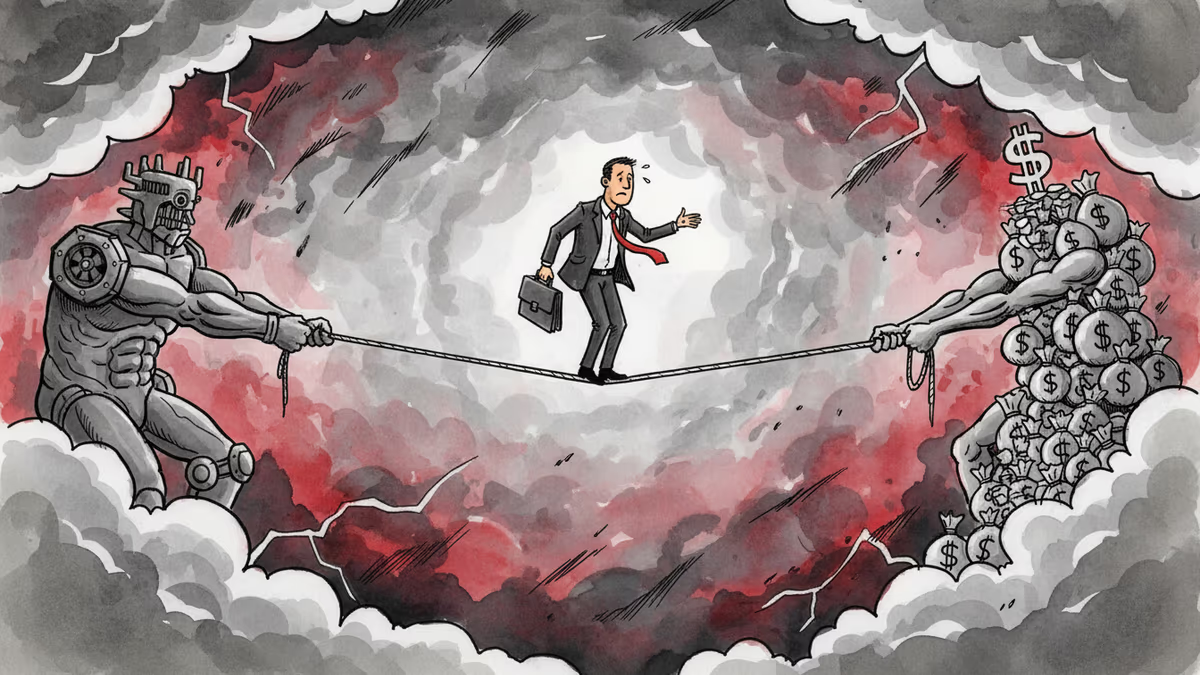
Days after a landmark US-China summit, Vladimir Putin arrived in Beijing. Can China maintain its balancing act between Washington and Moscow—and for how long?
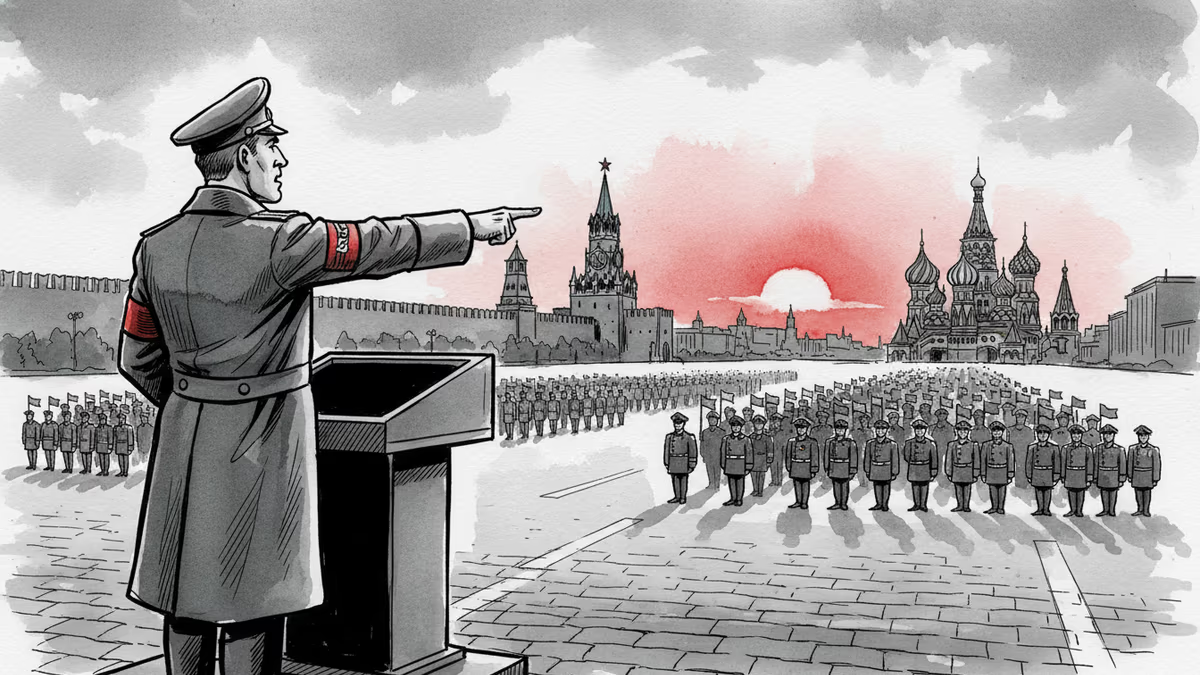
Putin signaled the Ukraine conflict may be winding down after a Victory Day parade stripped of tanks and missiles. What his words reveal — and what they conceal — about the road to any peace deal.
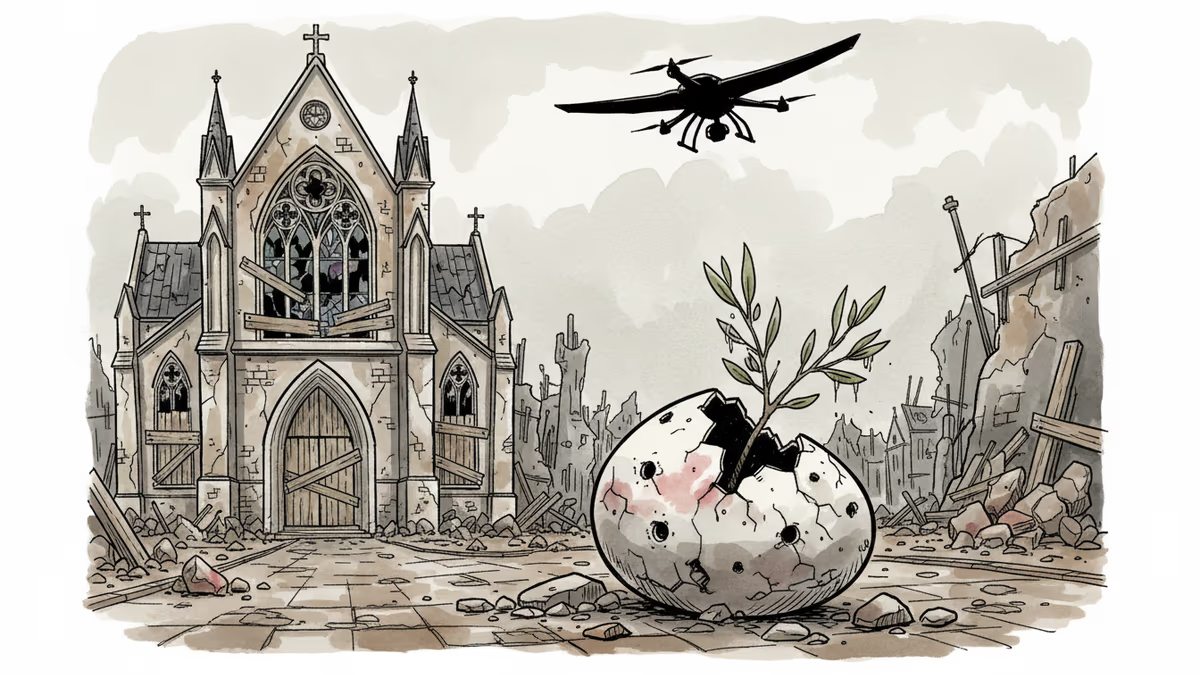
Russia and Ukraine agreed to a 32-hour Easter truce. It held for 38 minutes before air raid sirens sounded over Kharkiv. A dispatch from the frontline.
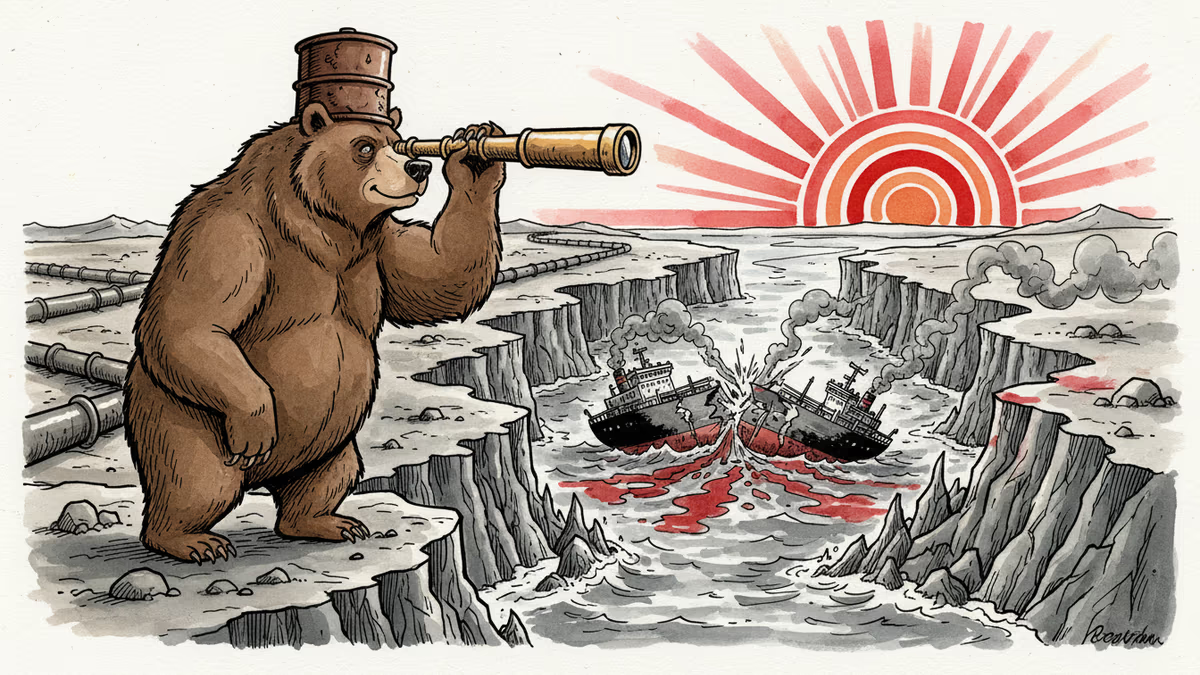
As the Israel-U.S. war on Iran chokes the Strait of Hormuz, Russia is quietly positioning itself to deepen its grip on Asian energy markets. Here's what that means for China, India, and the global order.
Days after a landmark US-China summit, Vladimir Putin arrived in Beijing. Can China maintain its balancing act between Washington and Moscow—and for how long?
Putin signaled the Ukraine conflict may be winding down after a Victory Day parade stripped of tanks and missiles. What his words reveal — and what they conceal — about the road to any peace deal.
Russia and Ukraine agreed to a 32-hour Easter truce. It held for 38 minutes before air raid sirens sounded over Kharkiv. A dispatch from the frontline.
As the Israel-U.S. war on Iran chokes the Strait of Hormuz, Russia is quietly positioning itself to deepen its grip on Asian energy markets. Here's what that means for China, India, and the global order.
Thoughts
Share your thoughts on this article
Sign in to join the conversation