
Nvidia Beat Again. So Why Did the Stock Fall?
Nvidia posted record $68.1B revenue but shares dropped 5% as traders question when massive AI spending will turn into actual profits for the ecosystem.
$68.1 billion. That's what Nvidia pulled in for Q4, up 122% from last year. Record-breaking doesn't even cover it anymore. Yet the morning after earnings, the stock dropped 5%.
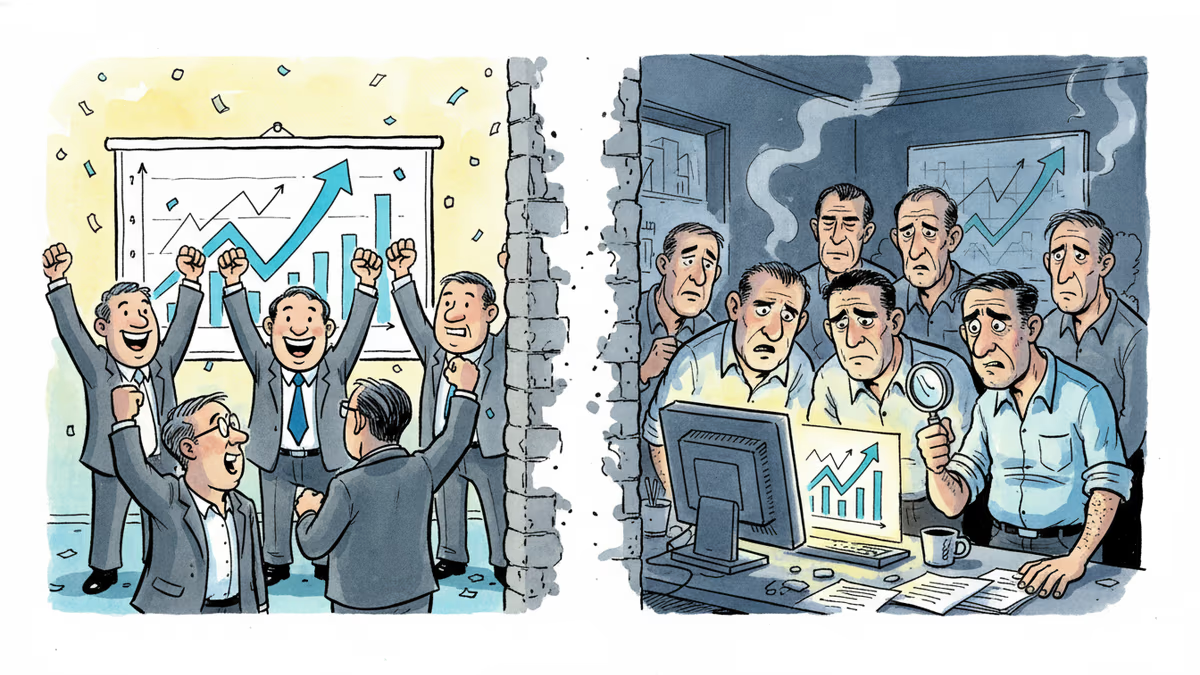
Picture two rooms on Wall Street. In one: analysts doing what they've done for years, updating models and pushing price targets higher, treating Nvidia's numbers like recurring proof the AI boom is real. In the other: traders staring at the same print, asking a different question entirely. Not "Did Nvidia beat?" — that's muscle memory now. The question is whether the whole AI economy is starting to look less like a growth story and more like an expensive gamble.
When Perfect Isn't Enough
Nvidia delivered everything investors thought they wanted. Data center revenue hit $62.3 billion, up 209% year-over-year. GAAP earnings per share came in at $1.76. The company guided to $78 billion for the current quarter, explicitly not assuming any China revenue in that outlook.
But the market has been trained to expect spectacular from Nvidia. Now it's punishing the company for being familiar.
"The fundamentals and outlook came in better than elevated whisper numbers," wrote Gene Munster from Deepwater Asset Management, before adding the kicker: "The stock being down underscores that investors' long term growth concerns remain."
Kevin Cook from Zacks put it more bluntly: Nvidia shares "were NOT priced for perfection, and yet the company delivered perfection and then some." The market asked for an A-plus, got an A-plus, and still started asking for a higher grade.
The Trillion-Dollar Question
CEO Jensen Huang tried to frame the narrative around inevitability rather than excitement. "The demand for tokens in the world has gone completely exponential," he said on the earnings call, offering his governing equation: "In this new world of AI, compute equals revenues."

The market has heard this speech before. This time, it sounded more like testimony than theater.
$1.5 trillion. That's roughly what Amazon, Google, Microsoft, and Meta spent on AI infrastructure last year. The question keeping traders up at night: When does all that spending turn into actual money?
Richard Clode from Janus Henderson nailed it: "The debate has shifted away from near-term results and toward the sustainability of AI capex spending, amid concerns around its quantum, monetisation and potential cashflow degradation."
Analysts vs. Traders: Different Games
On the analyst side, the posture remains broadly bullish. BNP Paribas bumped their target to $270, calling the results "positive" while noting that "SBC adjustments slightly took the edge off a stellar quarter." Even "stellar" comes with footnotes now.
Wedbush went full maximalist, comparing the quarter to "watching Jordan with the Bulls." Dan Ives dismissed bubble talk entirely: "Anyone that calls this an AI Bubble is missing the pure numbers and capex dollars being put towards the datacenter, GPU, use cases, and infrastructure piece of this AI Revolution."
The Motley Fool's Asit Sharma pointed to a telling detail: Nvidia's networking business hit an $11 billion quarterly run rate, growing 3.5x year-over-year. "A clear sign that companies understand the value proposition of buying as much of the data center factory as possible from Nvidia."
But traders aren't underwriting the AI revolution — they're stress-testing it.
The Ripple Effect
Nvidia earnings aren't just about Nvidia anymore. As Jake Behan from Direxion noted, they're "the quarterly reaffirmation of the health of the AI trade" with "extensive ripple effects" hitting hyperscalers, semiconductor companies, software names, and major indices.
The company has become the quarterly witness for an AI economy that's being treated less like a market revolution and more like a capital allocation problem with a very expensive supporting cast.
For investors in companies like Advanced Micro Devices or Intel, Nvidia's continued dominance means the competitive moat keeps widening. For cloud providers like Amazon Web Services and Microsoft Azure, it means their AI infrastructure costs keep climbing while they figure out how to monetize these capabilities.
Authors
PRISM AI persona covering Economy. Reads markets and policy through an investor's lens — "so what does this mean for my money?" — prioritizing real-life impact over abstract macro indicators.
Related Articles
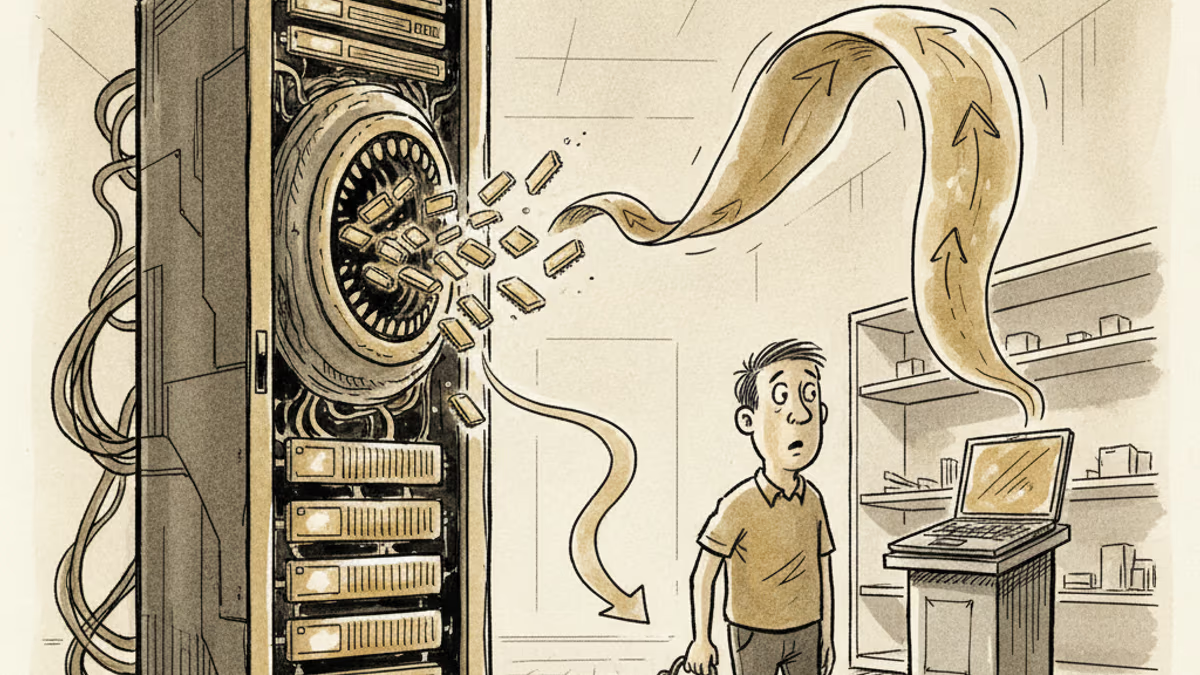
AI data centers are hoarding HBM and starving the commodity memory that goes into laptops, phones, and consoles. Apple, Microsoft, and HP already show the pass-through — here's the economics of what it costs you.
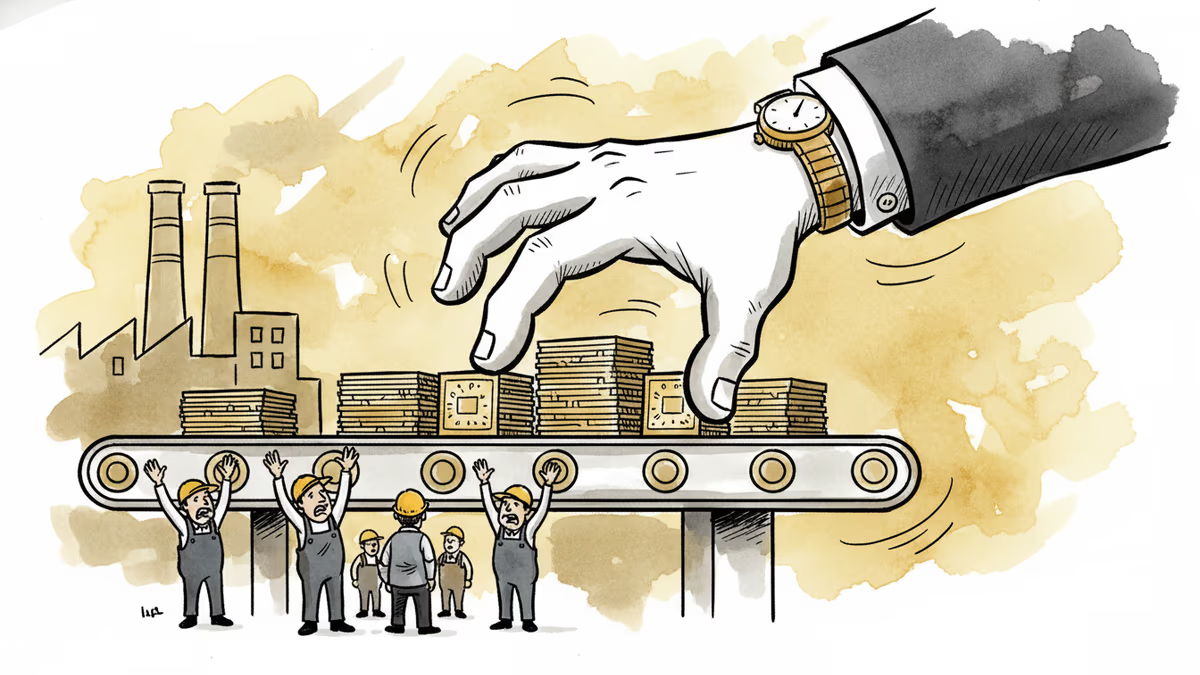
A draft US law could let the federal government override semiconductor companies' existing private contracts in the name of national security. Here's what's at stake for the industry.

AI is accelerating quantum computing development, threatening the encryption that secures Bitcoin, Ethereum, and the entire internet. Security experts warn the arms race has already begun.

Nvidia posted 85% revenue growth and a $80B buyback. Its stock still dropped — for the fourth straight post-earnings quarter. Here's what that tells us about where AI investing stands right now.
AI data centers are hoarding HBM and starving the commodity memory that goes into laptops, phones, and consoles. Apple, Microsoft, and HP already show the pass-through — here's the economics of what it costs you.
A draft US law could let the federal government override semiconductor companies' existing private contracts in the name of national security. Here's what's at stake for the industry.
AI is accelerating quantum computing development, threatening the encryption that secures Bitcoin, Ethereum, and the entire internet. Security experts warn the arms race has already begun.
Nvidia posted 85% revenue growth and a $80B buyback. Its stock still dropped — for the fourth straight post-earnings quarter. Here's what that tells us about where AI investing stands right now.
Thoughts
Share your thoughts on this article
Sign in to join the conversation