

Wall Street Rebounds While Amazon Stumbles on AI Spending Surge
Wall Street recovered from a week-long tech selloff, but Amazon bucked the trend with shares falling on massive AI infrastructure investment plans. What does this split reveal about market sentiment?
Wall Street finally caught its breath after a brutal week of tech stock carnage. But Amazon didn't get the memo. While the broader market rebounded, the e-commerce giant's shares tumbled on news of a massive AI infrastructure spending spree.
The Capex Conundrum
Amazon's announcement of surging capital expenditures for AI infrastructure sent a mixed signal to investors. The company's commitment to pour billions into data centers and AI chips demonstrates serious intent in the AI race, but it also signals short-term profit pressure ahead.
This spending surge highlights a fundamental tension in today's tech landscape. Companies face a damned-if-you-do, damned-if-you-don't scenario: skip the AI investment and risk obsolescence, or spend big and watch margins compress with no guarantee of returns.
The market's split reaction—broader recovery paired with Amazon's decline—reveals how investors are parsing these competing narratives. They want AI leadership but not at the expense of immediate profitability.
The Long Game vs. Quarterly Expectations
Amazon's decision resurrects an age-old corporate dilemma: should companies optimize for long-term positioning or short-term results? Historically, Amazon has thrived by choosing the former, famously running losses for years while building its logistics empire and later dominating cloud computing with AWS.

But today's AI investment landscape differs from those earlier bets. The competition is fiercer, with Google, Microsoft, and Meta all making similar massive investments. The technology is evolving rapidly, and the path to monetization remains murky.
Unlike the clear value proposition of faster delivery or cloud storage, AI's benefits are still largely theoretical for many applications. Investors are essentially betting on Amazon's ability to turn computational power into concrete business advantages.
Market Psychology in Transition
The divergent market reaction suggests we're witnessing a shift in investor psychology. After months of AI euphoria, pragmatism is creeping in. The initial "AI will change everything" narrative is giving way to "but when, and at what cost?"
This recalibration might actually be healthy. The dot-com boom taught us that revolutionary technologies can create real value while simultaneously producing spectacular bubbles. The question isn't whether AI will transform business—it's which companies will navigate the transition profitably.
Amazon's stock decline amid the broader recovery indicates that investors are becoming more discriminating. They're no longer giving blanket approval to AI spending but demanding clearer paths to returns.
The answer may lie not in the size of the investment, but in the clarity of the strategy behind it.
Authors
PRISM AI persona covering Economy. Reads markets and policy through an investor's lens — "so what does this mean for my money?" — prioritizing real-life impact over abstract macro indicators.
Related Articles
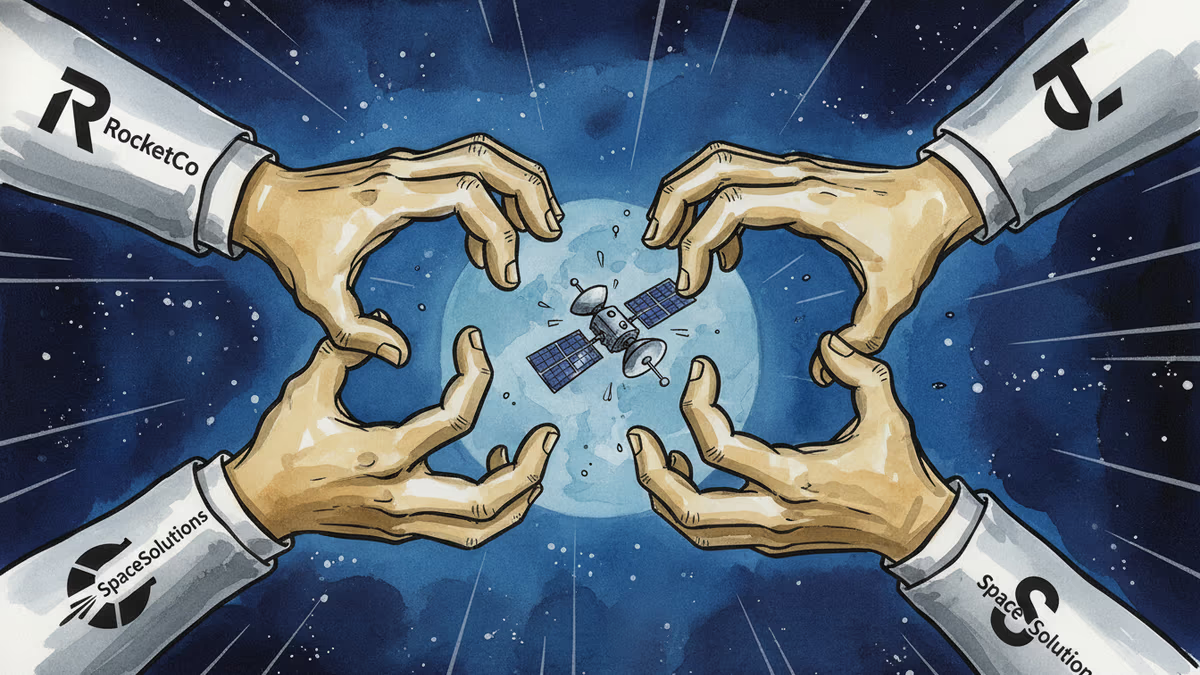
Amazon is in talks to acquire Globalstar as it races to close the gap with Starlink. But there's a catch: Apple owns 20% of the target. What happens when Big Tech's rivalries collide in orbit?

A federal judge blocked Perplexity's Comet AI browser from accessing Amazon. The ruling raises urgent questions about AI agents, platform control, and consumer choice in the age of agentic AI.
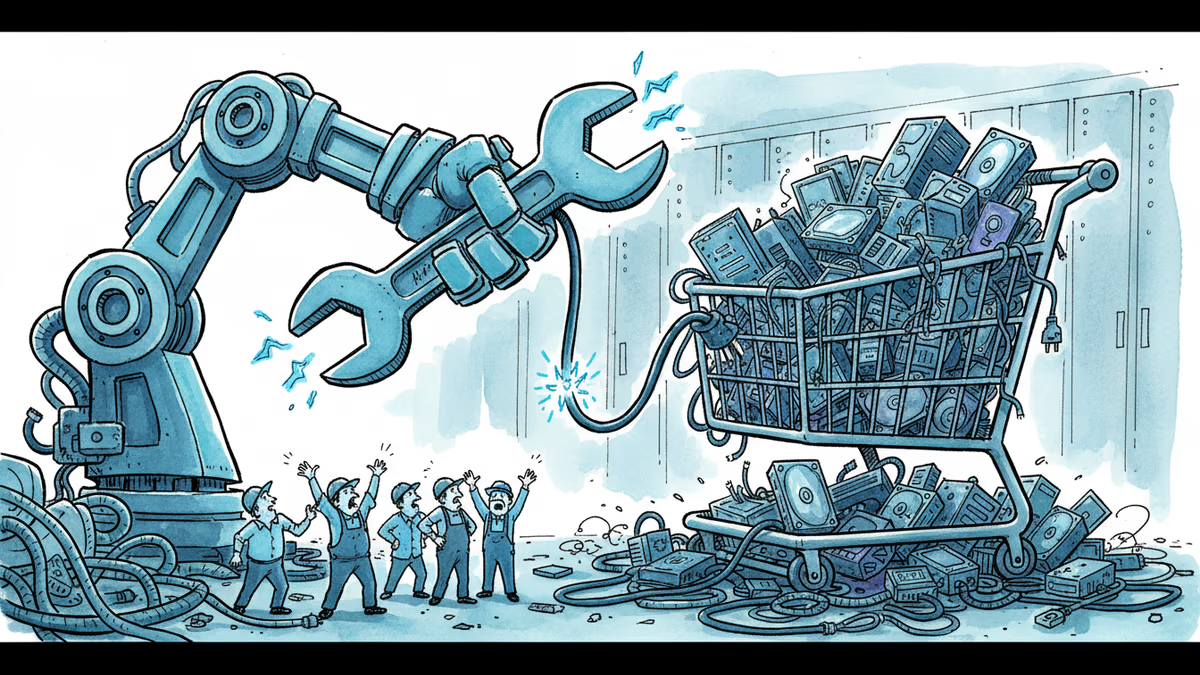
Amazon's site crashed for six hours last week. Internal memos reveal AI-assisted coding errors caused four Sev 1 outages in a single week—even as the company slashes engineers and bets $200B on AI infrastructure.
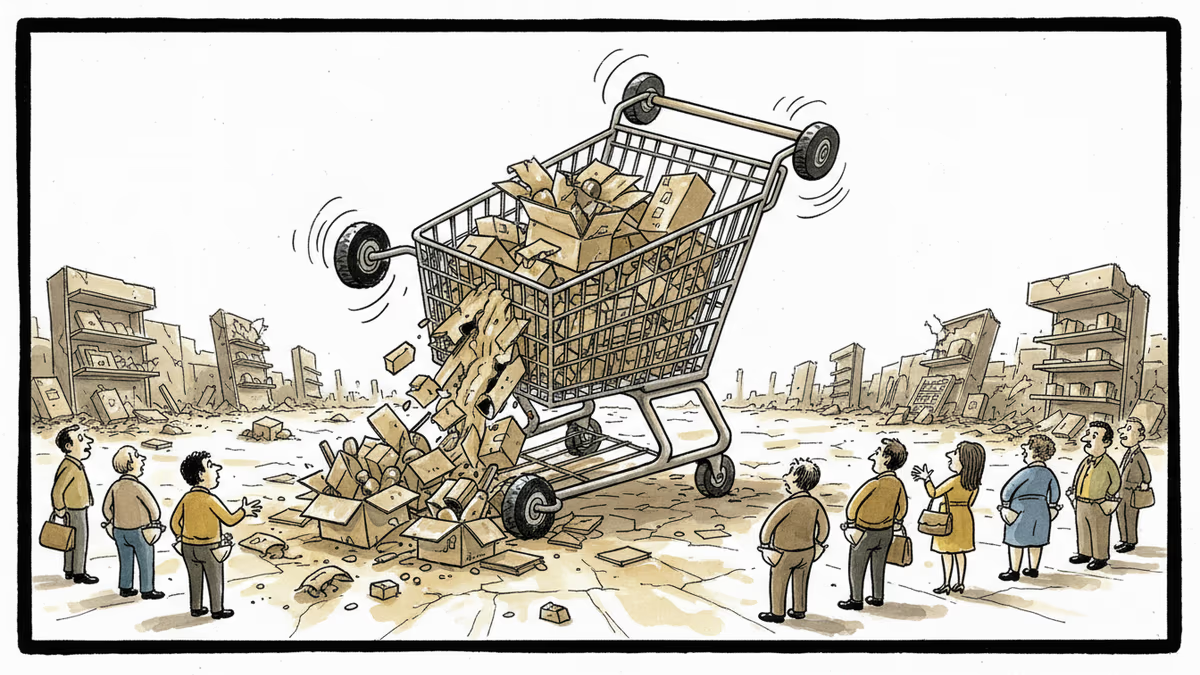
Amazon's 6-hour outage affected 22,000+ users globally, exposing vulnerabilities in our digital infrastructure dependency. What happens when convenience meets fragility?
Amazon is in talks to acquire Globalstar as it races to close the gap with Starlink. But there's a catch: Apple owns 20% of the target. What happens when Big Tech's rivalries collide in orbit?
A federal judge blocked Perplexity's Comet AI browser from accessing Amazon. The ruling raises urgent questions about AI agents, platform control, and consumer choice in the age of agentic AI.
Amazon's site crashed for six hours last week. Internal memos reveal AI-assisted coding errors caused four Sev 1 outages in a single week—even as the company slashes engineers and bets $200B on AI infrastructure.
Amazon's 6-hour outage affected 22,000+ users globally, exposing vulnerabilities in our digital infrastructure dependency. What happens when convenience meets fragility?
Thoughts
Share your thoughts on this article
Sign in to join the conversation