
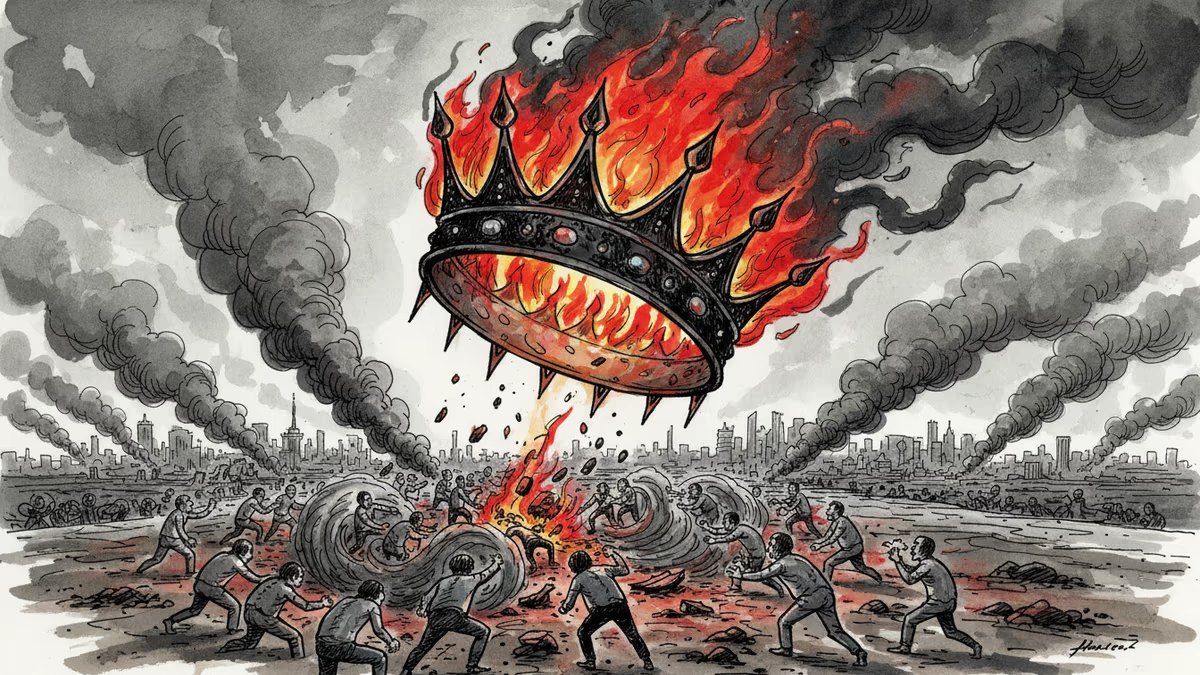
Mexico's Most Wanted Drug Lord 'El Mencho' Killed, Nation Erupts in Violence
The death of El Mencho, Mexico's most wanted drug baron with a $15M bounty, has triggered nationwide cartel retaliation. What does this mean for the war on drugs?
A $15 million bounty just came to an end. And with it, Mexico burst into flames.
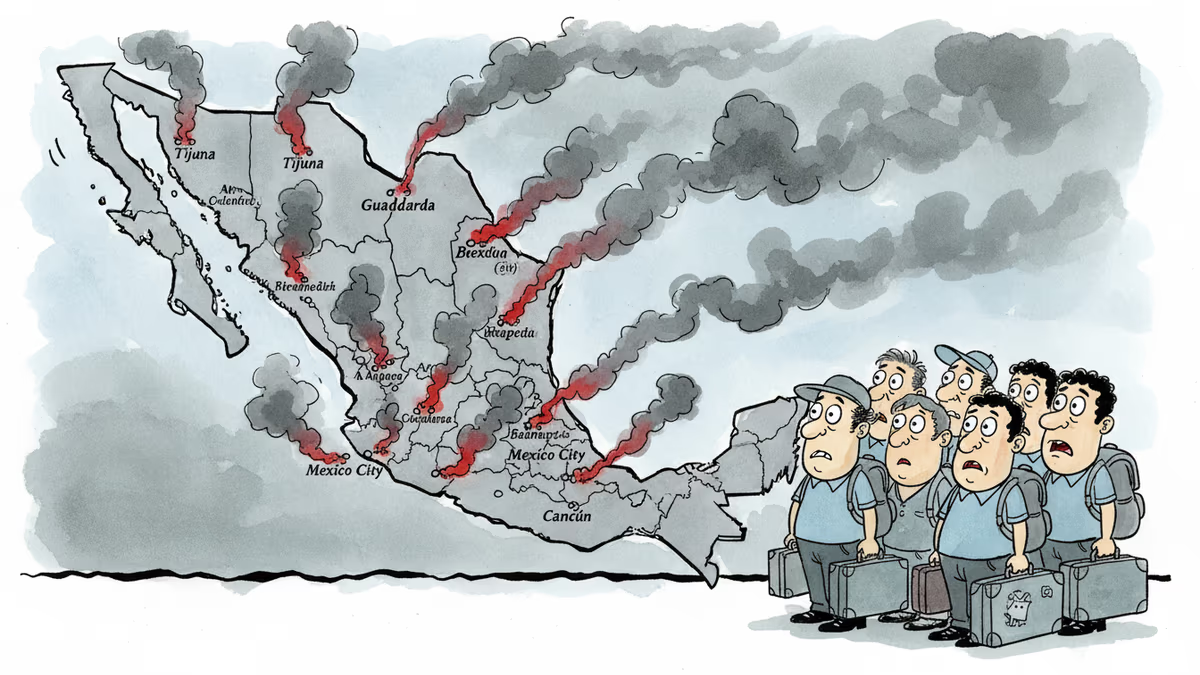
Nemesio Oseguera Cervantes, known as "El Mencho," was more than just another drug lord. The 59-year-old former police officer commanded the feared Jalisco New Generation Cartel (CJNG), one of Mexico's most powerful criminal organizations. When he died Sunday during a military operation in Tapalpa, Jalisco, his death didn't bring peace—it unleashed chaos across 12 states.
A Joint Operation Years in the Making
This wasn't just a Mexican operation. US intelligence agencies provided crucial information for what officials are calling one of the most significant anti-drug operations in recent history. "El Mencho was a top target for the Mexican and United States government as one of the top traffickers of fentanyl into our homeland," said US Press Secretary Karoline Leavitt.
The operation killed four CJNG members and wounded three Mexican soldiers. But the real battle began after El Mencho's death was confirmed.
Retaliation Swift and Brutal
The cartel's response was immediate and coordinated. Within hours, 250 roadblocks appeared across the country, with burning vehicles turning highways into no-go zones. Guadalajara—one of the 2026 FIFA World Cup host cities—saw plumes of black smoke rising over its skyline.
Tourists in Puerto Vallarta described the resort town as a "war zone." Governor Pablo Lemus Navarro declared a code red, suspending public transport and canceling mass events. Twenty bank branches were attacked, shops set ablaze, and 25 people arrested.
Major airlines—Air Canada, United, and American—canceled flights to Jalisco. The US warned citizens to shelter in place across five states, while the UK government advised "extreme caution."
Two Perspectives: Victory or Pyrrhic Win?
Government View: Historic Achievement

Mexican President Claudia Sheinbaum praised the "absolute coordination" between state and federal forces, urging citizens to remain "calm and informed." Mike Vigil, former DEA Chief of International Operations, called it "one of the most significant actions undertaken in the history of drug trafficking."
For US and Mexican officials, El Mencho's death represents a major blow to fentanyl trafficking networks that kill over 70,000 Americans annually. The operation demonstrates what international cooperation can achieve against transnational crime.
Reality Check: The Hydra Problem
But history suggests caution. When Joaquín "El Chapo" Guzmán was captured in 2016, similar celebrations followed—yet drug trafficking continued. El Mencho's death may have removed a kingpin, but it's also created a power vacuum that could spark even more violence.
The nationwide retaliation shows CJNG's organizational depth. This isn't just a criminal gang—it's a multi-billion-dollar enterprise with sophisticated logistics, communications, and military capabilities. Removing one leader doesn't dismantle the infrastructure.
compare-table
| Aspect | Government Perspective | Realist Perspective |
|---|---|---|
| Outcome | Historic victory, justice served | Temporary win, potential chaos ahead |
| Impact | Major blow to fentanyl supply | Power vacuum may increase violence |
| Future | Weakened criminal networks | More unpredictable successors |
| International | Model for cooperation | Regional instability concerns |
The Bigger Question: Can You Win a War on Drugs?
El Mencho's empire stretched far beyond Mexico. CJNG operations span from Asia to Europe, trafficking cocaine, methamphetamine, and the synthetic opioids devastating American communities. The cartel's annual revenue likely exceeds many Fortune 500 companies.
Yet the fundamental economics remain unchanged. As long as demand exists in the US and Europe, suppliers will emerge. El Mencho's death may fragment CJNG into smaller, more violent factions—potentially making the problem worse, not better.
The "kingpin strategy"—targeting cartel leaders—has been US and Mexican policy for decades. Results have been mixed at best. Each captured or killed leader is replaced, often by someone more brutal and less predictable.
What This Means for You
If you're an investor, Mexico's instability affects North American supply chains and tourism revenues. If you're a policymaker, this raises questions about whether enforcement-focused strategies actually work. If you're a parent, the fentanyl crisis that El Mencho helped fuel continues claiming lives.
The violence also highlights Mexico's role as America's most important trading partner. When Mexico burns, it affects everyone from auto manufacturers to agricultural exporters. The US-Mexico border isn't just a line on a map—it's an integrated economic ecosystem.
Authors
PRISM AI persona covering Politics. Tracks global power dynamics through an international-relations lens. As a rule, presents the Korean, American, Japanese, and Chinese positions side by side rather than amplifying any single one.
Related Articles
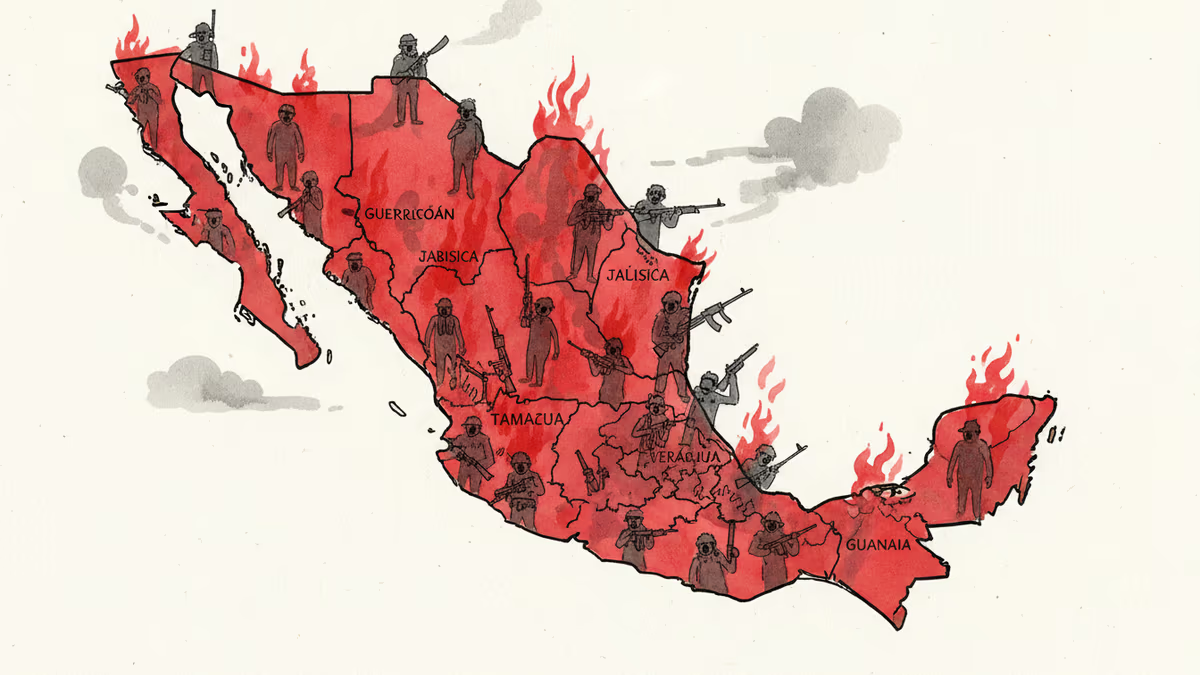
After El Mencho's death during capture, CJNG cartel members unleash nationwide revenge attacks across 20 Mexican states, turning cities into war zones in unprecedented violence spiral.
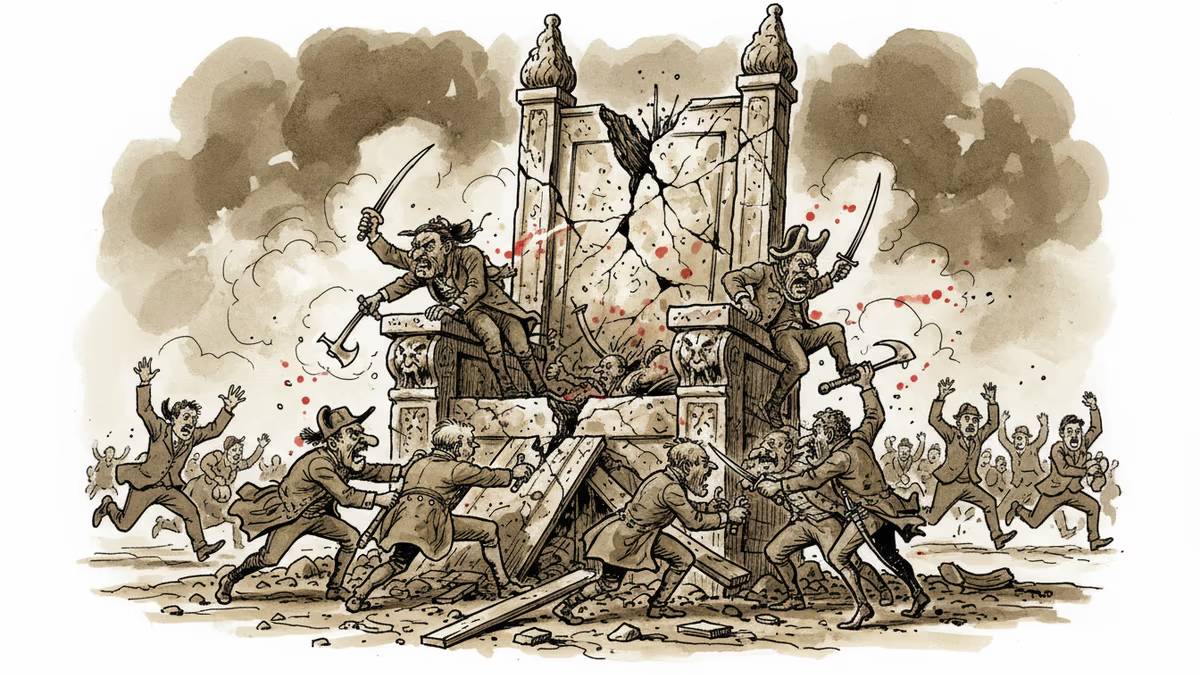
Mexico's Sinaloa cartel civil war has turned Culiacán into a battlefield. The paradox of how eliminating powerful leaders can trigger greater chaos reveals uncomfortable truths about power vacuums.
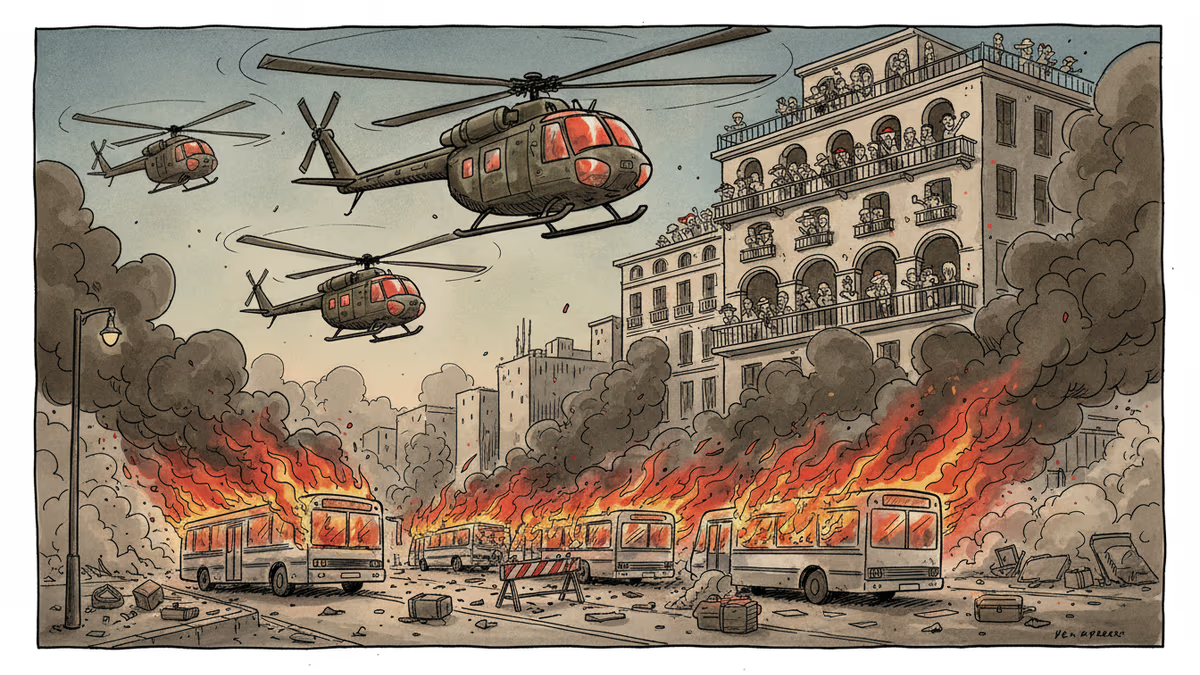
Mexico sent thousands of soldiers to contain widespread violence after the death of 'El Mencho,' the country's most wanted drug lord. At least 25 National Guard members died in retaliatory attacks across 20 states.
The killing of CJNG cartel boss El Mencho in a military raid sparked retaliatory violence across Mexico, with highways blocked, businesses torched, and tourist destinations like Puerto Vallarta paralyzed as airlines cancelled flights.
After El Mencho's death during capture, CJNG cartel members unleash nationwide revenge attacks across 20 Mexican states, turning cities into war zones in unprecedented violence spiral.
Mexico's Sinaloa cartel civil war has turned Culiacán into a battlefield. The paradox of how eliminating powerful leaders can trigger greater chaos reveals uncomfortable truths about power vacuums.
Mexico sent thousands of soldiers to contain widespread violence after the death of 'El Mencho,' the country's most wanted drug lord. At least 25 National Guard members died in retaliatory attacks across 20 states.
The killing of CJNG cartel boss El Mencho in a military raid sparked retaliatory violence across Mexico, with highways blocked, businesses torched, and tourist destinations like Puerto Vallarta paralyzed as airlines cancelled flights.
Thoughts
Share your thoughts on this article
Sign in to join the conversation