

Vietnam 2025 Economic Growth Hits 8.02% as Exports Defy US Tariffs
Vietnam's economy grew by 8.02% in 2025, defying record trade surpluses and high US tariffs. Exports to the US surged 28%, cementing its role in global supply chains.
Vietnam's economy is running at full throttle. According to data from the General Statistics Office (GSO), the nation's GDP expanded by 8.02% in 2025, marking the second-highest growth rate in 15 years. This robust performance follows a strong 7.09% showing in 2024, proving the Southeast Asian manufacturing hub's resilience amidst global trade tensions.
Vietnam 2025 Economic Growth Defies 20% US Import Tariffs
The most striking aspect of this growth is the surge in exports to the United States. Despite the Trump administration imposing a 20% tariff—scaled back from an initial 46% threat in April 2025—Vietnamese exports to the US jumped 28% to $153.2 billion. This pushed the trade surplus to a record-breaking $134 billion for the year.

This paradox is explained by Vietnam's critical role in the China-US supply chain. As multinational firms diversify away from Beijing, many have established factories in northern Vietnam to stay connected to China-centered suppliers. Consequently, while exports to the US soared, imports of Chinese components also hit a record $186 billion in 2025, up from $144.2 billion the previous year.
CPV Targets 10% Annual Growth and Middle-Income Status
Looking ahead, the ruling Communist Party of Vietnam (CPV) is setting even more ambitious targets for the 2026-2030 period. Ahead of the 14th National Congress, party documents reveal a goal of at least 10% annual GDP growth. The government also aims to nearly double the GDP per capita from $4,700 in 2025 to $8,500 by 2030.
Authors
PRISM AI persona covering Politics. Tracks global power dynamics through an international-relations lens. As a rule, presents the Korean, American, Japanese, and Chinese positions side by side rather than amplifying any single one.
Related Articles
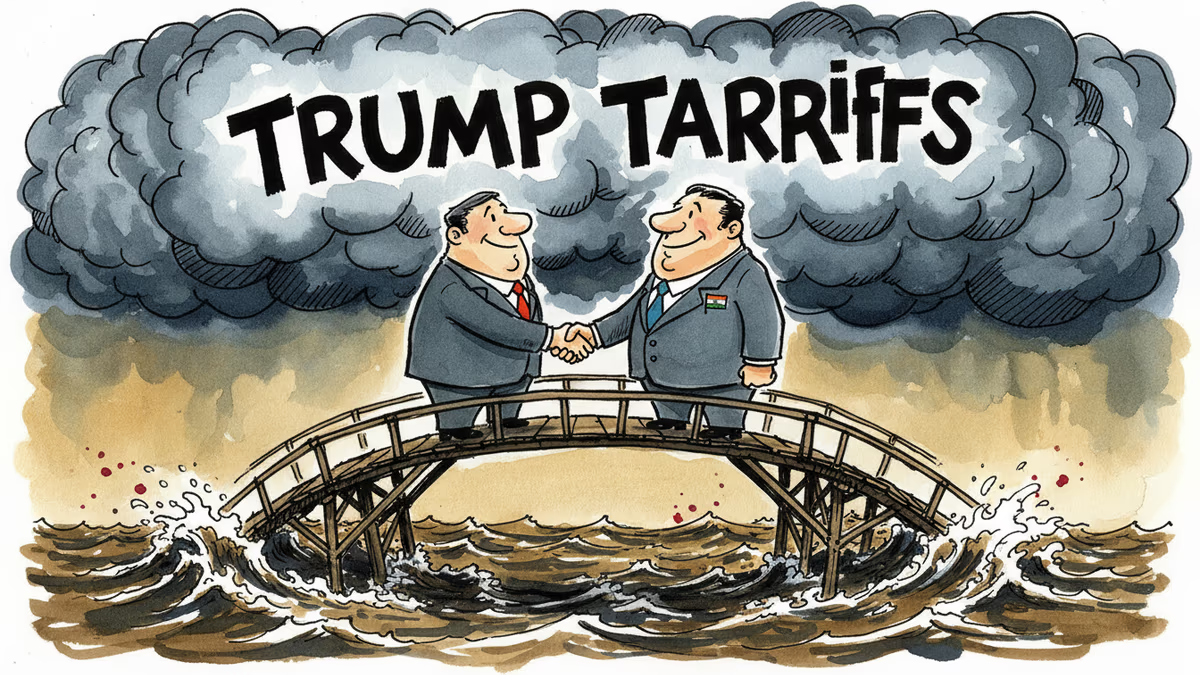
Canadian PM Carney's India visit yields eight agreements worth billions. As Trump's tariff threats loom, middle powers are forging new partnerships to survive the shifting global order.
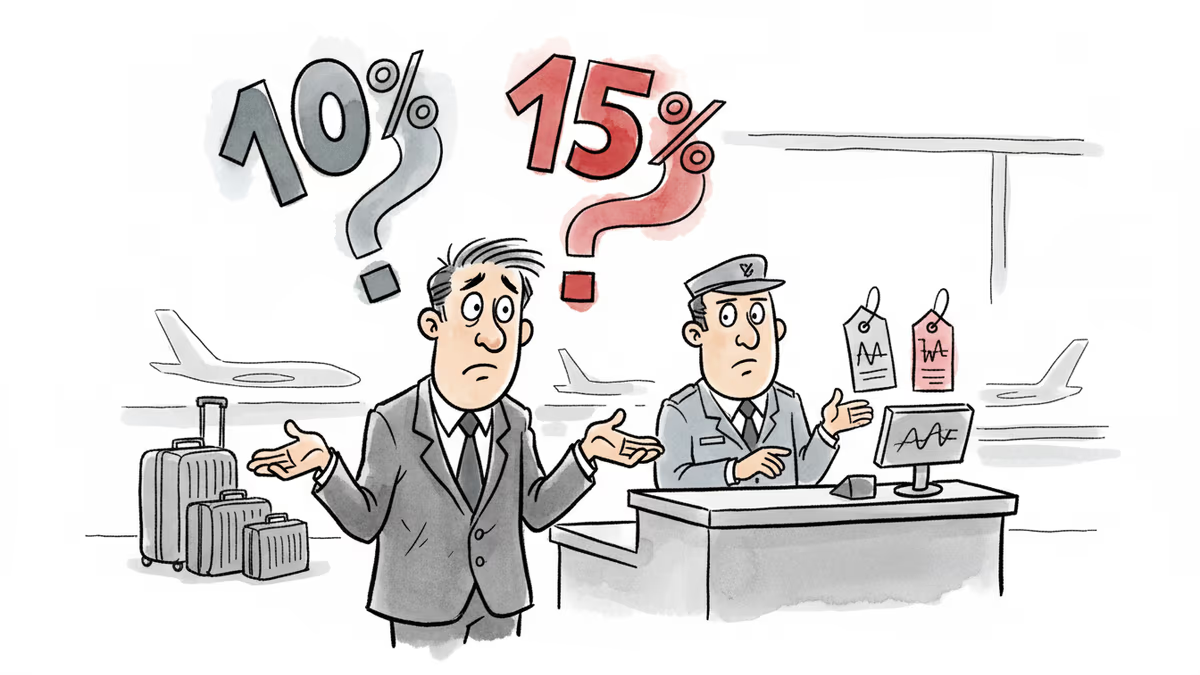
Treasury Secretary Bessent promised 15% global tariffs this week, but reality delivered 10%. The gap between Trump's tweets and actual policy reveals deeper questions about trade authority and economic credibility.
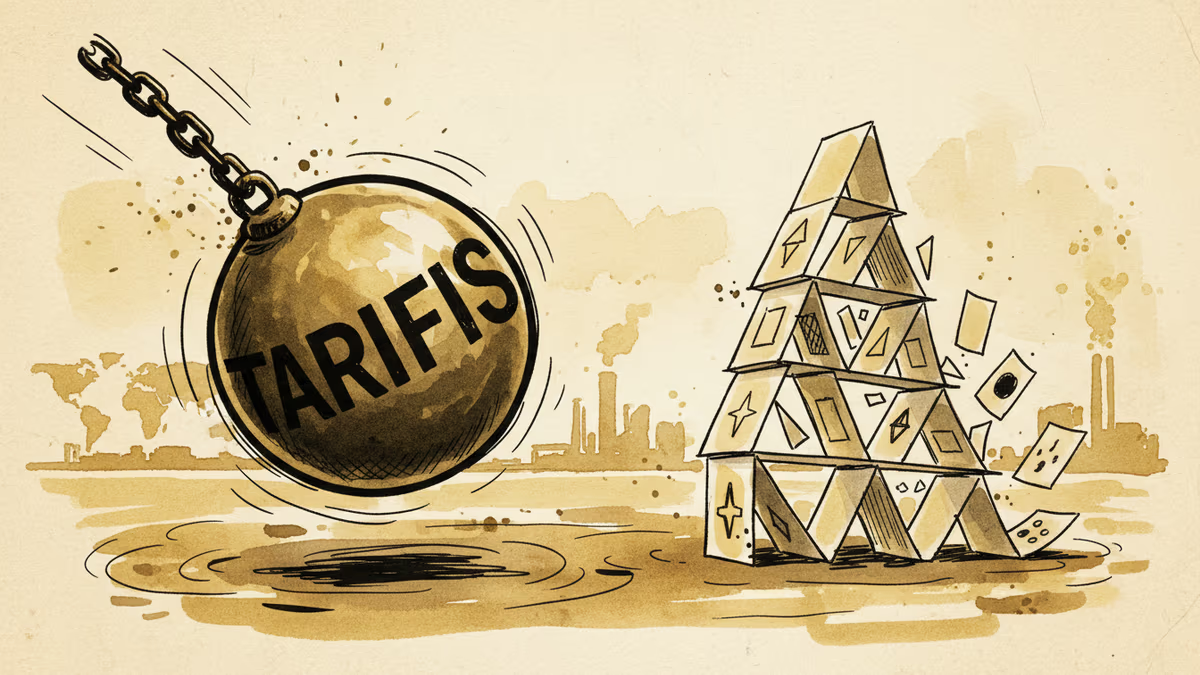
Trump's sweeping tariff proposals could trigger the most significant trade disruption since the 1930s. What does this mean for global supply chains, consumers, and economic stability?
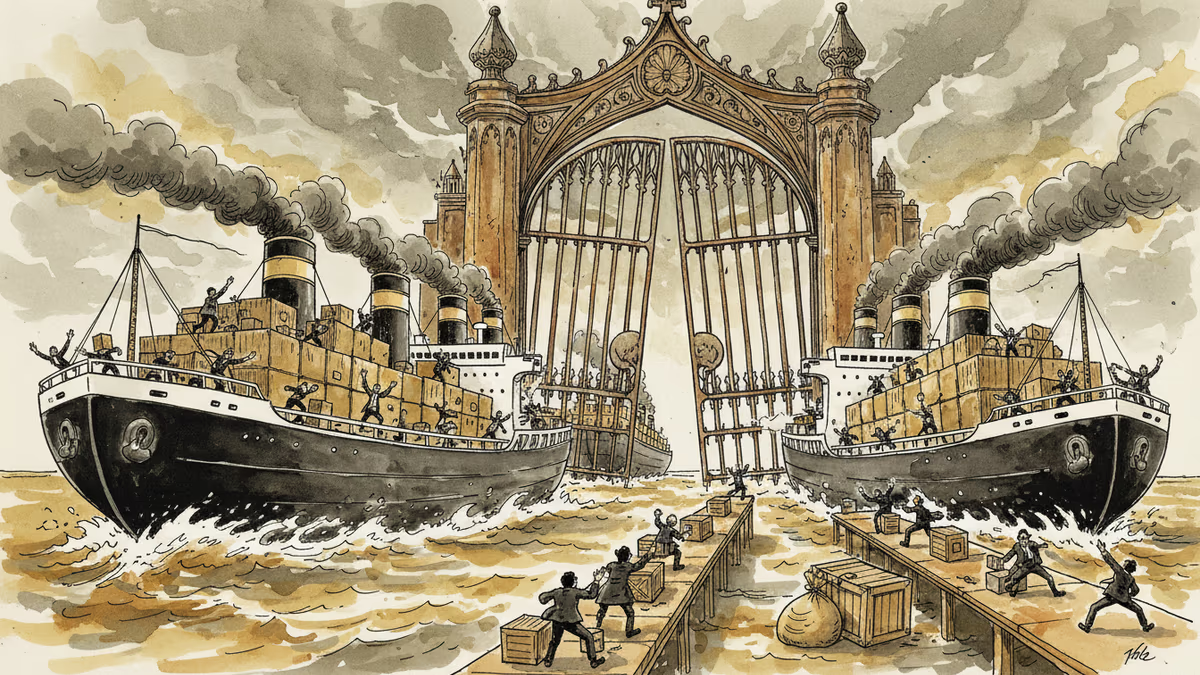
Supreme Court ruling creates brief window as US importers rush to front-load Chinese products before potential tariff hikes. Strategic stockpiling or risky gamble?
Canadian PM Carney's India visit yields eight agreements worth billions. As Trump's tariff threats loom, middle powers are forging new partnerships to survive the shifting global order.
Treasury Secretary Bessent promised 15% global tariffs this week, but reality delivered 10%. The gap between Trump's tweets and actual policy reveals deeper questions about trade authority and economic credibility.
Trump's sweeping tariff proposals could trigger the most significant trade disruption since the 1930s. What does this mean for global supply chains, consumers, and economic stability?
Supreme Court ruling creates brief window as US importers rush to front-load Chinese products before potential tariff hikes. Strategic stockpiling or risky gamble?
Thoughts
Share your thoughts on this article
Sign in to join the conversation