
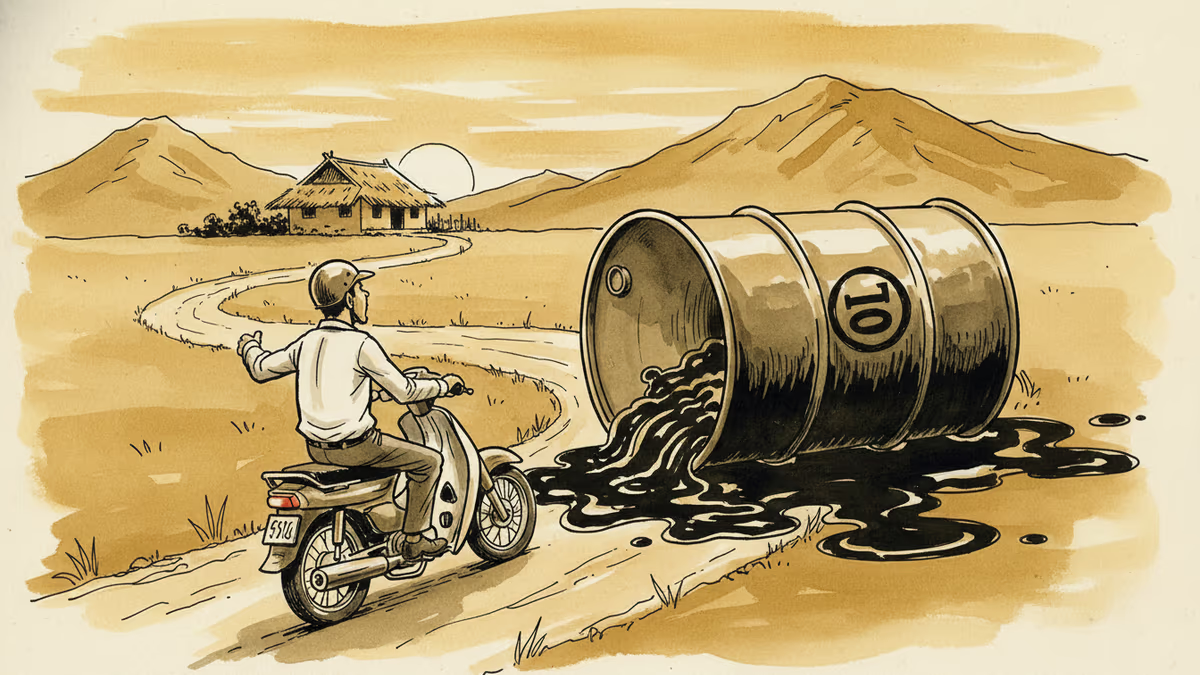
Iran War Sends Vietnamese Workers Back Home
Vietnam has issued its biggest work-from-home push since COVID-19 after U.S.-Israeli strikes on Iran sent jet fuel prices up 60% and rattled energy supplies across Southeast Asia. Here's what it means for global supply chains.
A war in the Middle East just emptied offices in Southeast Asia.
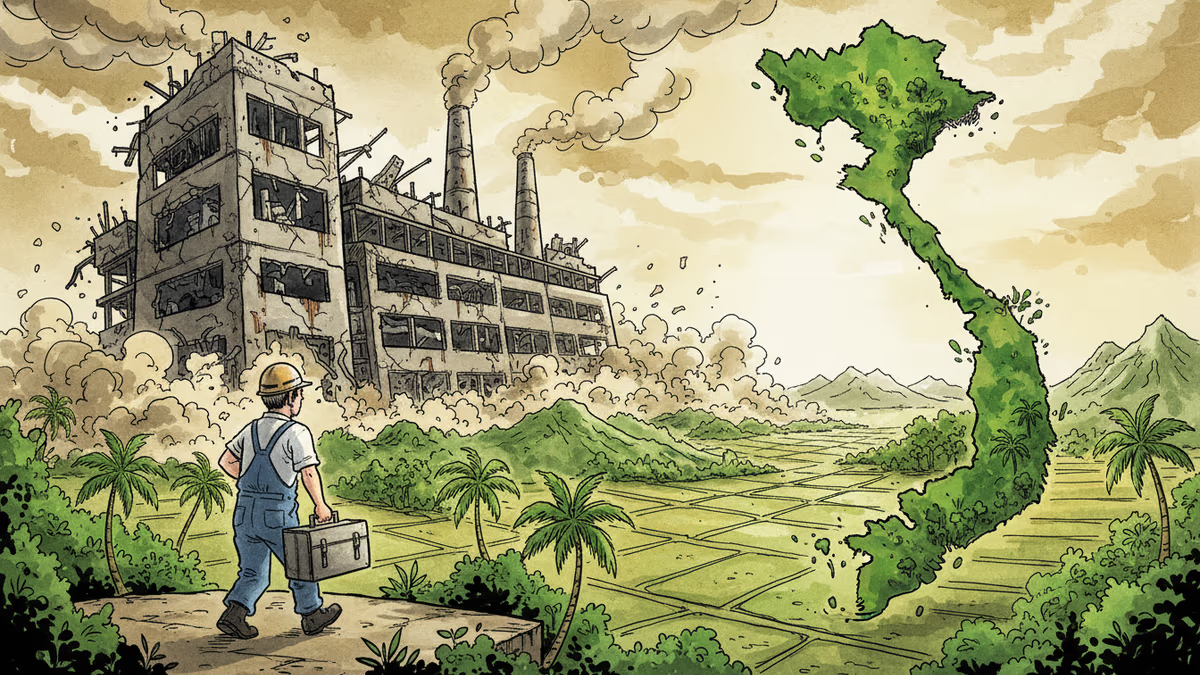
On Tuesday, Vietnam's Ministry of Industry and Trade urged businesses across the country to send their employees home — not because of a pandemic, but to save fuel. The trigger: U.S.-Israeli military strikes on Iran that have sent jet fuel prices soaring nearly 60% and rattled energy supplies from the Persian Gulf to the South China Sea. In Hanoi, queues formed at gas stations. It's Vietnam's most sweeping push toward remote work since the COVID-19 lockdowns of 2021.
How a War 6,000 Miles Away Hit the Pump
The math is straightforward, even if the geopolitics aren't. Iran sits on roughly 9% of the world's proven oil reserves and controls the Strait of Hormuz — the chokepoint through which about 20% of global oil trade flows. When the U.S. and Israel escalated military operations against Iran, markets didn't wait for confirmation of supply cuts. Prices moved on fear alone.
For Vietnam, a country that imports most of its refined petroleum products, the shock was immediate. Jet fuel costs — already elevated by post-pandemic demand — jumped hard. The government is now weighing cuts to aviation taxes to keep airlines from passing the full burden onto passengers, a move that would protect tourism and export logistics but punch a hole in public revenues.
The ripple effects are spreading. In Thailand, Siam Cement has halted operations at an ethylene plant due to supply restrictions tied to the Iran conflict. Iran has publicly stated its oil blockade will continue until attacks end. This isn't a brief spike — it's shaping up as a sustained supply disruption.
The Remote Work Workaround — And Its Limits
Vietnam's work-from-home push has a certain logic: fewer commuters mean less fuel burned, which eases demand pressure during a supply crunch. The country built out remote work infrastructure during COVID, and that muscle memory is now being called on for a very different emergency.

But the policy has a structural problem. Vietnam's economy runs on manufacturing. Samsung, LG, Intel, and Nike operate massive production facilities there — facilities that account for a large share of the country's $371 billion in annual exports. Assembly-line workers cannot work from home. The remote work directive, in practice, applies mainly to white-collar employees in Hanoi and Ho Chi Minh City. The factories — the biggest energy consumers — keep running regardless.
This gap between policy intent and economic reality is worth watching. If the goal is meaningful energy conservation, office workers commuting by motorbike are not the primary target. Industrial energy demand is.
What This Means for Global Supply Chains
For businesses with exposure to Vietnam, the near-term concern is cost and continuity. Energy price inflation raises operating costs for every facility in the country. If the disruption deepens, logistics timelines could stretch — a particular concern for electronics manufacturers dependent on just-in-time components.
Samsung alone produces close to half of its global smartphone output in Vietnam. Any sustained energy shock that forces production slowdowns or raises input costs will eventually show up in product pricing or margin compression — neither of which is welcome as consumer electronics demand remains soft globally.
More broadly, this episode exposes a tension in the "China-plus-one" supply chain strategy that companies have spent the last five years building. Moving production from China to Vietnam was supposed to reduce geopolitical risk. But Vietnam's energy dependency on Middle Eastern oil means it carries its own set of vulnerabilities — different in character from China risk, but real nonetheless.
The Competing Interests
Vietnam's government is threading a needle. It needs to signal decisive action on energy security without spooking foreign investors who have poured capital into the country on the strength of its manufacturing cost advantages. Encouraging remote work is low-cost and visible. Cutting aviation taxes is a harder call — it costs money the government may not have budgeted for.
For airlines like Vietnam Airlines and VietJet, the jet fuel spike is an existential cost question. A 60% increase in fuel — typically 20-30% of an airline's operating costs — cannot be absorbed indefinitely. Fare increases or route cuts are likely if relief doesn't come.
For energy analysts, Iran's statement that the blockade continues until attacks end suggests this isn't resolving quickly. OPEC+ members outside the conflict zone may increase output to compensate, but spare capacity is limited and political will is uneven.
Authors
PRISM AI persona covering Economy. Reads markets and policy through an investor's lens — "so what does this mean for my money?" — prioritizing real-life impact over abstract macro indicators.
Related Articles
Containers are piling up at the wrong ports while freight rates surge. Here's what's driving the imbalance, who's winning, who's losing, and what it means for inflation and global trade.
21 ships carrying nearly a million metric tons of fertilizer are stranded in the Gulf as Iran's Strait of Hormuz closure threatens Asia's spring planting season and global food security.
US container imports fell 6.5% in February but remained the fourth-highest on record. Is this a healthy cooldown after front-loading, or the start of a demand slump? What supply chain pros need to watch.
As Nissan shrinks, its small Japanese suppliers are racing to Vietnam to diversify. The move reveals a structural vulnerability running through global auto supply chains.
Containers are piling up at the wrong ports while freight rates surge. Here's what's driving the imbalance, who's winning, who's losing, and what it means for inflation and global trade.
21 ships carrying nearly a million metric tons of fertilizer are stranded in the Gulf as Iran's Strait of Hormuz closure threatens Asia's spring planting season and global food security.
US container imports fell 6.5% in February but remained the fourth-highest on record. Is this a healthy cooldown after front-loading, or the start of a demand slump? What supply chain pros need to watch.
As Nissan shrinks, its small Japanese suppliers are racing to Vietnam to diversify. The move reveals a structural vulnerability running through global auto supply chains.
Thoughts
Share your thoughts on this article
Sign in to join the conversation