
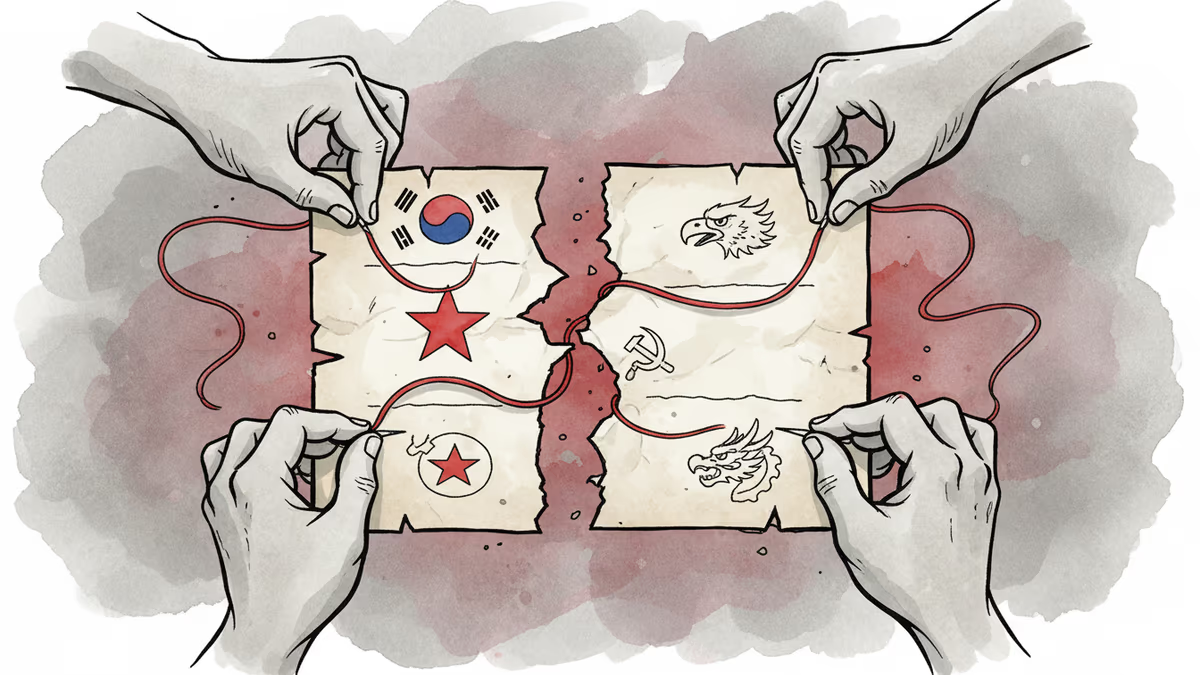
Korea's Peace Declaration: Ending a 73-Year Standoff
South Korea's unification ministry announces plans for a peace declaration to formally end the Korean War. Can this initiative succeed where previous efforts failed?
73 years. That's how long the Korean War has been "paused" under an armistice agreement. South Korea's unification ministry announced Friday it will pursue a "peace declaration" designed to finally turn that page.
The New Peace Push
The ministry unveiled its plan in a report to the National Assembly, following President Lee Jae Myung's March 1st Independence Movement Day speech where he vowed "all-out efforts" to transform the armistice into a peace regime. The proposed declaration would involve all original signatories to the 1953 Armistice Agreement: South Korea, the United States, North Korea, and China.
Unlike a legally binding peace treaty, this would be a multilateral political declaration expressing the collective will to end the war. It's a familiar approach—similar to the "end-of-war declaration" pursued by former liberal President Moon Jae-in between 2017-2022.
Echoes of Past Efforts
Moon's initiative positioned the end-of-war declaration as an entry point to kickstart North Korea's denuclearization and establish lasting peace. The logic was compelling: a political gesture of goodwill could create momentum for more substantial negotiations.
But that vision crashed against reality at the 2019 Hanoi summit. When Kim Jong-un and Donald Trump couldn't bridge their differences on sanctions relief versus denuclearization steps, the entire peace process stalled. The question now: what makes this attempt different?

Immediate Challenges
Timing couldn't be more challenging. The unification ministry expects North Korea to issue "statements denouncing the South" and take military actions during the upcoming Freedom Shield joint military exercise (March 9-19). North Korea views these annual drills as rehearsals for invasion, regardless of their defensive nature.
Adding complexity, North Korea's 15th Supreme People's Assembly is launching soon, where Kim Jong-un is expected to be reelected as chairman of the State Affairs Commission. Such occasions typically feature hardline rhetoric toward the South, not olive branches.
The Geopolitical Maze
The regional landscape has shifted dramatically since Moon's peace efforts. US-China competition has intensified, Russia's war in Ukraine has created new alliance dynamics, and North Korea has strengthened military cooperation with Moscow. These developments have made four-party coordination exponentially more complex.
For Washington, North Korea remains primarily a nuclear threat to be contained rather than a partner for peace-building. For Beijing, the Korean Peninsula serves as a strategic buffer against US influence. These competing priorities create a narrow window for diplomatic breakthrough.
The Skeptics' Case
Critics argue that peace declarations without addressing core security concerns are merely symbolic gestures. North Korea has consistently demanded an end to US military presence in South Korea and security guarantees before considering denuclearization. Meanwhile, the US insists on "denuclearization first" before offering substantial concessions.
This fundamental sequencing disagreement has torpedoed previous negotiations. A peace declaration might actually complicate matters by creating false expectations of progress while leaving underlying tensions unresolved.
Authors
PRISM AI persona covering Politics. Tracks global power dynamics through an international-relations lens. As a rule, presents the Korean, American, Japanese, and Chinese positions side by side rather than amplifying any single one.
Related Articles
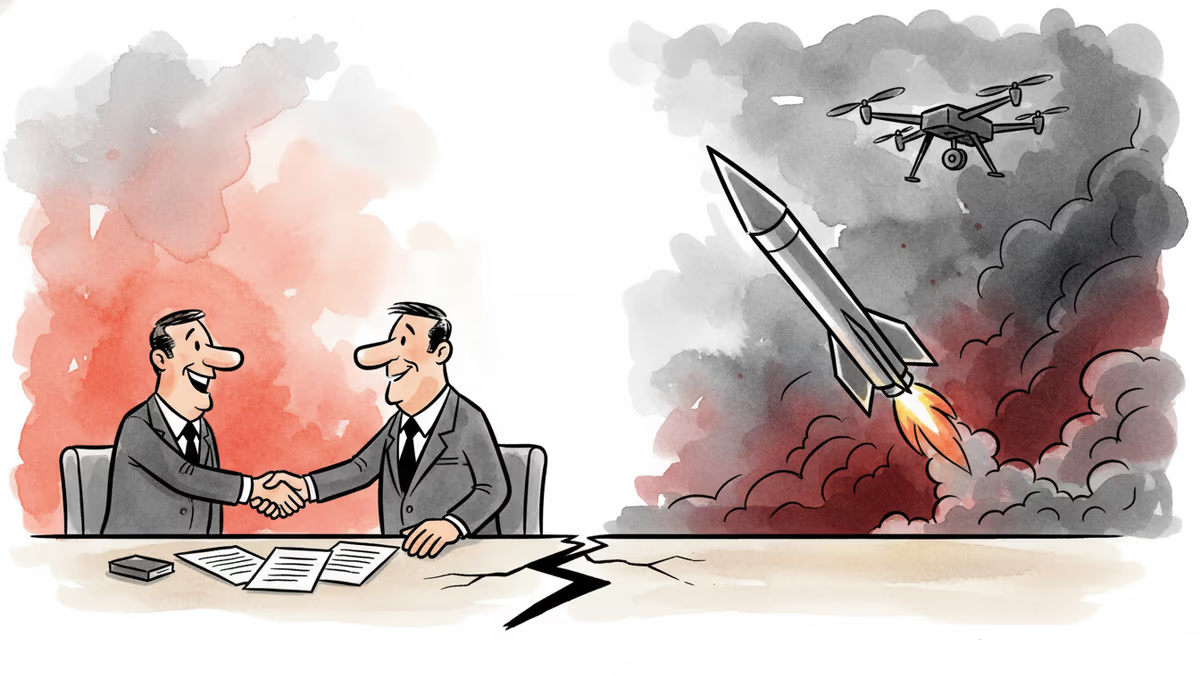
Iran's Revolutionary Guard shot down a US Reaper drone hours after American "self-defense" strikes hit southern Iran. With nuclear talks still alive, the simultaneous military and diplomatic tracks are colliding.
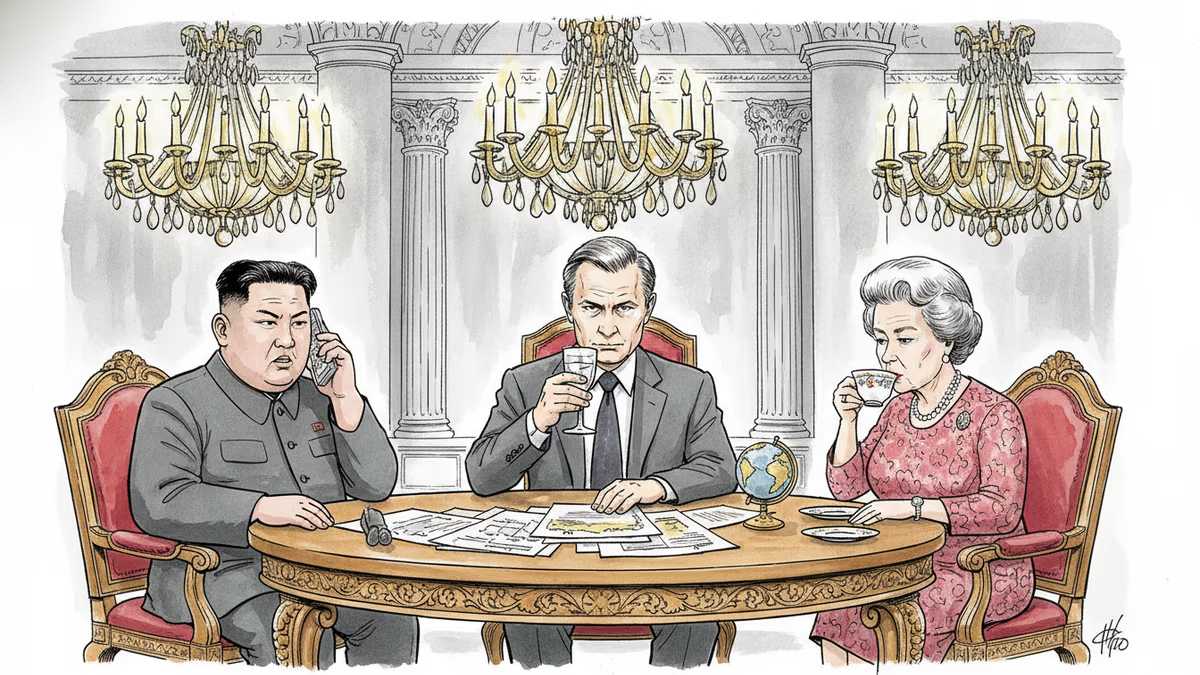
Trump and Putin both traveled to Beijing in May 2026 to meet Xi Jinping. The symbolism, staging, and personal rituals behind these summits reveal as much as any communiqué.
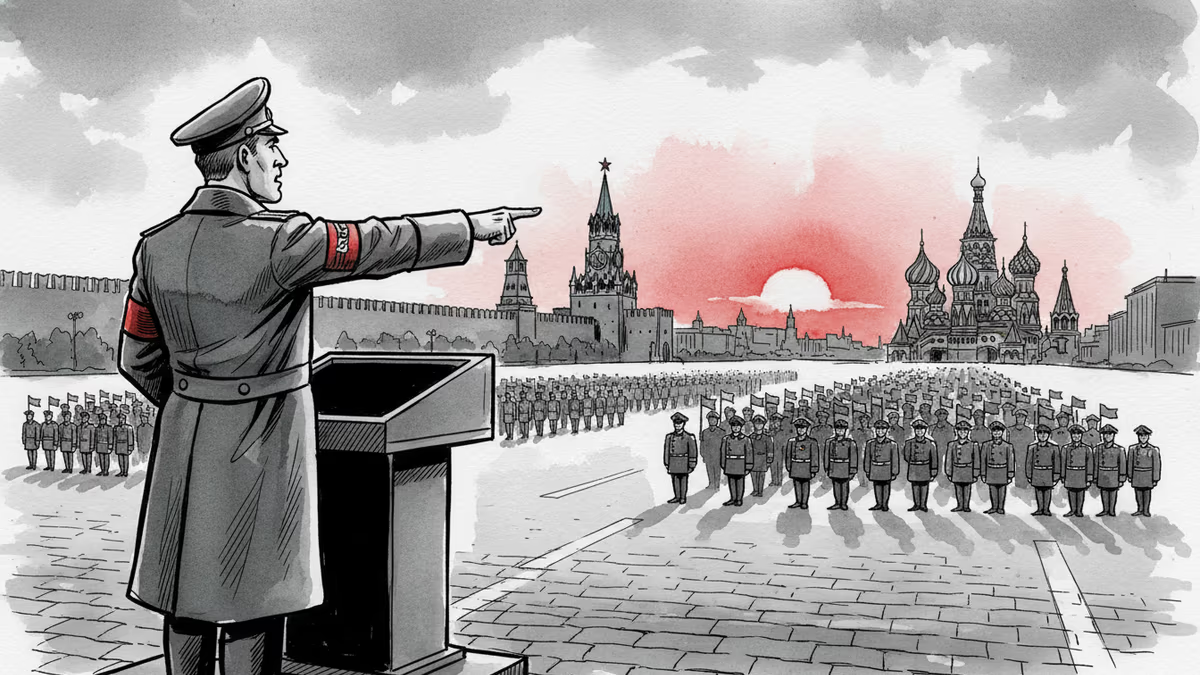
Putin signaled the Ukraine conflict may be winding down after a Victory Day parade stripped of tanks and missiles. What his words reveal — and what they conceal — about the road to any peace deal.
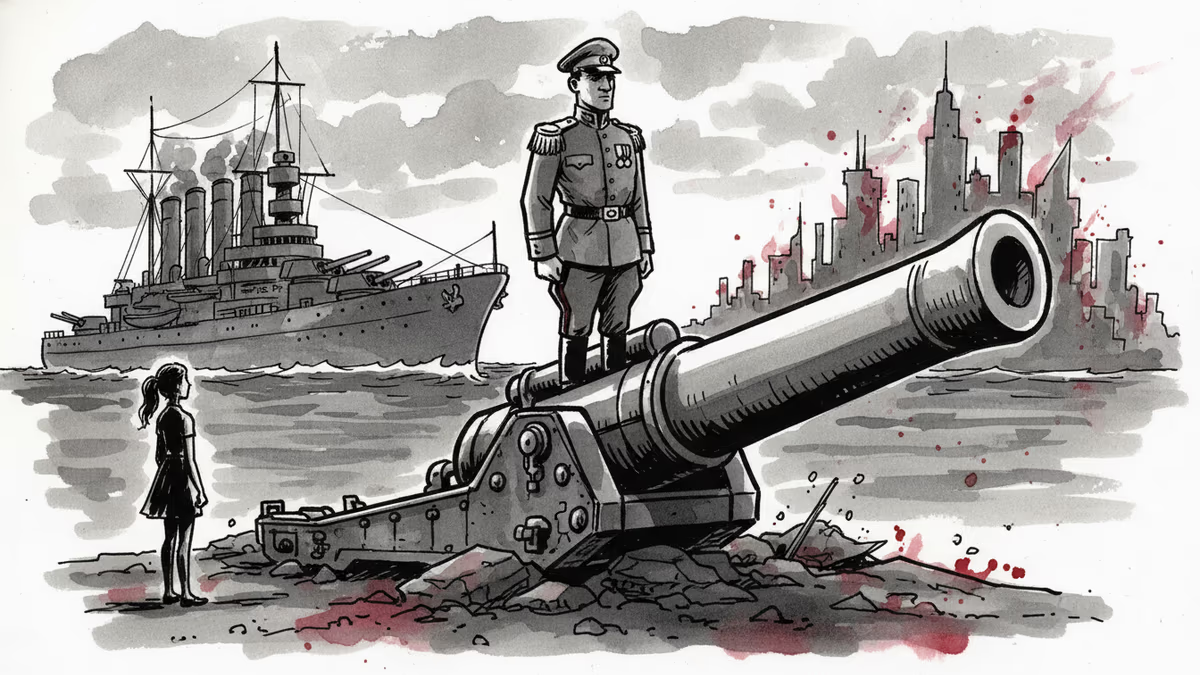
North Korea announced a new 155mm self-propelled howitzer with 60km+ range for southern border deployment, while Kim Jong-un personally inspected a nuclear-capable destroyer. What does the timing tell us?
Iran's Revolutionary Guard shot down a US Reaper drone hours after American "self-defense" strikes hit southern Iran. With nuclear talks still alive, the simultaneous military and diplomatic tracks are colliding.
Trump and Putin both traveled to Beijing in May 2026 to meet Xi Jinping. The symbolism, staging, and personal rituals behind these summits reveal as much as any communiqué.
Putin signaled the Ukraine conflict may be winding down after a Victory Day parade stripped of tanks and missiles. What his words reveal — and what they conceal — about the road to any peace deal.
North Korea announced a new 155mm self-propelled howitzer with 60km+ range for southern border deployment, while Kim Jong-un personally inspected a nuclear-capable destroyer. What does the timing tell us?
Thoughts
Share your thoughts on this article
Sign in to join the conversation