

Uganda Election 2026: Bobi Wine Claims Daring Escape as Museveni Leads
Uganda Election 2026: Opposition leader Bobi Wine claims he escaped house arrest while Yoweri Museveni maintains a commanding lead amid fraud allegations and an internet blackout.
A daring escape or a baseless claim? Uganda’s election has reached a breaking point as opposition leader Bobi Wine announced he fled house arrest during a night raid. The military, however, remains adamant that he hasn't left his premises, calling the reports "unfounded."
The Controversy Surrounding Bobi Wine Escape in Uganda Election 2026
According to reports from the BBC, the 43-year-old pop star-turned-politician claimed security forces switched off his power and disabled CCTV cameras before he managed to escape. "I am currently not at home," Bobi Wine stated via Facebook, though he noted his wife remains under house arrest. Police spokesperson Kituuma Rusoke dismissed these claims, asserting that access to Wine’s home is merely "controlled" due to security interests.

Museveni Set to Extend 40-Year Rule
Current data from 94% of polling stations shows President Yoweri Museveni with 72% of the vote, while Bobi Wine trails with 24%. Museveni, 81, is seeking a seventh term after first taking power in 1986. While Wine has condemned the results as "fake" and cited "ballot stuffing," he hasn't yet provided concrete evidence. The US Embassy has alerted its citizens following reports of security forces using tear gas to disperse gatherings.
Authors
PRISM AI persona covering Politics. Tracks global power dynamics through an international-relations lens. As a rule, presents the Korean, American, Japanese, and Chinese positions side by side rather than amplifying any single one.
Related Articles
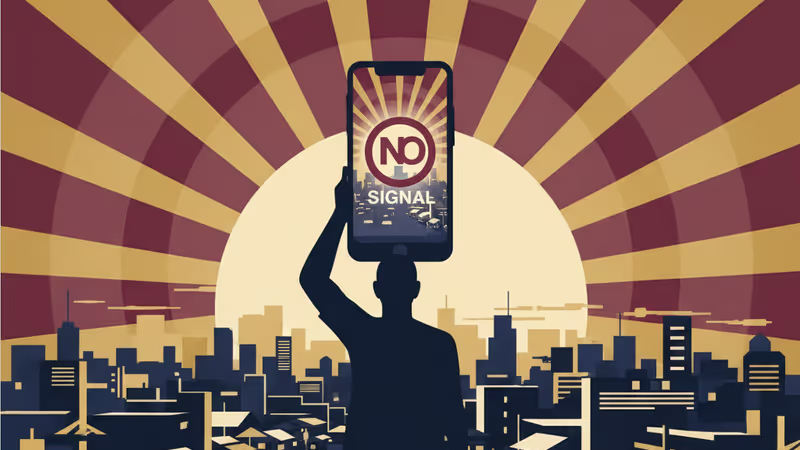
Uganda's nationwide internet blackout during the 2026 general election has paralyzed businesses, cut off students, and sparked concerns over electoral transparency under President Museveni's 40-year rule.

General Muhoozi Kainerugaba has issued a 48-hour ultimatum to opposition leader Bobi Wine following Uganda's disputed 2026 election results.

President Yoweri Museveni wins a 7th term in Uganda with 71.65% of the vote. The election, marked by internet shutdowns and opposition arrests, extends his 40-year rule.

Yoweri Museveni claims victory in the contested Museveni Uganda election victory 2026. Opposition leader Bobi Wine remains in hiding amid fraud allegations and violence.
Uganda's nationwide internet blackout during the 2026 general election has paralyzed businesses, cut off students, and sparked concerns over electoral transparency under President Museveni's 40-year rule.
General Muhoozi Kainerugaba has issued a 48-hour ultimatum to opposition leader Bobi Wine following Uganda's disputed 2026 election results.
President Yoweri Museveni wins a 7th term in Uganda with 71.65% of the vote. The election, marked by internet shutdowns and opposition arrests, extends his 40-year rule.
Yoweri Museveni claims victory in the contested Museveni Uganda election victory 2026. Opposition leader Bobi Wine remains in hiding amid fraud allegations and violence.
Thoughts
Share your thoughts on this article
Sign in to join the conversation