
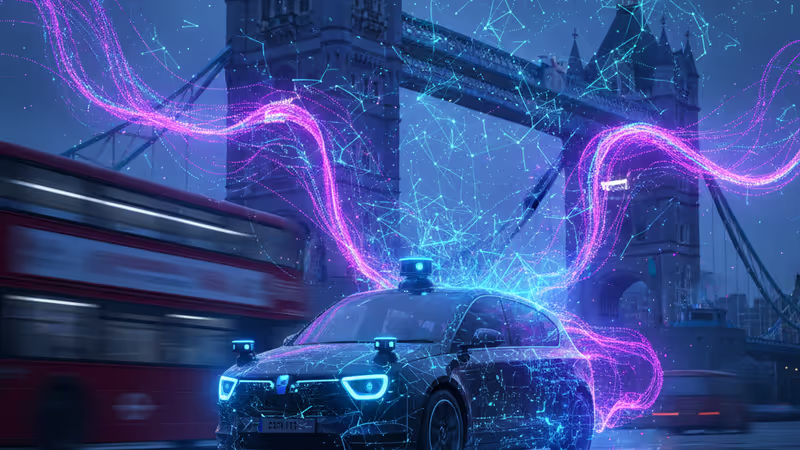
London's 2026 Robotaxi Race Heats Up: Uber and Lyft to Deploy Baidu's Self-Driving Cars
Uber and Lyft are bringing Baidu's Apollo Go robotaxis to London in 2026, joining Waymo and Wayve in a heated race to dominate the city's autonomous vehicle market.
London is shaping up to be the next major battleground for autonomous vehicles. Ride-hailing giants Uber and Lyft both confirmed they will begin testing Baidu's Apollo Go robotaxis in the city in 2026, joining an increasingly crowded field that already includes Waymo and local startup Wayve. The move signals that the race for self-driving dominance is shifting from Silicon Valley test tracks to the complex streets of a global megacity.
In a post on X, Lyft CEO David Risher stated his company will launch its test program as soon as it secures local regulatory approval. He noted that Lyft "plans to scale to hundreds" of Baidu's all-electric RT6 SUVs, though he didn't provide a timeline for a full commercial launch. Uber, confirming its own deal with Baidu first announced in July, said it expects to begin testing there in the first half of 2026.
• **Incumbents:** Waymo (Google/Alphabet), Wayve (UK-based startup) • **New Challengers:** Uber (with Baidu), Lyft (with Baidu) • **Key Vehicle:** Baidu's RT6 electric SUV
These twin rollouts aren't isolated events; they're the latest in a clear strategic pivot across the industry. Instead of burning billions to develop their own AV tech from scratch, Uber and Lyft are acting as aggregators, striking deals with specialists like Baidu and Waymo to stand up operations in cities around the world. For these companies, the path to profitability isn't owning the car—it's owning the customer relationship on the app.
This content is AI-generated based on source articles. While we strive for accuracy, errors may occur. We recommend verifying with the original source.
Related Articles
China's Baidu is partnering with Uber and Lyft to launch its Apollo Go autonomous robotaxis in London in 2026, heating up competition with Alphabet's Waymo in the UK market.
A major power outage in San Francisco on Saturday caused Waymo's driverless cars to stall at intersections with dead traffic lights, leading to significant traffic jams and raising questions about AV reliability.
Waymo suspended its robotaxi service in San Francisco during a city-wide blackout after vehicles were seen blocking traffic. The incident highlights the vulnerability of autonomous tech to infrastructure failures.
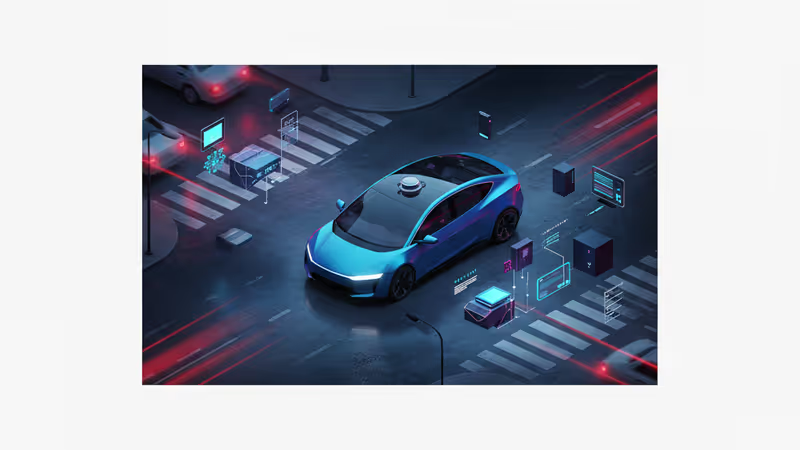
Alphabet's Waymo suspended its driverless robotaxi service in San Francisco after a massive power outage caused its vehicles to stall, raising questions about AV readiness for real-world urban failures.