
The Republican Crossroads: 'AmericaFest' Exposes a Party at War With Itself
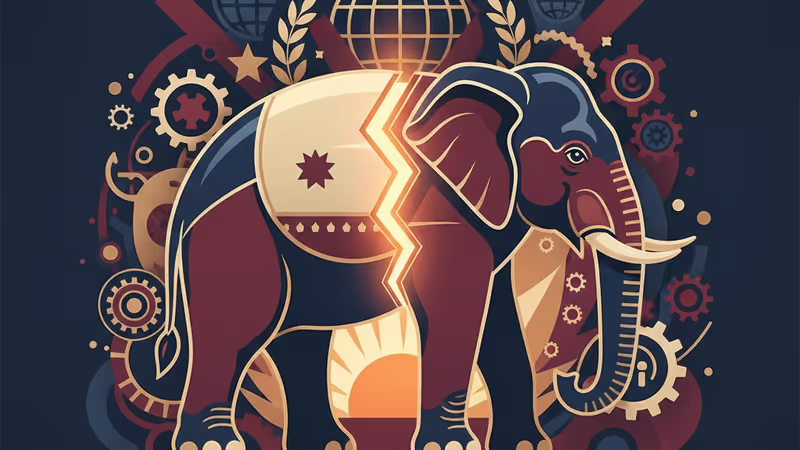
The Turning Point USA 'AmericaFest' conference in Phoenix, December 2025, has highlighted deep-seated rifts within the Republican Party, revealing a struggle between its populist and traditionalist wings over its future.
A major gathering of conservative activists in Phoenix, Arizona, this past weekend has thrown a stark light on the deepening fractures within the Republican Party. According to reports from NPR, Turning Point USA's annual "AmericaFest" conference served as a vivid showcase for the division over the party's future direction and identity.
While the event was ostensibly a festival of conservative unity and strength, it also revealed two distinct Republican parties vying for control. On one side is the populist, "America First" wing championed by Turning Point USA, which prioritizes nationalist fervor. On the other is the more traditional, establishment faction that emphasizes Reaganite principles of fiscal conservatism and robust international leadership. These ideological fault lines are creating clear points of conflict on everything from foreign policy to trade and government spending.
Founded in 2012, Turning Point USA is a conservative youth organization that grew exponentially as a key part of Donald Trump's base. It focuses on promoting conservatism on college campuses, targeting Gen Z and Millennial voters.
The tension is particularly acute with the 2026 midterm elections and the 2028 presidential race on the horizon. The populist wing views any compromise with the establishment as a betrayal of its base, demanding ideological purity. Meanwhile, the mainstream wing argues that a more pragmatic approach is essential for winning general elections by appealing to a broader electorate. The divergent reactions from the thousands of activists in Phoenix suggest this isn't merely a debate over tactics, but a profound crisis of identity for the party.
PRISM Insight
This internal Republican conflict has implications that extend far beyond U.S. domestic politics; it's a critical variable for global stability. A continued ascendancy of the 'America First' wing could lead to a significant realignment of alliances and a resurgence of protectionist trade policies, impacting the entire international order. Conversely, if traditional conservatives regain control, a return to an alliance-centric foreign and security policy is more likely. The outcome of this intra-party struggle over the next two years is a key geopolitical indicator that allies and adversaries alike will be watching closely.
This content is AI-generated based on source articles. While we strive for accuracy, errors may occur. We recommend verifying with the original source.
Related Articles
At the Turning Point conference, Vice President J.D. Vance defined patriotism as the only boundary for the conservative movement, sparking a debate on its future and inclusivity.

U.S. and Ukrainian envoys held "productive" talks in Miami, but a major breakthrough to end the war remains out of reach amid conflicting signals from Russia and ongoing military attacks.

At Turning Point's AmericaFest, a fierce internal feud between figures like Ben Shapiro and Steve Bannon gave way to calls for unity from VP JD Vance. An analysis of the ideological schism shaping the future of the Republican party.

Progressives are pushing Medicare for All in key Democratic Senate primaries, creating a rift with moderates who fear it undermines a united attack on Republicans over Obamacare. The debate signals a deeper battle for the party's future healthcare strategy.