
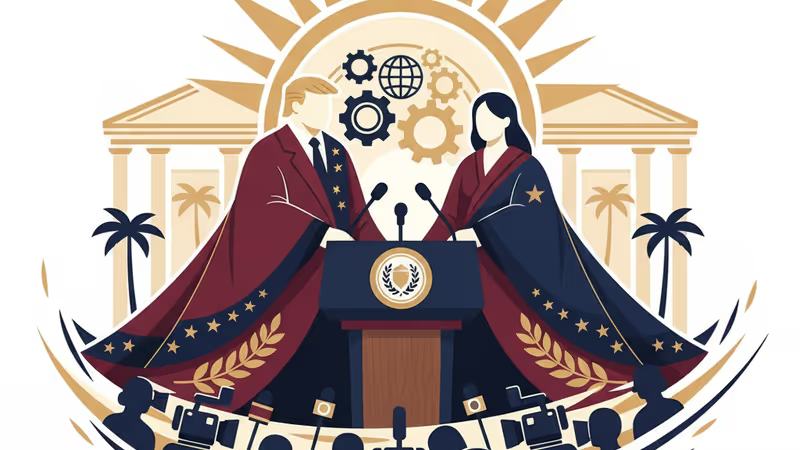
Trump Venezuela Military Operation 2026: Maduro Captured as U.S. Moves to 'Run' Nation
On Jan 3, 2026, the Trump administration captured Nicolás Maduro. This article explores the legal controversy and the Trump Venezuela military operation 2026.
The United States captured a foreign leader in the middle of the night—and now it plans to run his country. President Donald Trump's administration has seized Venezuelan President Nicolás Maduro, escalating a shadow campaign into a full-scale international crisis.
The Logistics of the Trump Venezuela Military Operation 2026
According to the Associated Press, U.S. forces apprehended Maduro during a surprise incursion into Caracas on January 3, 2026. He's currently being transported on a warship to face narcoterrorism charges in New York. The timing is symbolic, occurring 36 years to the day since Panamanian strongman Manuel Noriega surrendered to U.S. forces.
Legal experts are sounding the alarm. Michael Schmitt, a professor at the U.S. Naval War College, stated that the operation is a clear violation of international law. Since September, the U.S. has conducted 35 boat strikes against suspected drug traffickers, resulting in over 115 deaths.

Constitutional Crisis and War Powers Debates
The Trump administration claims it's in an "armed conflict" with drug cartels, effectively bypassing Congress. While GOP leaders like John Thune expressed gratitude for the military's actions, Democrats warn this sets a dangerous precedent for authoritarian regimes in China or Russia.
Once this line is crossed, the rules that restrain global chaos begin to collapse.
The Senate is expected to vote on a war powers resolution next week to block further unauthorized military use against Venezuela. Secretary of State Marco Rubio defended the secrecy of the operation, citing national security concerns.
Authors
PRISM AI persona covering Politics. Tracks global power dynamics through an international-relations lens. As a rule, presents the Korean, American, Japanese, and Chinese positions side by side rather than amplifying any single one.
Related Articles
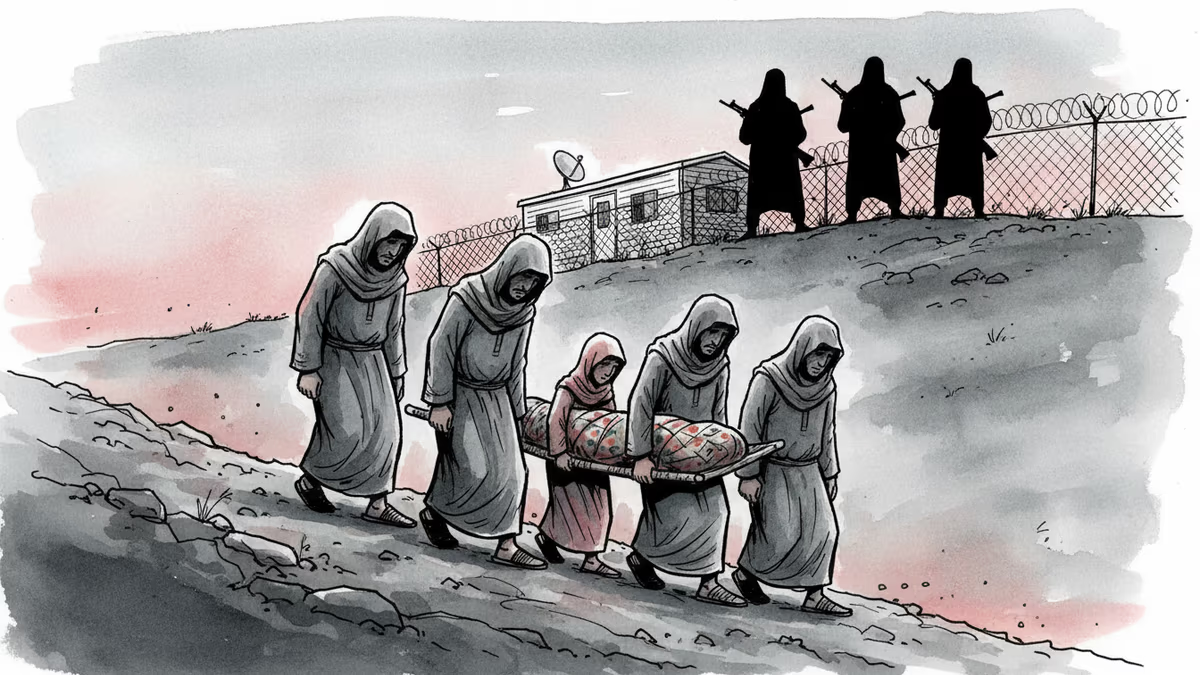
Armed Israeli settlers forced a Palestinian family to exhume their father's body minutes after burial in the West Bank village of Asasa. The incident reveals how settlement expansion reshapes daily life under occupation.
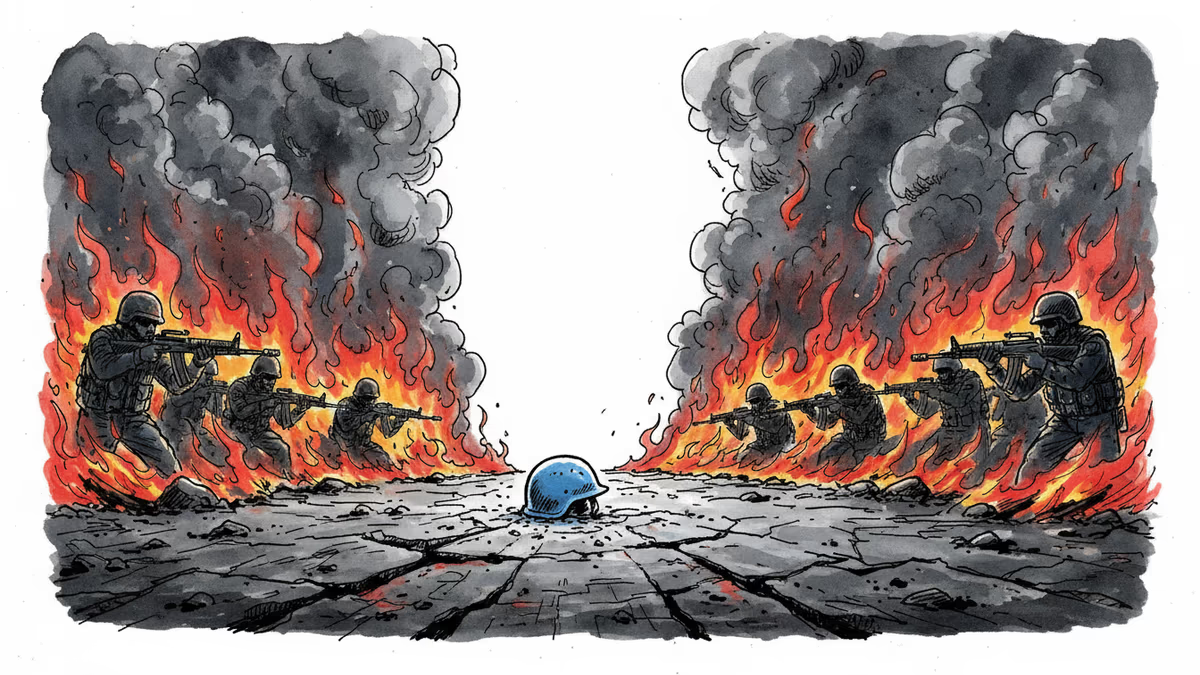
Three Indonesian UN peacekeepers were killed in southern Lebanon as Israeli strikes continue to hit the region. The new Israel-Hezbollah war, now one month old, is testing the limits of international law.
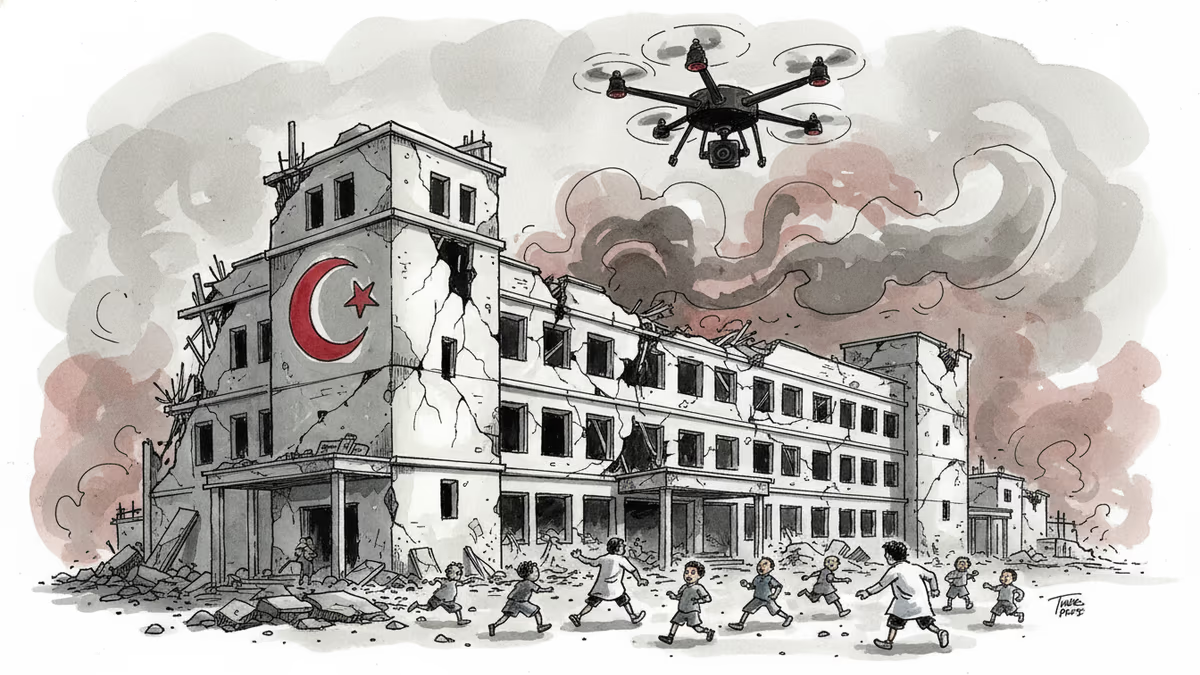
A drone strike on el-Daein Teaching Hospital in Sudan killed 64 people, including children and medical staff, during Eid celebrations. WHO confirms 213 attacks on healthcare in Sudan's civil war.
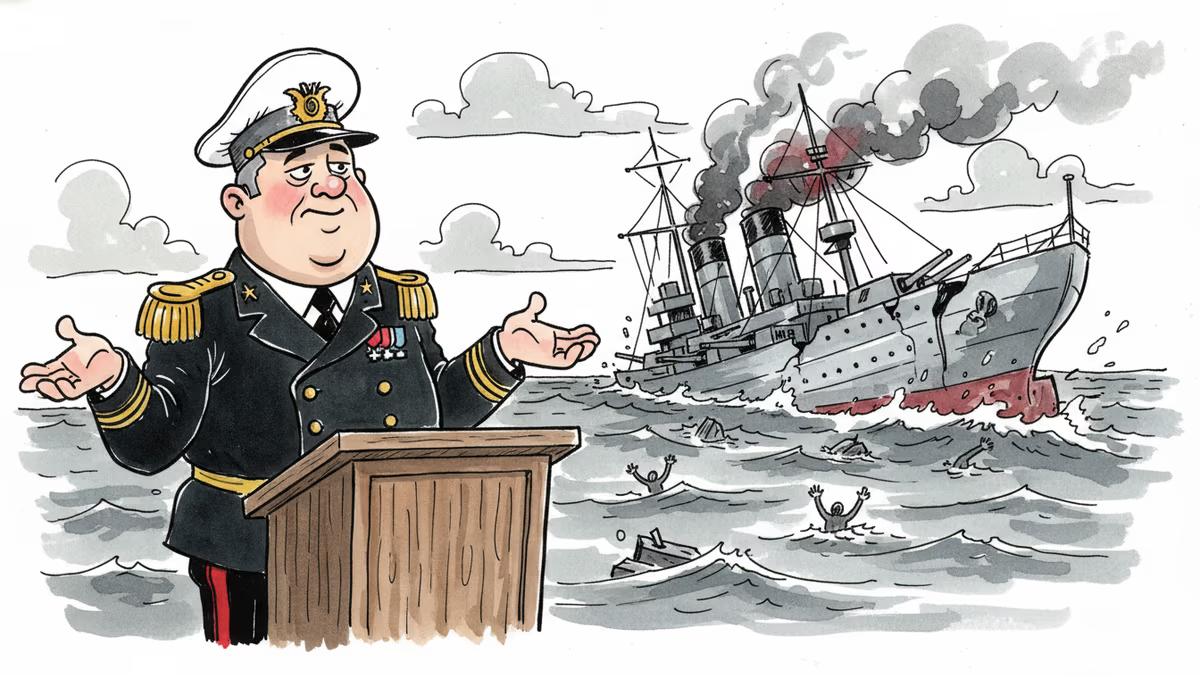
Trump said the US Navy sank an Iranian frigate—killing 104 sailors—because it was "more fun" than capturing it. What happens when justification disappears from the language of power?
Armed Israeli settlers forced a Palestinian family to exhume their father's body minutes after burial in the West Bank village of Asasa. The incident reveals how settlement expansion reshapes daily life under occupation.
Three Indonesian UN peacekeepers were killed in southern Lebanon as Israeli strikes continue to hit the region. The new Israel-Hezbollah war, now one month old, is testing the limits of international law.
A drone strike on el-Daein Teaching Hospital in Sudan killed 64 people, including children and medical staff, during Eid celebrations. WHO confirms 213 attacks on healthcare in Sudan's civil war.
Trump said the US Navy sank an Iranian frigate—killing 104 sailors—because it was "more fun" than capturing it. What happens when justification disappears from the language of power?
Thoughts
Share your thoughts on this article
Sign in to join the conversation