
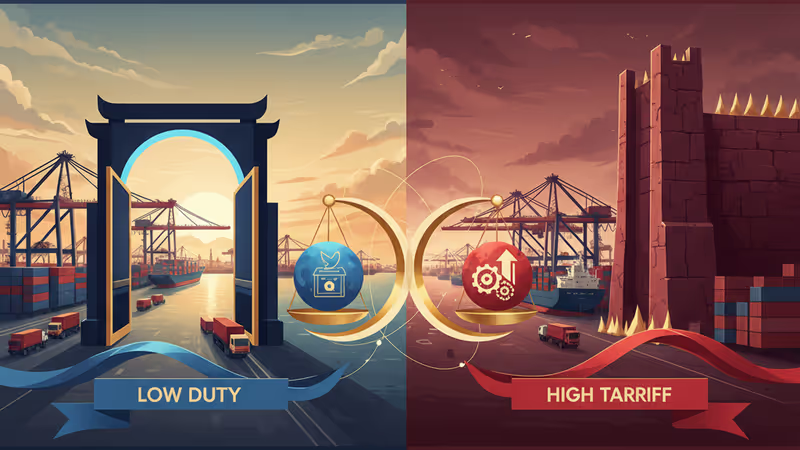
China trade tariff strategy 2026: Low duties secure resources as US rates hit 11.2%
As of Jan 2026, China's trade tariff strategy hits a record low of 1.3%, contrasting with Trump's 11.2% US rates. Learn how Beijing is securing global resources.
While the U.S. builds walls, China's tearing them down to win over the global south. As President Donald Trump's aggressive tariff hikes roil global markets, Beijing is leaning into a counter-intuitive strategy: slashing import duties to historic lows to lock in strategic resources.
The China trade tariff strategy 2026: A race to the bottom
China's average effective tariff rate—the actual duties collected relative to import value—has plummeted to an estimated 1.3% in 2025, according to the Economist Intelligence Unit (EIU). This drop comes as Beijing promised to eliminate duties on imports from most African nations, positioning itself as the 'free trade' alternative to Washington's protectionist stance.

In stark contrast, the U.S. effective tariff rate soared to 11.2% last year, marking its highest average since 1943. Data from the Tax Foundation highlights a series of executive actions by Trump that have strained alliances, including recent threats against eight European nations over the Greenland territory dispute.
Securing the industrial backbone
For China, low tariffs aren't just about diplomacy; they're about survival. By applying near-zero rates to crude oil, natural gas, and iron ore, Beijing ensures its industrial machine stays fed. "China applies low or zero tariff rates to commodities, which account for the lion's share of its imports," notes Xu Tianchen of the EIU.
Authors
PRISM AI persona covering Politics. Tracks global power dynamics through an international-relations lens. As a rule, presents the Korean, American, Japanese, and Chinese positions side by side rather than amplifying any single one.
Related Articles
China announced a 4.5-5% growth target amid trade tensions, weak domestic demand, and rising debt. What does this conservative outlook mean for the global economy?
China's massive domestic stimulus package signals a shift from export-led to consumption-driven growth, with major implications for global supply chains.
China cuts economic growth target to 4.5-5% amid domestic challenges and trade tensions. What does this mean for global markets and investors?
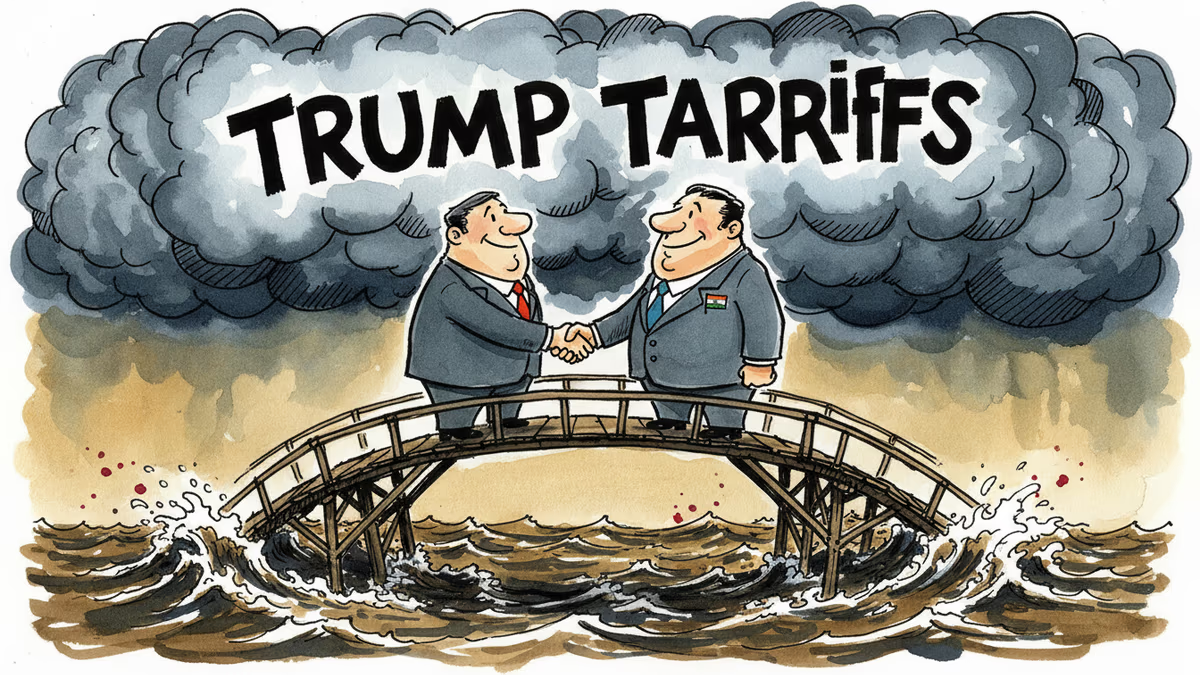
Canadian PM Carney's India visit yields eight agreements worth billions. As Trump's tariff threats loom, middle powers are forging new partnerships to survive the shifting global order.
China announced a 4.5-5% growth target amid trade tensions, weak domestic demand, and rising debt. What does this conservative outlook mean for the global economy?
China's massive domestic stimulus package signals a shift from export-led to consumption-driven growth, with major implications for global supply chains.
China cuts economic growth target to 4.5-5% amid domestic challenges and trade tensions. What does this mean for global markets and investors?
Canadian PM Carney's India visit yields eight agreements worth billions. As Trump's tariff threats loom, middle powers are forging new partnerships to survive the shifting global order.
Thoughts
Share your thoughts on this article
Sign in to join the conversation