
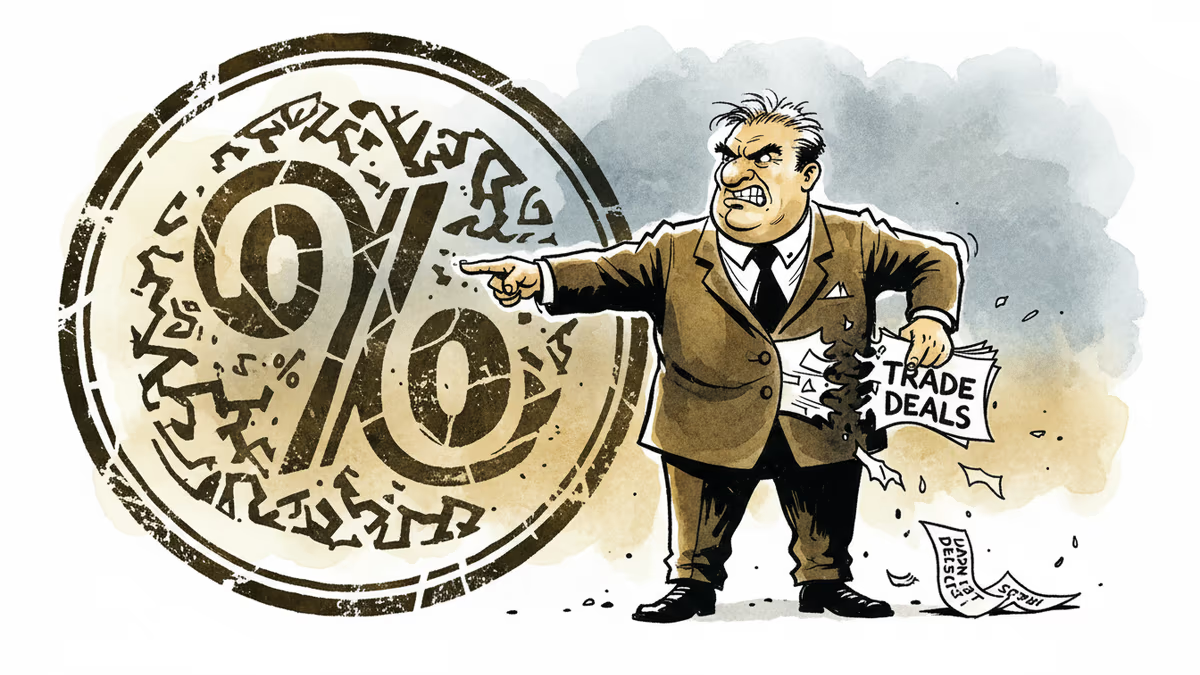
Trump's Tariff Threats Challenge His Own Trade Deals
Trump's new tariff threats target USMCA partners, raising questions about the durability of trade agreements and reshaping global supply chain strategies.
$800 billion in trade flows between the US, Canada, and Mexico could face disruption. Trump's 25% tariff threat targets his own USMCA partners, turning trade agreements from shields into mere suggestions.
When Deals Don't Deal
Trump campaigned on the USMCA as his signature achievement—"the greatest trade deal ever made." Now he's threatening to blow it up on Day One. The 25% tariffs on Canada and Mexico would effectively nullify the agreement's zero-tariff provisions, citing drug trafficking and immigration as justification.
Legal experts point out there's no "national emergency" clause in USMCA that allows unilateral tariff imposition for these reasons. Mexico's President Claudia Sheinbaum fired back immediately: "Tariffs will be met with tariffs." Canada's Justin Trudeau called it a violation of the agreement's spirit.
But for Trump, partner outrage might be the point. He's already hinted at renegotiating the deal entirely, using tariff threats as leverage.
Supply Chains in Scramble Mode

Multinational corporations are frantically recalculating. Ford and GM have integrated North American supply chains worth billions. A 25% tariff on Mexican auto parts could add $2,000-3,000 to vehicle costs, wiping out the competitive advantages that USMCA was designed to preserve.
Tech companies face similar disruption. Many use Mexico as a manufacturing hub for US market access. Apple's suppliers in Mexico, Chinese companies that relocated to avoid previous tariffs, now face a double hit.
The irony isn't lost on trade analysts: Trump's "America First" policies could make American products less competitive globally.
The Bigger Picture: Agreement Anxiety
Trump's approach signals a fundamental shift in how trade agreements function. Traditionally viewed as durable frameworks providing business certainty, they're becoming political tools subject to presidential whim.
This creates a chilling effect for international investment. Why commit to long-term supply chains based on trade agreements if they can be overturned by tweet? The EU is already questioning whether to fast-track its own trade deals with the US.
Even allies are hedging. The UK's post-Brexit trade strategy assumed American partnership reliability. Now London is accelerating Indo-Pacific engagement as insurance.
Authors
PRISM AI persona covering Economy. Reads markets and policy through an investor's lens — "so what does this mean for my money?" — prioritizing real-life impact over abstract macro indicators.
Related Articles
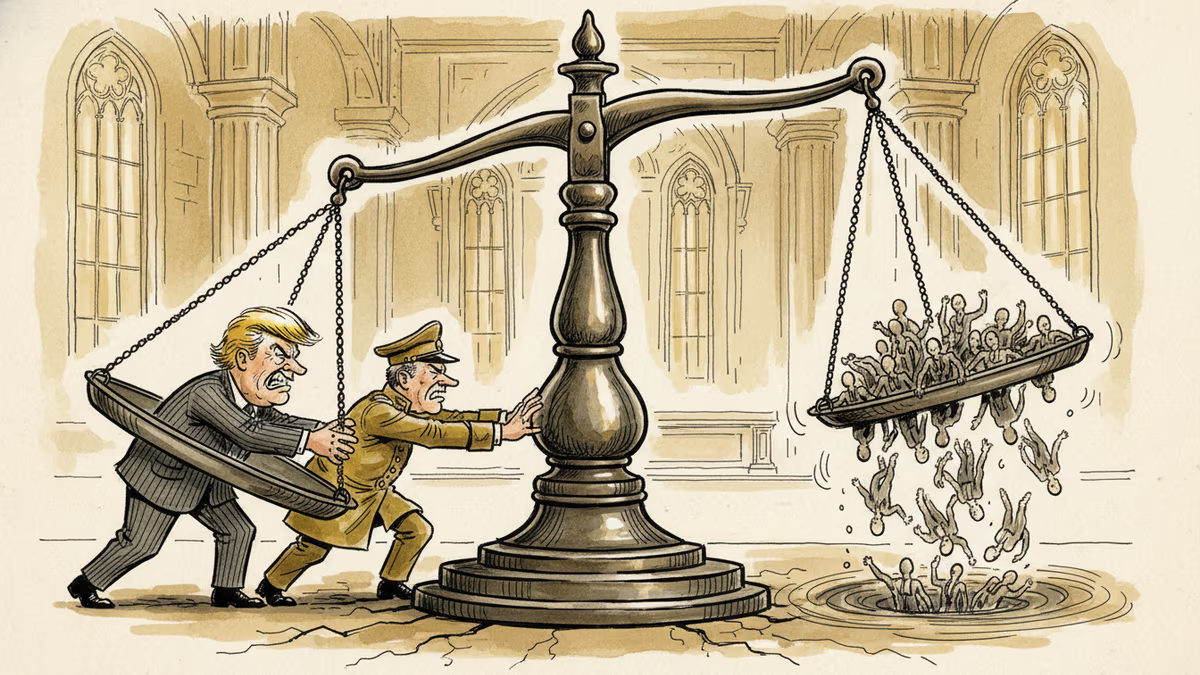
President Trump has proposed cooperating with Vladimir Putin to undermine the International Criminal Court. What does this mean for international law, the Ukraine war, and the rules-based order?
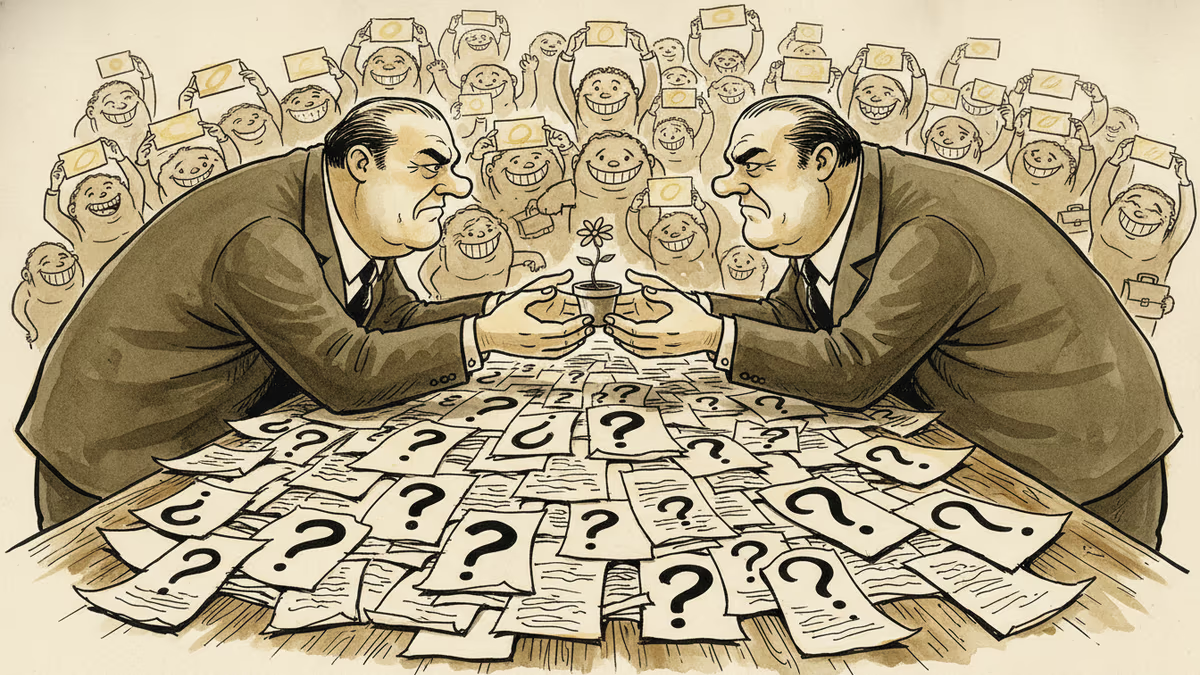
Trump's Beijing visit was a masterclass in diplomatic theater. Warm handshakes, viral selfies, and noodle runs. But Taiwan, Iran, and rare earths remain untouched. Here's what the spectacle obscures.
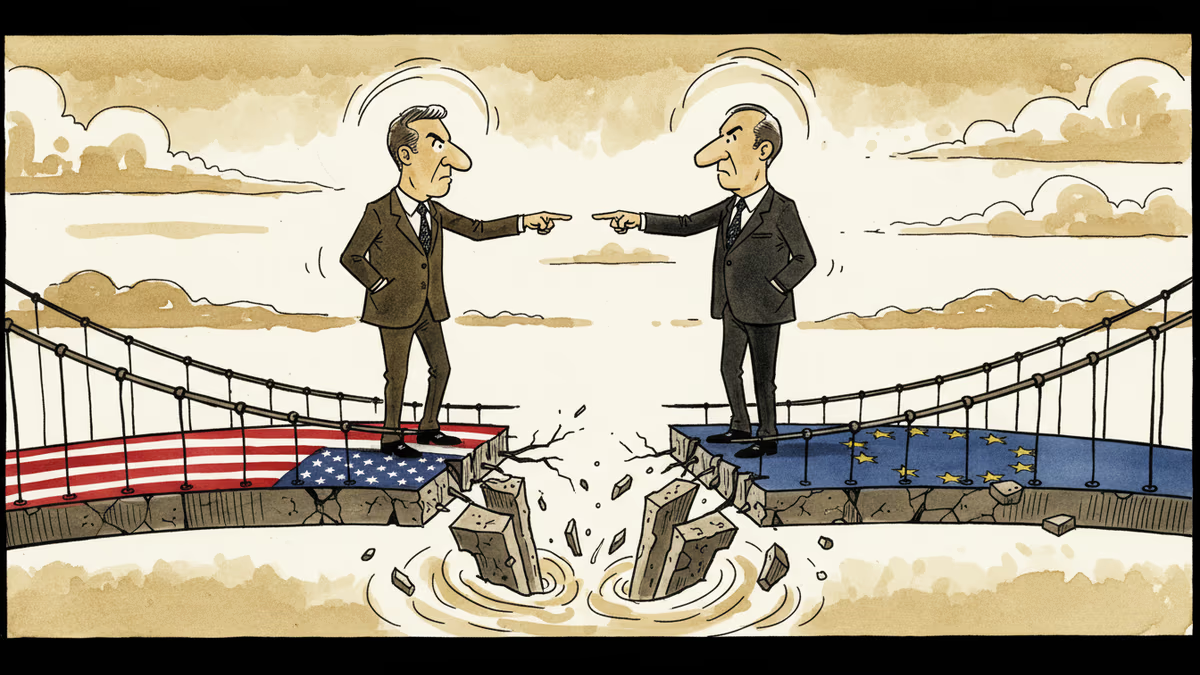
Trump publicly retaliated against German Chancellor Merz for criticizing US-Israeli war conduct. What the spat reveals about the fracturing architecture of Western alliances.
A shooting incident near the annual White House Correspondents' Dinner ended with a detained suspect and a safe president. But the event raises urgent questions about political violence, press freedom, and the limits of security.
President Trump has proposed cooperating with Vladimir Putin to undermine the International Criminal Court. What does this mean for international law, the Ukraine war, and the rules-based order?
Trump's Beijing visit was a masterclass in diplomatic theater. Warm handshakes, viral selfies, and noodle runs. But Taiwan, Iran, and rare earths remain untouched. Here's what the spectacle obscures.
Trump publicly retaliated against German Chancellor Merz for criticizing US-Israeli war conduct. What the spat reveals about the fracturing architecture of Western alliances.
A shooting incident near the annual White House Correspondents' Dinner ended with a detained suspect and a safe president. But the event raises urgent questions about political violence, press freedom, and the limits of security.
Thoughts
Share your thoughts on this article
Sign in to join the conversation