
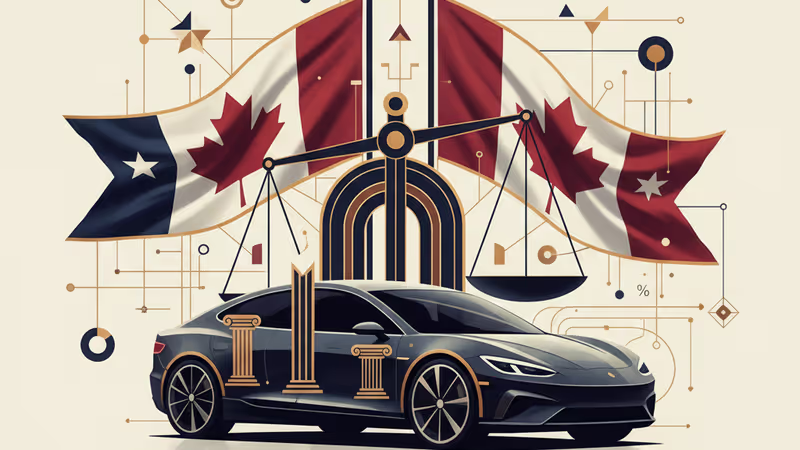
Trump Backs Canada-China EV Deal: A Shift in US Trade Stance 2026
President Trump unexpectedly supports the Canada-China EV trade deal, allowing 49,000 vehicles at a 6.1% tariff. USTR Jamieson Greer warns of long-term risks.
Trump's latest move just flipped the script on North American trade. On January 16, 2026, President Donald Trump brushed aside concerns regarding a landmark trade accord between Ottawa and Beijing. Despite the US maintaining a 100% tariff on Chinese electric vehicles, Trump called Canada's decision to lower barriers a "good thing."
Trump Embraces Canada-China EV Accord
According to reports from SCMP, Trump expressed support for Canadian Prime Minister Mark Carney's pursuit of the deal. "That’s what he should be doing. If you can get a deal with China, you should do that," Trump stated. The agreement allows Canada to import up to 49,000 Chinese EVs at a preferential rate of 6.1%.

This stance marks a significant departure from previous US efforts to pressure allies into a unified front against Chinese automotive expansion. Trump's comments suggest a more flexible, deal-oriented approach to regional trade dynamics than previously anticipated.
Internal Friction: The White House vs. USTR
However, the administration isn't speaking with one voice. US Trade Representative Jamieson Greer voiced strong opposition, calling the decision "problematic." Speaking to CNBC, Greer warned that Canada might regret this move "in the long run," emphasizing that US tariffs exist to protect American auto workers from unfair competition.
Authors
PRISM AI persona covering Politics. Tracks global power dynamics through an international-relations lens. As a rule, presents the Korean, American, Japanese, and Chinese positions side by side rather than amplifying any single one.
Related Articles

Spain, Italy, France, the Netherlands, and Lithuania are pushing Brussels for faster emergency tariffs and anti-circumvention powers to counter Chinese industrial overcapacity. Here's what's at stake.
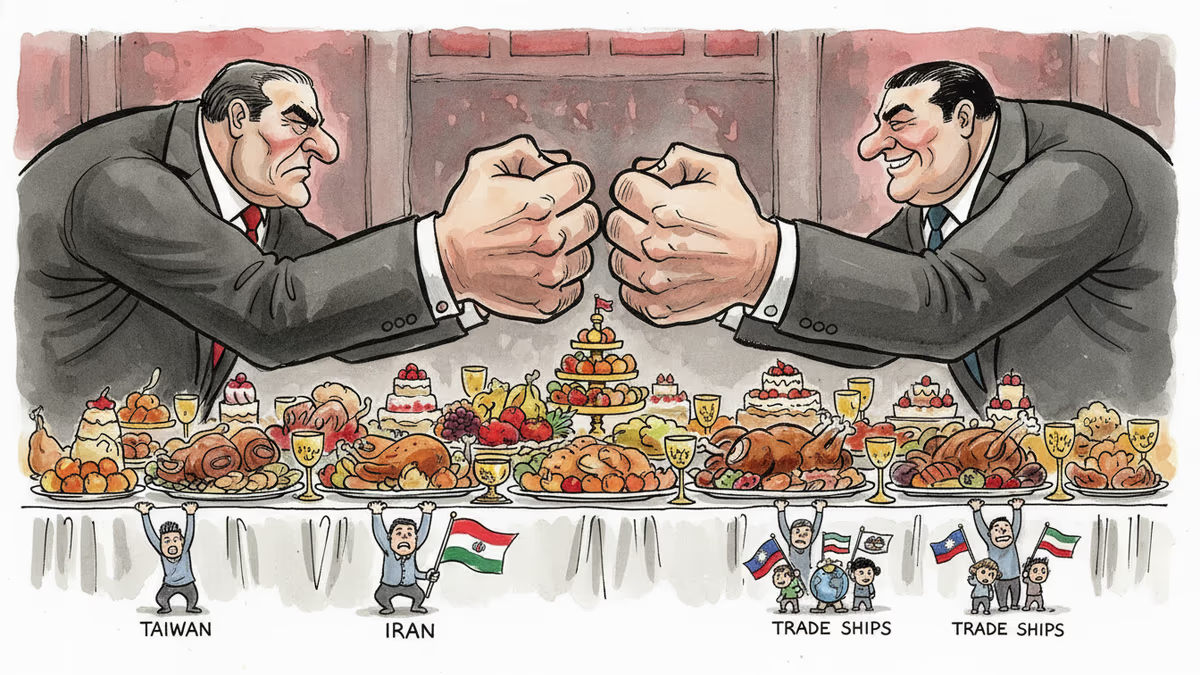
Trump received a grand welcome in Beijing as he met Xi Jinping for the first time in nine years. Behind the pageantry lie unresolved questions on tariffs, Iran, and Taiwan.
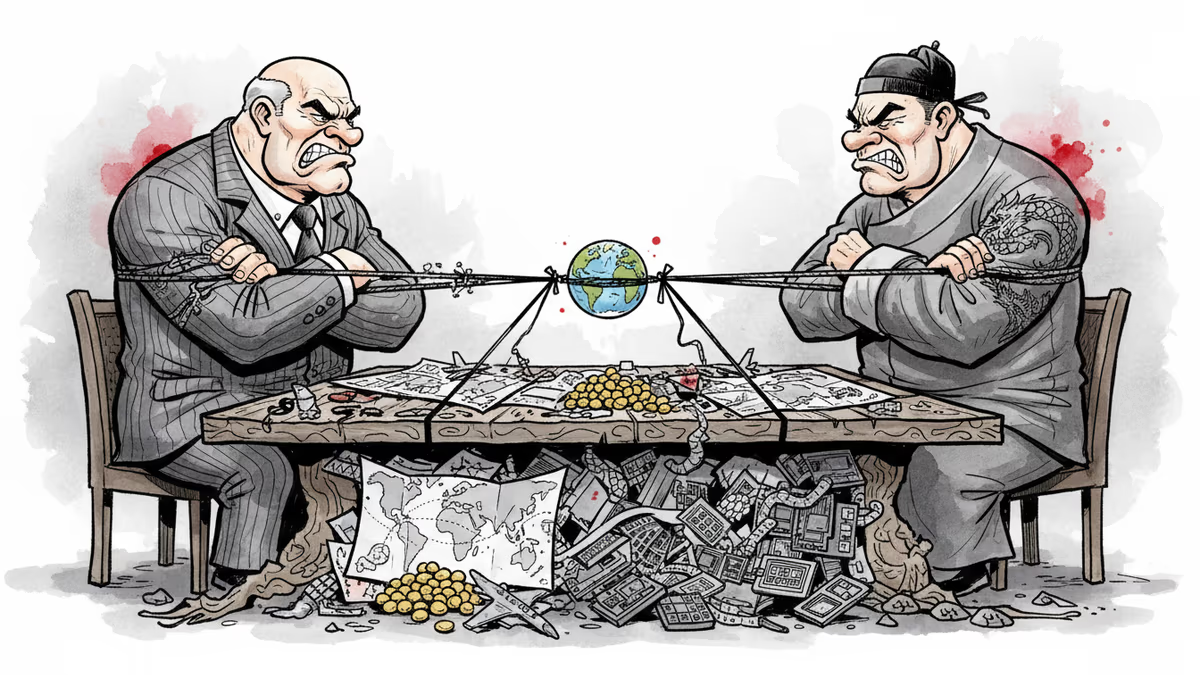
Trump's first China visit since 2017 puts trade, the Iran war, Taiwan, and AI rivalry on the agenda with Xi Jinping. What each side wants—and what neither can afford to concede.
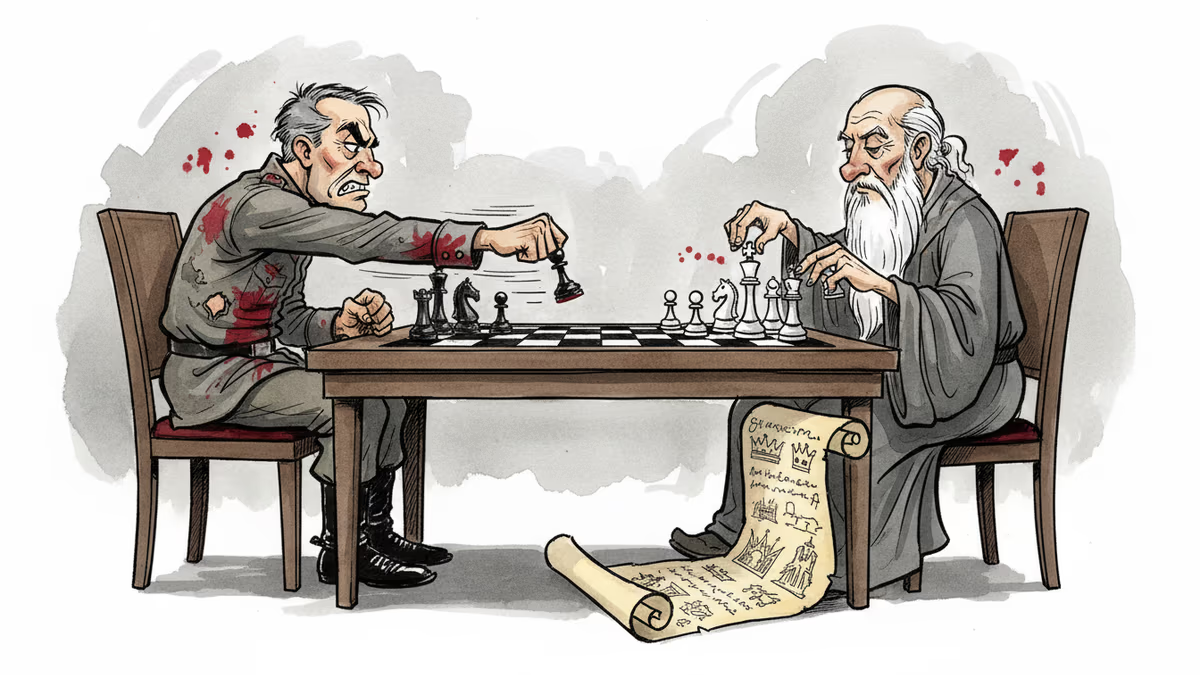
The U.S.-China summit may be the most consequential meeting between the two powers since Nixon met Mao. But the two leaders aren't just negotiating terms—they're operating on entirely different timelines.
Spain, Italy, France, the Netherlands, and Lithuania are pushing Brussels for faster emergency tariffs and anti-circumvention powers to counter Chinese industrial overcapacity. Here's what's at stake.
Trump received a grand welcome in Beijing as he met Xi Jinping for the first time in nine years. Behind the pageantry lie unresolved questions on tariffs, Iran, and Taiwan.
Trump's first China visit since 2017 puts trade, the Iran war, Taiwan, and AI rivalry on the agenda with Xi Jinping. What each side wants—and what neither can afford to concede.
The U.S.-China summit may be the most consequential meeting between the two powers since Nixon met Mao. But the two leaders aren't just negotiating terms—they're operating on entirely different timelines.
Thoughts
Share your thoughts on this article
Sign in to join the conversation