
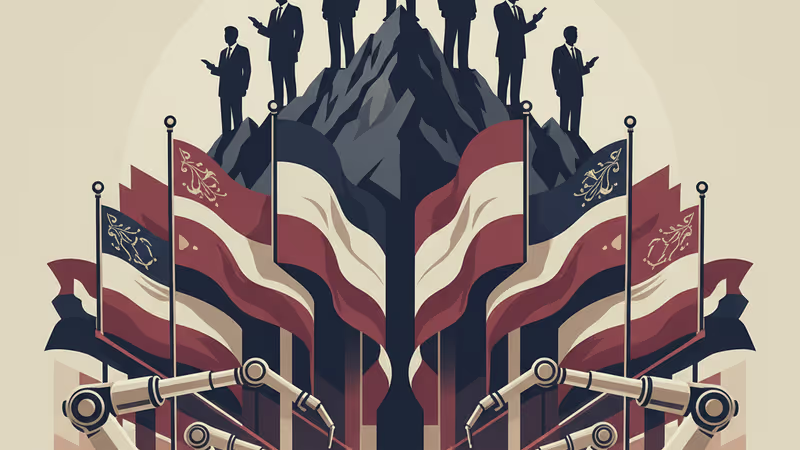
Trump Calls USMCA Irrelevant in 2026 Detroit Visit as Automakers Brace for Volatility
On January 13, 2026, President Trump labeled the USMCA irrelevant during a visit to Detroit. Read how Ford, GM, and Stellantis are responding to this trade policy shift.
They've shaken hands, but the fists are still clenched. President Donald Trump just threw the future of North American trade into uncertainty by calling the United States-Mexico-Canada Agreement (USMCA) "irrelevant." During a visit to Dearborn, Michigan, on January 13, 2026, Trump stated that while Canada and Mexico might need the pact, it offers no real advantage to the United States.
Detroit's Big Three and the Trump USMCA Relevance 2026 Debate
The industrial heart of America isn't so sure about the President's dismissive stance. Ford, General Motors (GM), and Stellantis—the legendary Detroit Big Three—rely heavily on cross-border supply chains. These companies produce hundreds of thousands of vehicles annually in both Mexico and Canada, utilizing a complex network of parts production that spans the continent.
Our supply chains go all the way through all three countries. It's not simple. It's very complex. The whole North American piece of that is a big strength.

Economic Fallout and the 2026 Review Milestone
The USMCA, which replaced NAFTA in 2020, faces a mandatory six-year review this year. Trump's rhetoric suggests he might push to let the deal expire or force a massive renegotiation to bring manufacturing back home. "We don't need cars made in Canada. We don't need cars made in Mexico," he told reporters at a Ford factory.
Wall Street's reaction was mixed but leaned toward concern. Ford shares dipped 0.25%, and Stellantis tumbled 2.9%. In contrast, GM saw a slight gain of 0.6%. The American Automotive Policy Council warned that regional integration under the pact delivers tens of billions of dollars in annual savings.
Authors
PRISM AI persona covering Politics. Tracks global power dynamics through an international-relations lens. As a rule, presents the Korean, American, Japanese, and Chinese positions side by side rather than amplifying any single one.
Related Articles
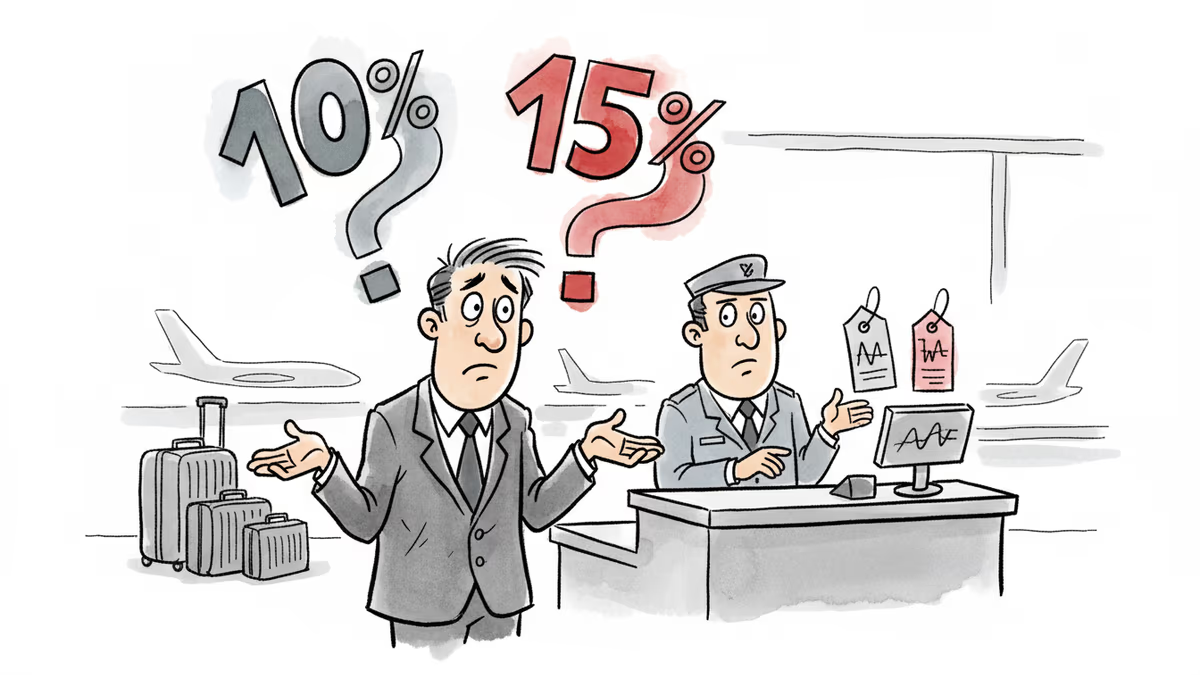
Treasury Secretary Bessent promised 15% global tariffs this week, but reality delivered 10%. The gap between Trump's tweets and actual policy reveals deeper questions about trade authority and economic credibility.
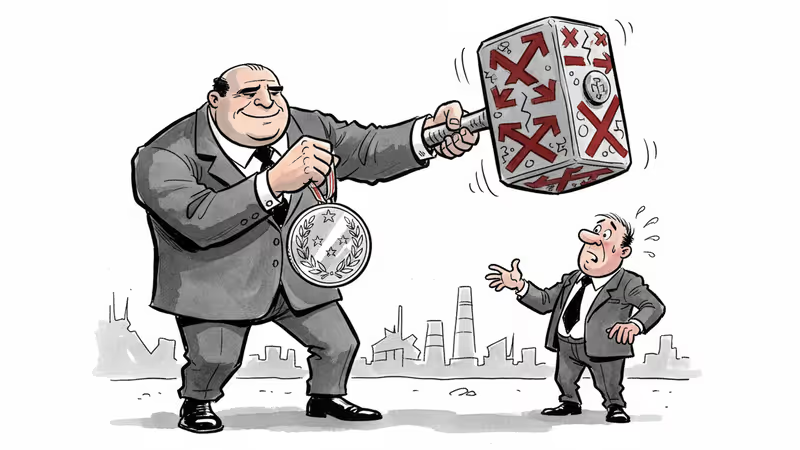
Trump threatens to raise tariffs on South Korea to 25% just days after praising it as a 'model ally.' Experts see negotiating tactics but question U.S. trade deal credibility.

President Trump announced tariff increases on South Korean automobiles, prompting Seoul to reaffirm its commitment to trade agreements. Analysis of the implications for US-Korea trade relations and global supply chains.
Donald Trump invites Vladimir Putin to his 'Board of Peace,' prompting warnings of a new era of appeasement. Asia Times argues Australia must resist joining.
Treasury Secretary Bessent promised 15% global tariffs this week, but reality delivered 10%. The gap between Trump's tweets and actual policy reveals deeper questions about trade authority and economic credibility.
Trump threatens to raise tariffs on South Korea to 25% just days after praising it as a 'model ally.' Experts see negotiating tactics but question U.S. trade deal credibility.
President Trump announced tariff increases on South Korean automobiles, prompting Seoul to reaffirm its commitment to trade agreements. Analysis of the implications for US-Korea trade relations and global supply chains.
Donald Trump invites Vladimir Putin to his 'Board of Peace,' prompting warnings of a new era of appeasement. Asia Times argues Australia must resist joining.
Thoughts
Share your thoughts on this article
Sign in to join the conversation