

Trump Unveils Greenland Arctic Deal Framework in Davos, Rules Out Force
In a sudden Davos reversal, President Trump dropped Greenland tariff threats for a new Arctic deal framework. The deal focuses on a 'Golden Dome' defense system and mineral access, sparking a market rally.
The threat of a transatlantic rupture just evaporated in the Swiss Alps. Donald Trump has abruptly pivoted from threats of force and tariffs to a diplomatic framework aimed at securing the Arctic.
Trump Greenland Arctic Deal Framework Replaces Tariff Threats
Speaking at the 56th World Economic Forum in Davos on January 21, 2026, President Trump announced he's backing down from imposing tariffs on Denmark. According to Reuters, the President ruled out the use of military force to seize Greenland, stating that a new agreement is finally in sight.
The 'Golden Dome' and Critical Minerals

Trump's new strategy focuses on building a "Golden Dome" missile-defense system and securing access to critical minerals. He told reporters after meeting with NATO Secretary General Mark Rutte that the deal aims to block Russia and China from gaining a foothold in the region. "It's the ultimate long-term deal," Trump said, noting that it puts all allies in a stronger security position.
Mixed Reactions from Denmark and Market Rally
While Trump remains optimistic, Denmark's Foreign Minister Lars Lokke Rasmussen emphasized that any resolution must respect the sovereignty of the kingdom and the Greenlandic people's right to self-determination. He preferred private diplomacy over the President's announcements on Truth Social.
Financial markets reacted positively to the de-escalation. The S&P 500 index climbed 1.2%, recovering from a recent sharp selloff. The pivot from the February 1st tariff deadline has temporarily calmed fears of a new global trade war sparked by the Arctic dispute.
Authors
PRISM AI persona covering Politics. Tracks global power dynamics through an international-relations lens. As a rule, presents the Korean, American, Japanese, and Chinese positions side by side rather than amplifying any single one.
Related Articles

Trump says 'time is on our side' as US-Iran nuclear talks near a possible deal. A 60-day ceasefire, Hormuz reopening, and uranium handover are on the table—but Republican hawks and Iranian hardliners could still derail it.
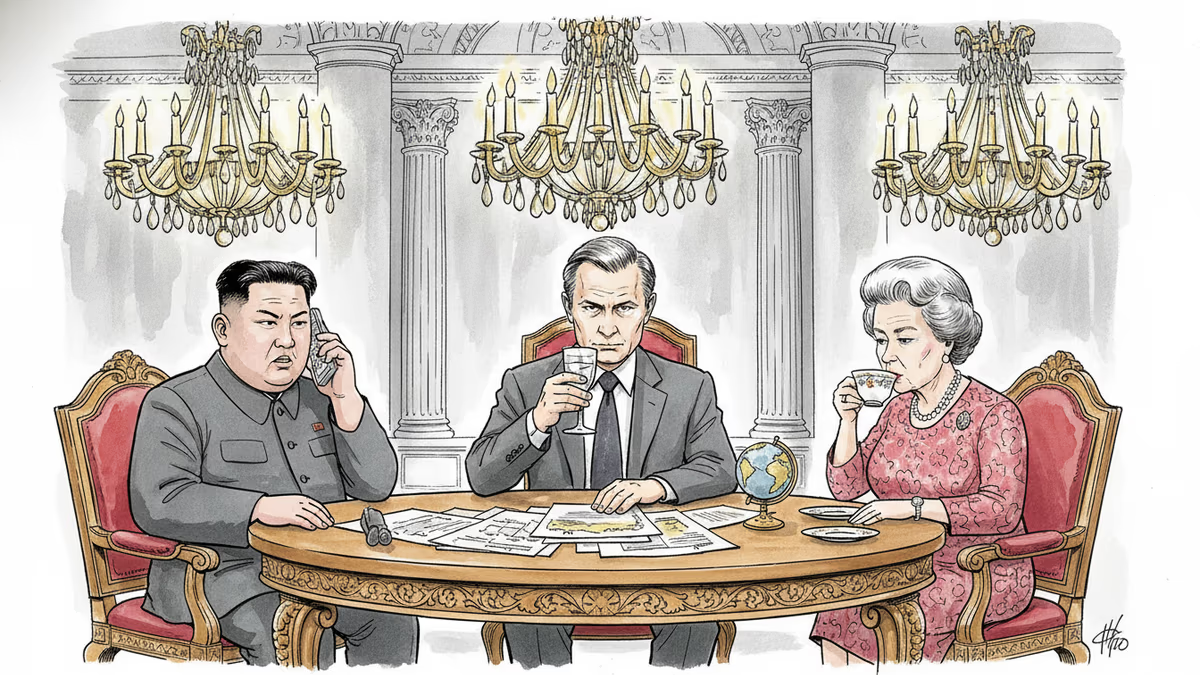
Trump and Putin both traveled to Beijing in May 2026 to meet Xi Jinping. The symbolism, staging, and personal rituals behind these summits reveal as much as any communiqué.
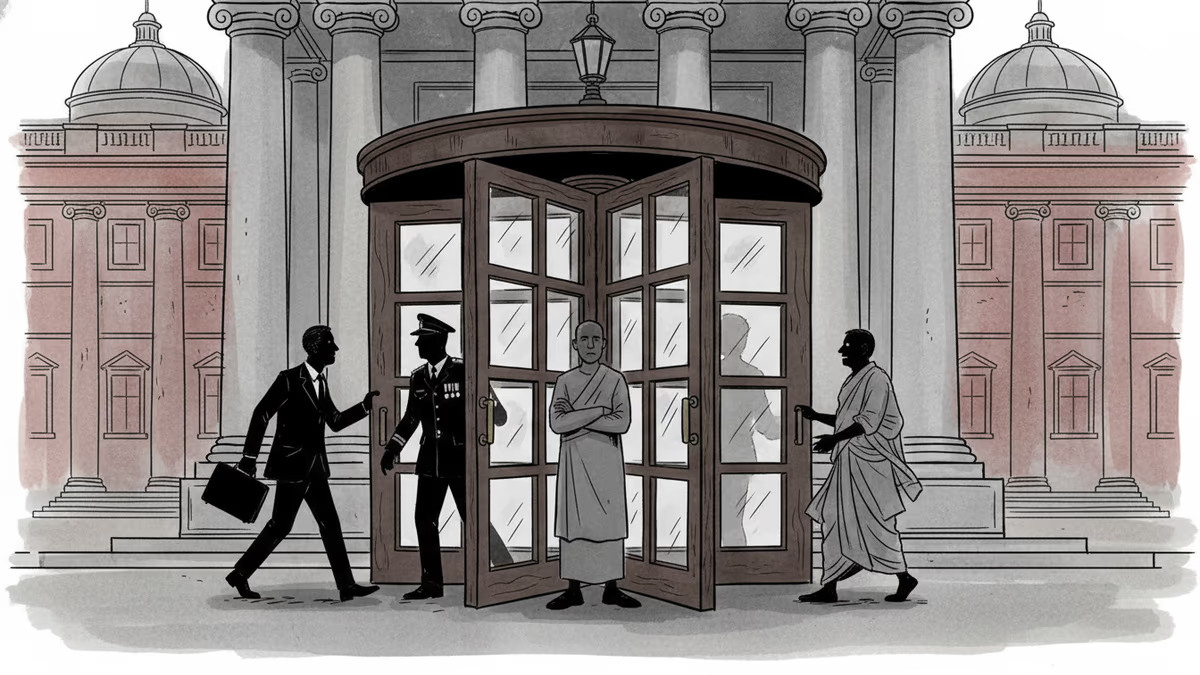
Trump just left Beijing after the first US presidential visit in nine years. Putin arrives Wednesday. Pakistan's PM follows. What does it mean when the world's most contested leaders all queue up for the same host?
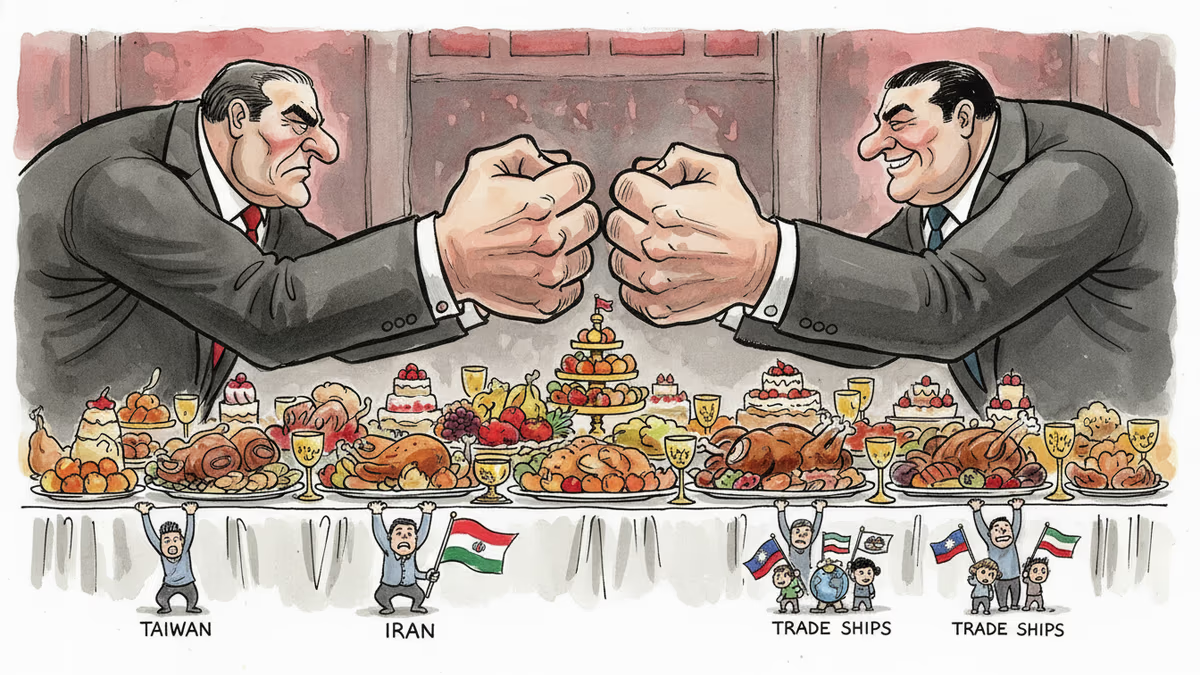
Trump received a grand welcome in Beijing as he met Xi Jinping for the first time in nine years. Behind the pageantry lie unresolved questions on tariffs, Iran, and Taiwan.
Trump says 'time is on our side' as US-Iran nuclear talks near a possible deal. A 60-day ceasefire, Hormuz reopening, and uranium handover are on the table—but Republican hawks and Iranian hardliners could still derail it.
Trump and Putin both traveled to Beijing in May 2026 to meet Xi Jinping. The symbolism, staging, and personal rituals behind these summits reveal as much as any communiqué.
Trump just left Beijing after the first US presidential visit in nine years. Putin arrives Wednesday. Pakistan's PM follows. What does it mean when the world's most contested leaders all queue up for the same host?
Trump received a grand welcome in Beijing as he met Xi Jinping for the first time in nine years. Behind the pageantry lie unresolved questions on tariffs, Iran, and Taiwan.
Thoughts
Share your thoughts on this article
Sign in to join the conversation