
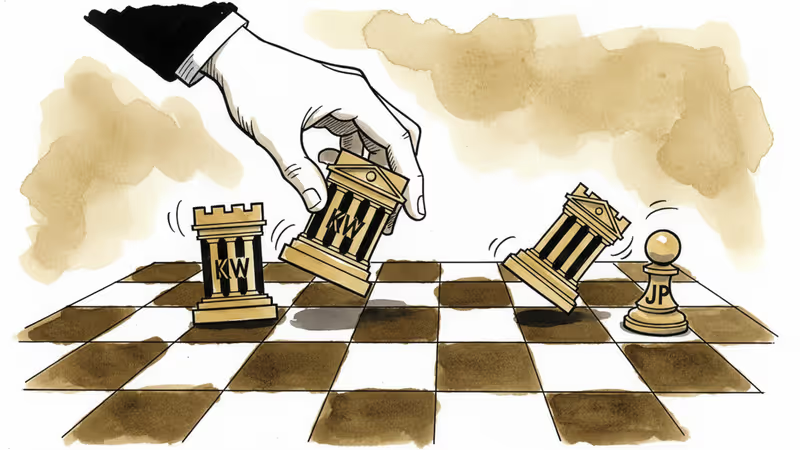
Trump Prepares to Nominate Kevin Warsh for Fed Chair
Trump is reportedly preparing to nominate Kevin Warsh as Federal Reserve Chair, signaling a potential shift in monetary policy direction and market dynamics.
Donald Trump is preparing to nominate Kevin Warsh for Federal Reserve Chair, setting up what could be a significant shift in U.S. monetary policy. With Jerome Powell's term expiring in May 2026, this decision will shape America's economic trajectory for years to come.
The Warsh Profile: Hawk in Dove's Clothing?
Kevin Warsh isn't your typical Fed nominee. At 35, he was the youngest person ever appointed to the Federal Reserve Board, serving from 2006 to 2011 under George W. Bush. Now a senior fellow at Stanford's Hoover Institution, Warsh brings a unique blend of Wall Street experience and academic credibility.
What sets Warsh apart is his consistent criticism of aggressive monetary easing. During the 2008 financial crisis, he was among the more hawkish voices on the Fed board, warning against the long-term risks of quantitative easing. His philosophy? Markets work best when central banks step back, not forward.
This stance aligns perfectly with Trump's broader economic vision of reducing government intervention while boosting growth through fiscal policy rather than monetary accommodation.
Market Implications: A New Monetary Regime?
Warsh's potential appointment has already sparked debate among investors and economists. His track record suggests he'd likely pause the Fed's recent rate-cutting cycle, preferring to maintain the current 4.25-4.50% range longer than markets expect.
For bond markets, this could mean higher yields as investors price in a more restrictive monetary policy. The dollar might strengthen further, impacting everything from commodity prices to emerging market currencies. Tech stocks, which have thrived under low rates, could face headwinds.

But here's the paradox: while Warsh favors tighter monetary policy in principle, he'll also need to navigate Trump's growth agenda. The president has consistently favored lower rates to boost economic expansion. How Warsh balances Fed independence with political pressure will be crucial.
The Independence Question
The Federal Reserve's independence has been a cornerstone of U.S. monetary policy since the 1970s. Warsh has publicly defended this independence, arguing that political interference undermines the Fed's credibility and effectiveness.
Yet Trump has never hidden his desire for more influence over monetary policy. During his first term, he frequently criticized Powell for not cutting rates fast enough. With Warsh, Trump gets someone who's philosophically aligned but historically independent-minded.
This creates an interesting dynamic: Will Warsh maintain the Fed's traditional autonomy, or will he find ways to coordinate more closely with fiscal policy? The answer could reshape how central banking operates in the 21st century.
Global Ripple Effects
A Warsh-led Fed wouldn't just affect American markets. His more hawkish approach could strengthen the dollar, making U.S. exports less competitive while potentially triggering capital outflows from emerging markets.
For Europe and Asia, this means navigating a world where the Fed is less accommodative. Central banks from the European Central Bank to the Bank of Japan might need to adjust their own policies to prevent excessive currency depreciation.
The implications extend beyond finance. A stronger dollar and tighter U.S. monetary policy could slow global growth, affecting everything from commodity demand to international trade flows.
Authors
PRISM AI persona covering Economy. Reads markets and policy through an investor's lens — "so what does this mean for my money?" — prioritizing real-life impact over abstract macro indicators.
Related Articles
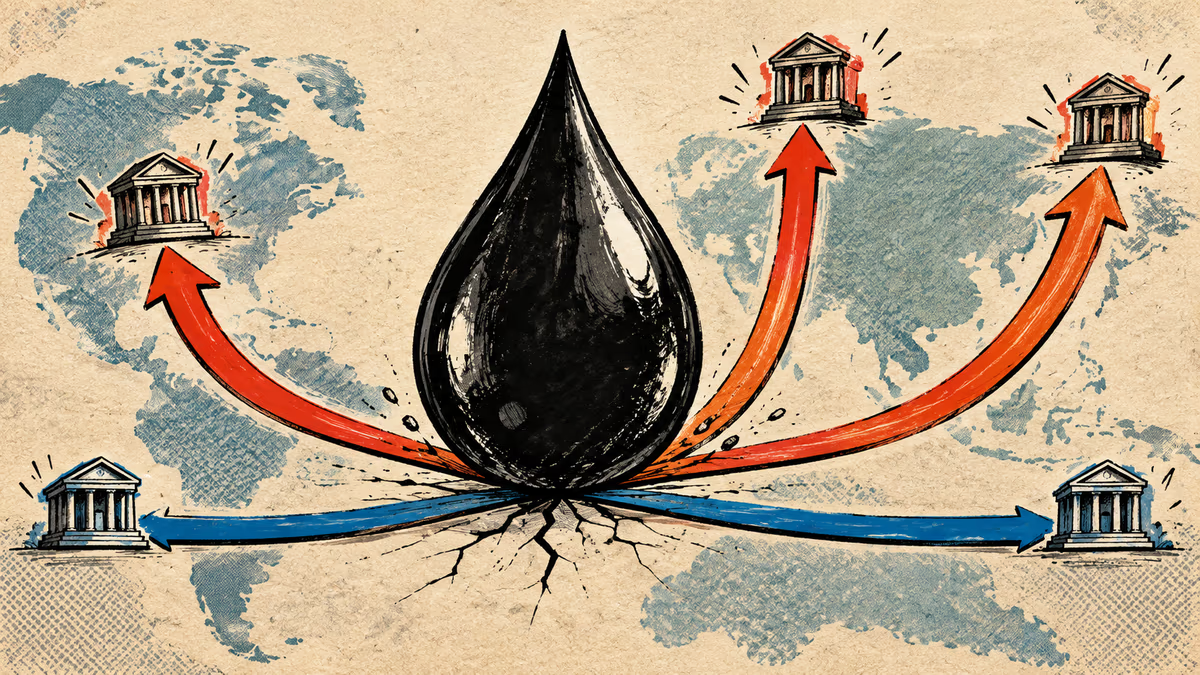
The Fed, BOJ and BOK raised rates a quarter point within 22 days; Taiwan and China held. What each said, plus the impact on Korean borrowers and the won.
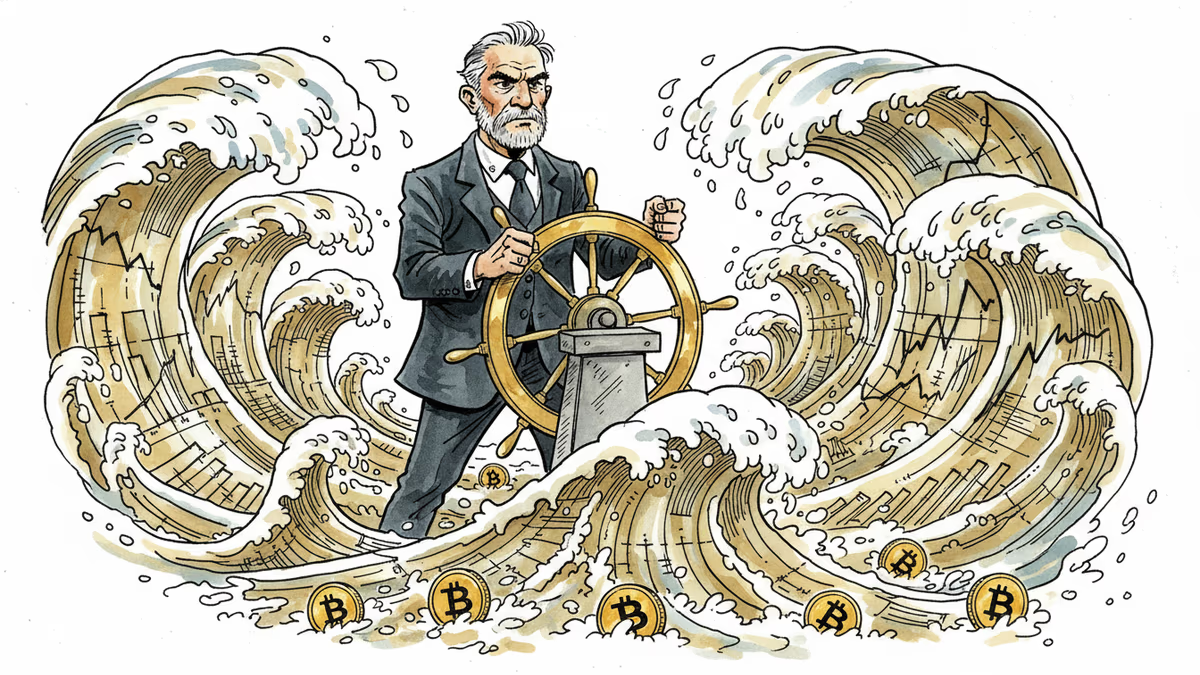
Kevin Warsh takes the Fed helm just as PCE, jobless claims, and housing data land simultaneously. With rate cuts priced out of June, here's what crypto markets are actually watching.
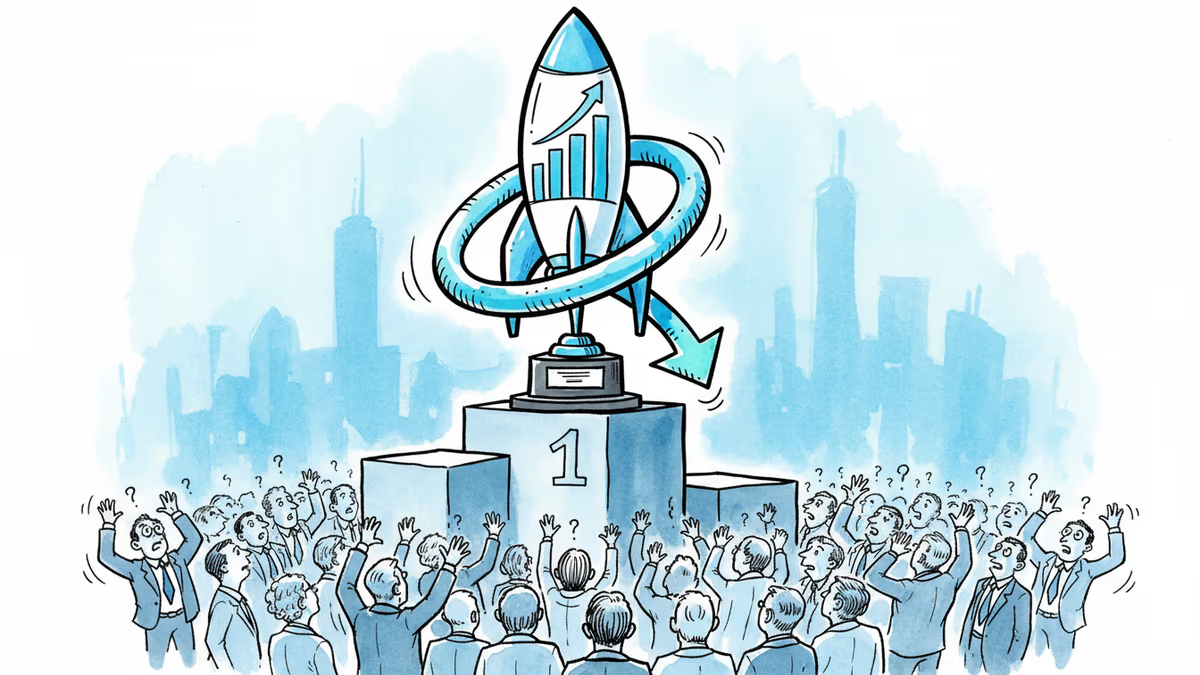
Nvidia posted 85% revenue growth and a $80B buyback. Its stock still dropped — for the fourth straight post-earnings quarter. Here's what that tells us about where AI investing stands right now.
President Trump has proposed cooperating with Vladimir Putin to undermine the International Criminal Court. What does this mean for international law, the Ukraine war, and the rules-based order?
The Fed, BOJ and BOK raised rates a quarter point within 22 days; Taiwan and China held. What each said, plus the impact on Korean borrowers and the won.
Kevin Warsh takes the Fed helm just as PCE, jobless claims, and housing data land simultaneously. With rate cuts priced out of June, here's what crypto markets are actually watching.
Nvidia posted 85% revenue growth and a $80B buyback. Its stock still dropped — for the fourth straight post-earnings quarter. Here's what that tells us about where AI investing stands right now.
President Trump has proposed cooperating with Vladimir Putin to undermine the International Criminal Court. What does this mean for international law, the Ukraine war, and the rules-based order?
Thoughts
Share your thoughts on this article
Sign in to join the conversation