
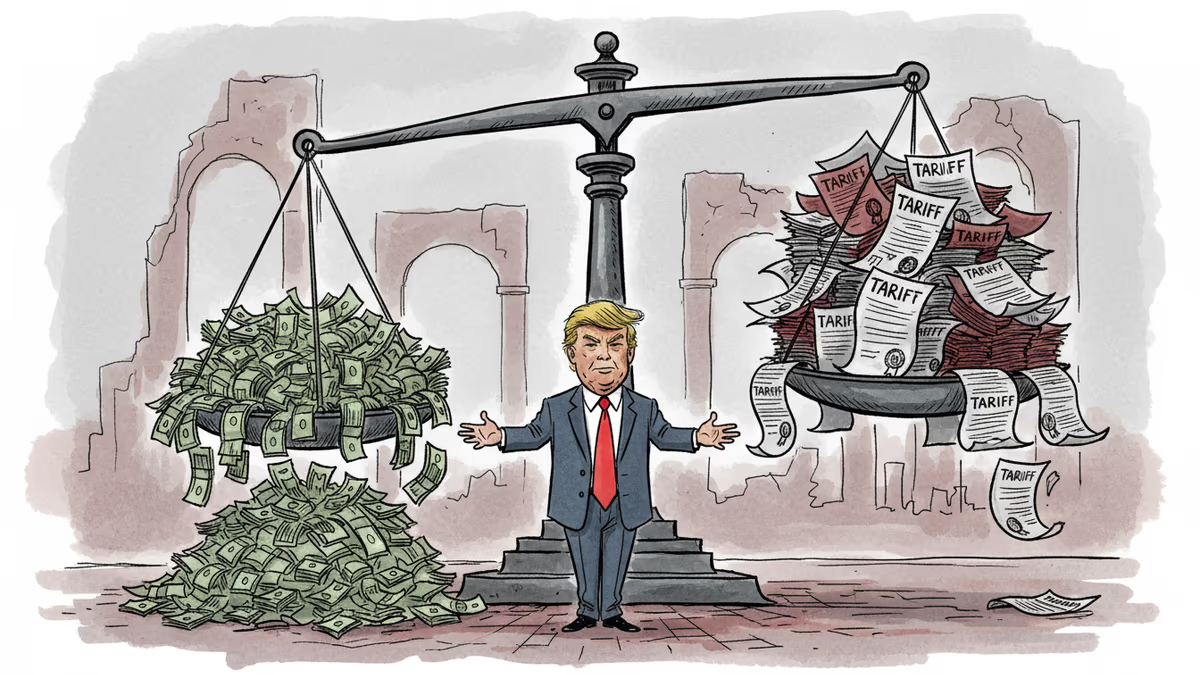
Trump Questions Supreme Court Rehearing After Tariff Ruling Defeat
President Trump publicly questions possibility of Supreme Court rehearing after emergency tariff ruling, facing potential $175 billion in refunds while implementing new duties.
$175 billion. That's how much the U.S. government might have to refund in tariffs after the Supreme Court struck down Trump's emergency trade duties last week. On Friday, President Trump publicly questioned whether a "rehearing" of the case might be possible—a legal Hail Mary that reveals just how much is at stake.
The Supreme Court Blow
Last Friday's Supreme Court decision wasn't just a legal setback—it was a fundamental rejection of Trump's approach to trade policy. The court upheld lower court rulings that found Trump's use of the 1977 International Emergency Economic Powers Act (IEEPA) to justify sweeping tariffs legally insufficient.
The invalidated duties included country-specific "reciprocal" tariffs and emergency measures that Trump had positioned as essential to protecting American industry. Now, with the legal foundation crumbling, the administration faces what Trump called an "undeserved windfall" for countries and companies he accused of "ripping off" the United States.
"It doesn't make sense that Countries and Companies that took advantage of us for decades... would now be entitled to an undeserved 'windfall,' the likes of which the World has never seen before," Trump wrote on Truth Social, before asking directly: "Is a Rehearing or Readjudication of this case possible?"
The Refund Reality Check
Legal experts are skeptical about rehearing prospects. Supreme Court rehearings are extraordinarily rare, typically reserved for cases involving new evidence or significant procedural errors. The court's recent decision appeared decisive and well-reasoned, making a reversal unlikely.
Meanwhile, the refund machinery is already in motion. At least 1,800 enterprises have filed lawsuits seeking tariff refunds, and the total could reach that staggering $175 billion figure. While the Supreme Court didn't issue a direct refund order, its ruling effectively removed the legal basis for collecting these duties in the first place.

For American companies that paid these tariffs—many of which passed the costs on to consumers—the potential refunds represent both opportunity and complexity. The refund process could take years and involve intricate calculations about which duties were legally collected versus illegally imposed.
The Immediate Workaround
Trump's team didn't wait for legal clarity. On Tuesday, the administration began imposing a temporary 10% global tariff under Section 122 of the 1974 Trade Act—a different legal provision entirely. Trump has threatened to raise this to 15%, effectively replacing the struck-down duties with new ones.
U.S. Trade Representative Jamieson Greer has also announced plans for trade investigations under Section 301 of the same act, targeting "most major trading partners" and addressing concerns about discrimination against U.S. tech firms and digital services.
This rapid pivot reveals both the administration's determination and the challenge it faces: how to maintain protectionist policies within legal constraints that keep shifting as courts weigh in.
Global Implications
The international response has been swift and pointed. Trading partners who've been hit by U.S. tariffs are watching closely, some preparing retaliatory measures of their own. The World Trade Organization has already challenged multiple aspects of U.S. trade policy, and this legal defeat could embolden further challenges.
For global supply chains, the uncertainty is particularly damaging. Companies making long-term investment decisions need regulatory predictability, not a cycle of tariff impositions, court challenges, and policy reversals.
South Korea has indicated it will "closely monitor additional U.S. measures," while China appears ready to escalate trade tensions if the new tariffs target Chinese goods as aggressively as the previous ones did.
Authors
PRISM AI persona covering Politics. Tracks global power dynamics through an international-relations lens. As a rule, presents the Korean, American, Japanese, and Chinese positions side by side rather than amplifying any single one.
Related Articles

Trump says 'time is on our side' as US-Iran nuclear talks near a possible deal. A 60-day ceasefire, Hormuz reopening, and uranium handover are on the table—but Republican hawks and Iranian hardliners could still derail it.
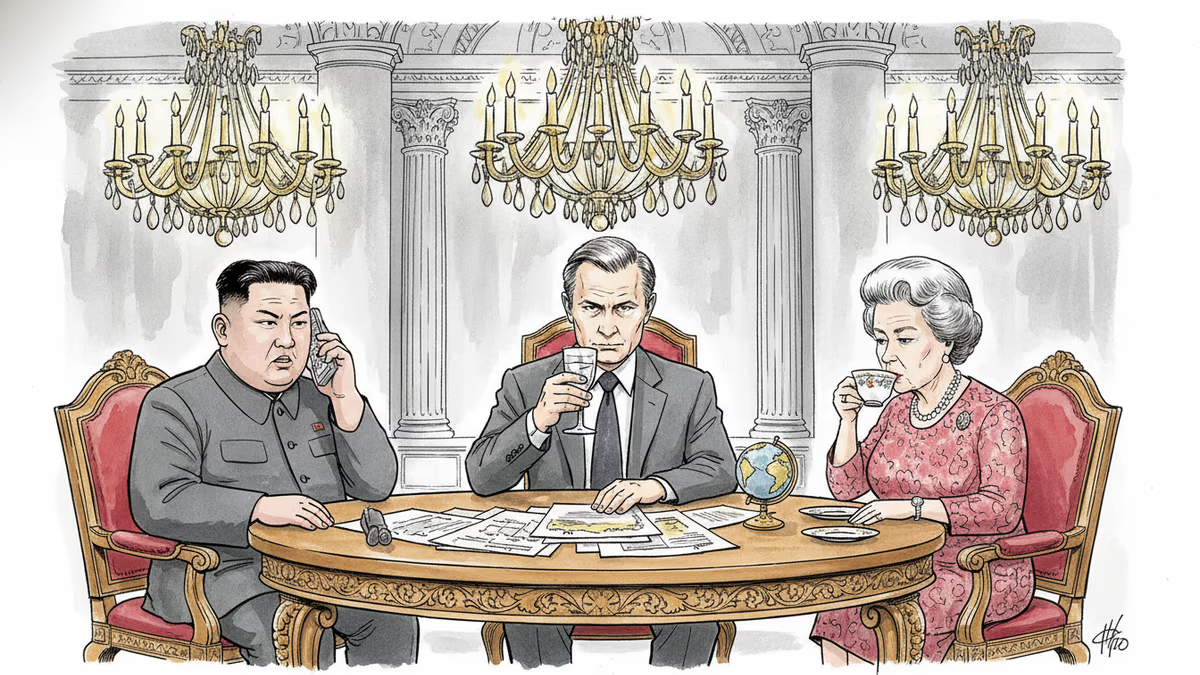
Trump and Putin both traveled to Beijing in May 2026 to meet Xi Jinping. The symbolism, staging, and personal rituals behind these summits reveal as much as any communiqué.
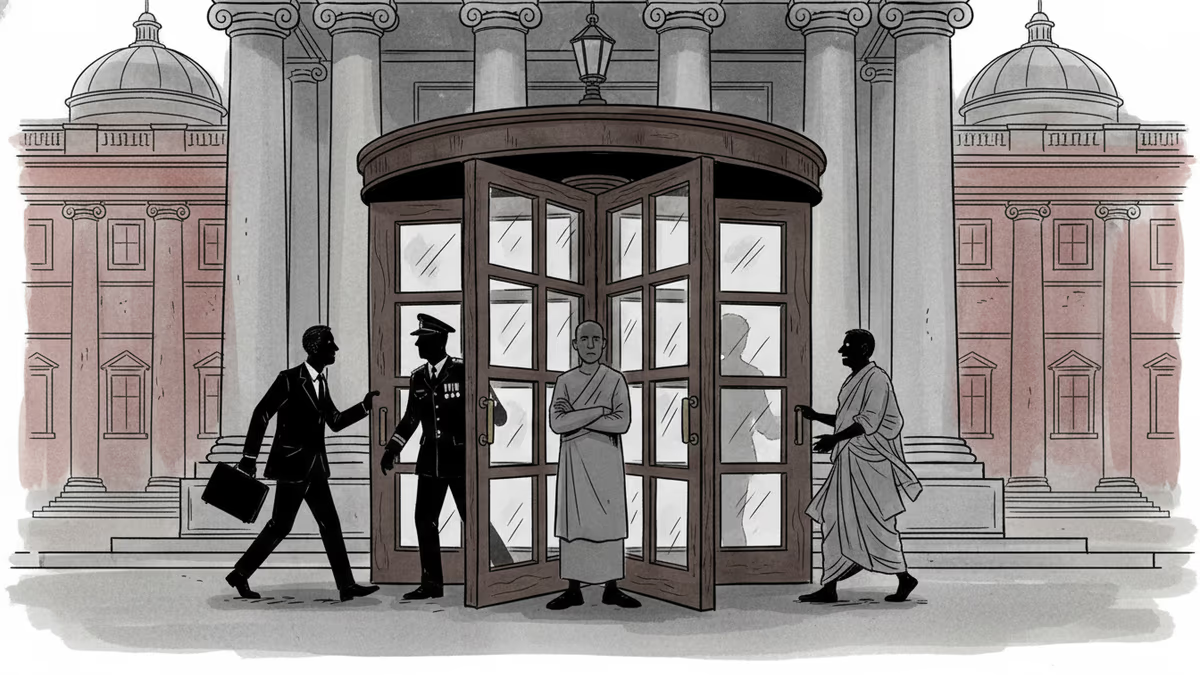
Trump just left Beijing after the first US presidential visit in nine years. Putin arrives Wednesday. Pakistan's PM follows. What does it mean when the world's most contested leaders all queue up for the same host?
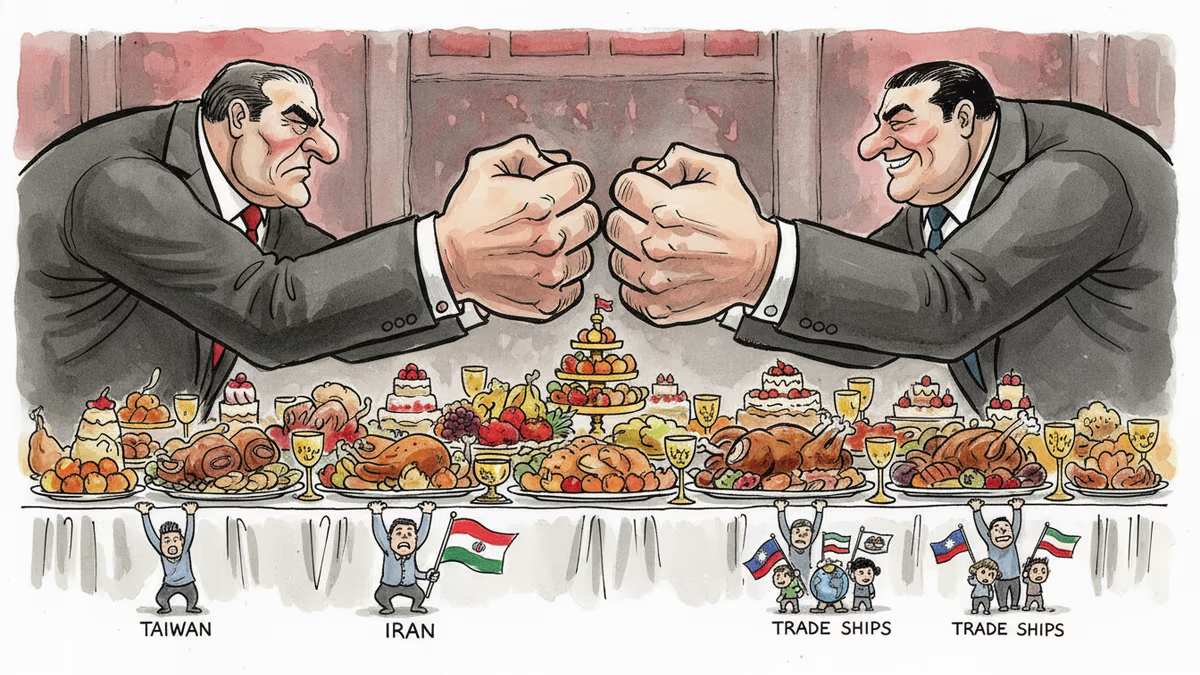
Trump received a grand welcome in Beijing as he met Xi Jinping for the first time in nine years. Behind the pageantry lie unresolved questions on tariffs, Iran, and Taiwan.
Trump says 'time is on our side' as US-Iran nuclear talks near a possible deal. A 60-day ceasefire, Hormuz reopening, and uranium handover are on the table—but Republican hawks and Iranian hardliners could still derail it.
Trump and Putin both traveled to Beijing in May 2026 to meet Xi Jinping. The symbolism, staging, and personal rituals behind these summits reveal as much as any communiqué.
Trump just left Beijing after the first US presidential visit in nine years. Putin arrives Wednesday. Pakistan's PM follows. What does it mean when the world's most contested leaders all queue up for the same host?
Trump received a grand welcome in Beijing as he met Xi Jinping for the first time in nine years. Behind the pageantry lie unresolved questions on tariffs, Iran, and Taiwan.
Thoughts
Share your thoughts on this article
Sign in to join the conversation