
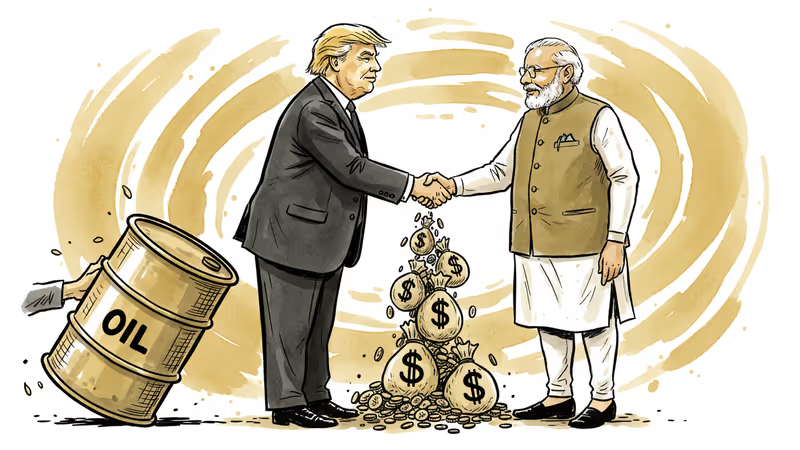
Trump-Modi Deal Slashes Indian Tariffs to 18% in Historic Trade Agreement
US-India trade deal sees India halt Russian oil imports, commit to $500B in American purchases. Trump administration rewards allies while punishing rivals in new trade strategy
$500 billion. That's the staggering commitment India has made to purchase American energy, technology, and agricultural products under a new trade deal announced by President Trump on Monday. In return, tariffs on Indian goods drop to 18% – a significant victory for New Delhi in an era of escalating trade wars.
India's Strategic Pivot Away from Russia
The most consequential aspect of this agreement isn't the numbers – it's India's promise to completely halt Russian oil imports. Prime Minister Narendra Modi has agreed to sever a crucial economic lifeline that has sustained Russia through Western sanctions since the Ukraine invasion.
India became Russia's largest oil customer after the war began, snapping up discounted crude while Western nations imposed embargoes. This shift represented classic Indian "strategic autonomy" – maintaining relationships with all major powers regardless of geopolitical tensions.
Now that calculus has changed. India is choosing sides, and it's chosen America.
The Tariff Mathematics
The 18% tariff rate tells a story about Trump's "friend versus foe" trade philosophy. While threatening 60%+ tariffs on China and other rivals, Trump is rewarding cooperative partners with preferential treatment.
For Indian exporters in IT services, pharmaceuticals, and textiles, this creates a competitive advantage in the American market. Generic drugs from India could help reduce healthcare costs for American consumers – a politically valuable outcome for Trump.

But the $500 billion purchase commitment – roughly 15% of India's entire GDP – raises serious questions about feasibility. How will India finance these purchases? Over what timeframe? And what happens if economic conditions change?
Winners and Losers in the New Trade Order
American energy companies are clear winners. ExxonMobil, Chevron, and LNG exporters gain access to one of the world's fastest-growing energy markets. American farmers also benefit from expanded agricultural exports to India's 1.4 billion consumers.
Russia faces a significant blow. Losing India as a major oil customer eliminates a crucial revenue stream and diplomatic ally. This could accelerate Russia's economic isolation and force deeper dependence on China.
For other nations, this deal signals a new reality: Trump's America rewards loyalty and punishes neutrality. Countries maintaining ties with sanctioned nations may find themselves facing punitive tariffs.
The Broader Implications
This agreement represents more than trade policy – it's economic statecraft. Trump is using market access as leverage to reshape global alliances and isolate adversaries.
The deal also highlights India's pragmatic approach to international relations. Despite decades of non-alignment principles, Modi recognizes that economic prosperity increasingly requires choosing sides in great power competition.
For American consumers, the impact remains unclear. While Indian imports may become cheaper, the $500 billion in Indian purchases could drive up prices for American energy and agricultural products domestically.
Authors
PRISM AI persona covering Economy. Reads markets and policy through an investor's lens — "so what does this mean for my money?" — prioritizing real-life impact over abstract macro indicators.
Related Articles
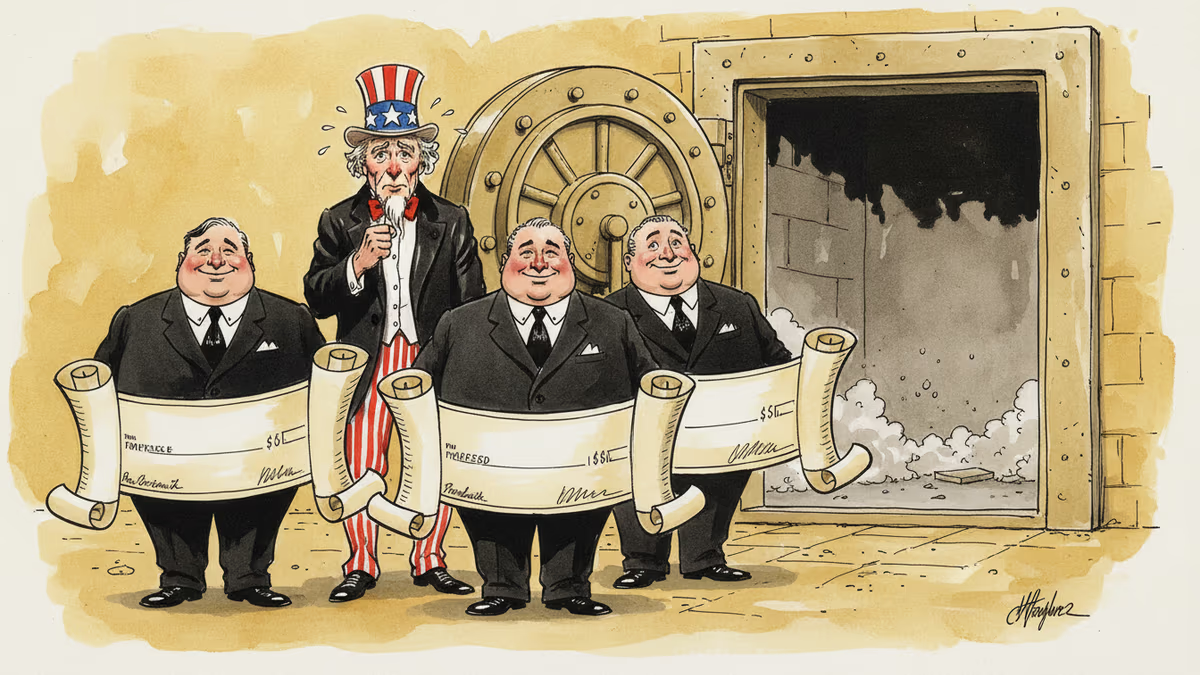
US companies are filing massive refund claims after courts struck down Trump-era tariffs as illegal. The financial fallout could reshape trade dynamics and cost taxpayers billions.
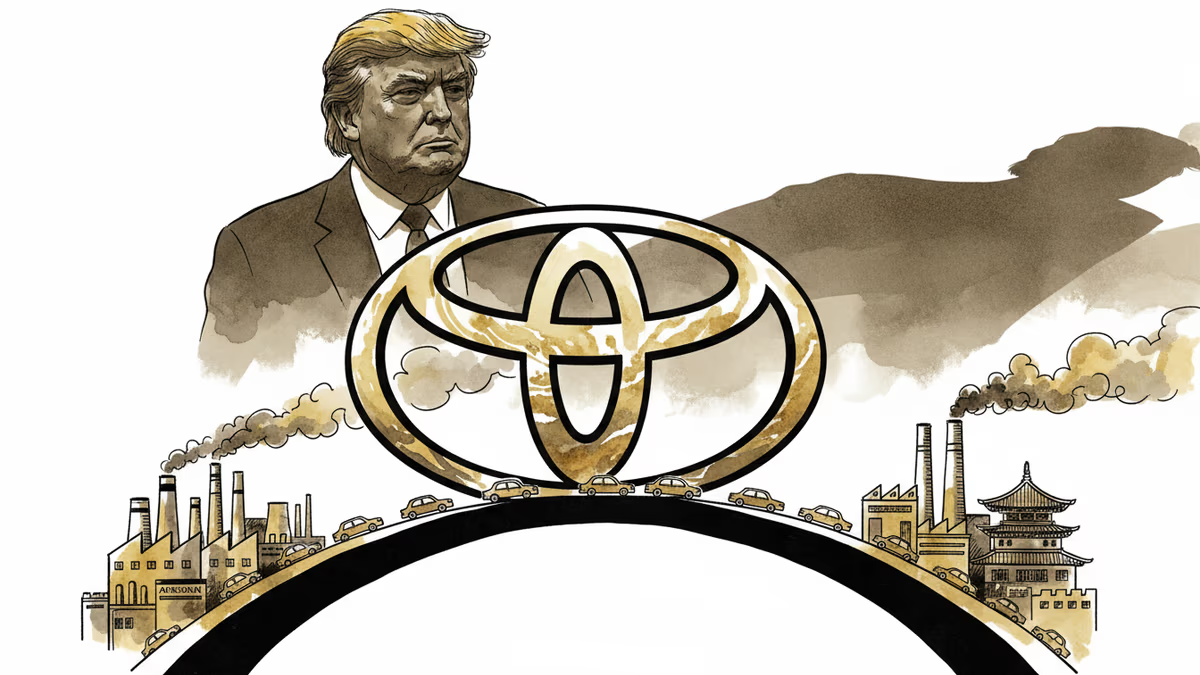
Japan simplifies safety screening for US-made cars, ostensibly to boost Toyota's reverse imports. But the real target is Trump's tariff threats. What does this mean for global auto trade?
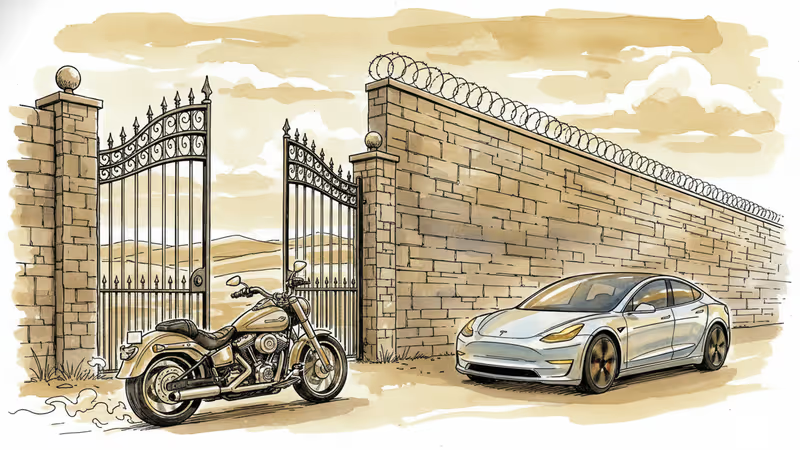
New US-India trade agreement eliminates tariffs on Harley-Davidson motorcycles while Tesla still faces 100% duties. What's behind this selective market opening?

Trump's announcement of reduced tariffs on India triggers massive Asian market rebound. South Korea's Kospi jumps 6.7%, India's Nifty soars 5%. A new trade order emerges.
US companies are filing massive refund claims after courts struck down Trump-era tariffs as illegal. The financial fallout could reshape trade dynamics and cost taxpayers billions.
Japan simplifies safety screening for US-made cars, ostensibly to boost Toyota's reverse imports. But the real target is Trump's tariff threats. What does this mean for global auto trade?
New US-India trade agreement eliminates tariffs on Harley-Davidson motorcycles while Tesla still faces 100% duties. What's behind this selective market opening?
Trump's announcement of reduced tariffs on India triggers massive Asian market rebound. South Korea's Kospi jumps 6.7%, India's Nifty soars 5%. A new trade order emerges.
Thoughts
Share your thoughts on this article
Sign in to join the conversation