
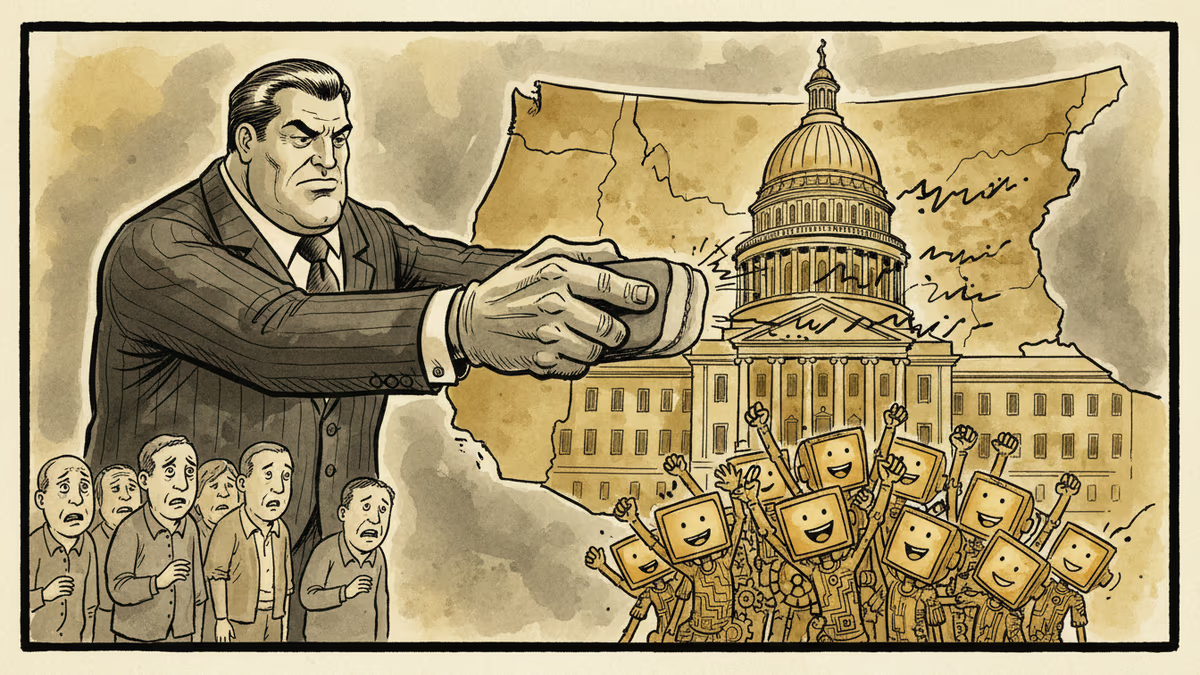
Why Trump Really Wants to Kill Utah's AI Safety Bill
Trump pressures Utah Republicans to scrap AI safety legislation. In the regulation vs innovation debate, who wins? What it means for tech startups, consumers, and global AI competition.
Donald Trump is making phone calls. Not to world leaders or campaign donors, but to Utah Republicans. His message: kill the AI safety bill. And he's not even president yet.
What's Really Happening
Utah passed its AI Safety Act last year, requiring companies to test high-risk AI systems and report safety measures. It's not the most aggressive AI regulation in America, but it's significant enough to catch Trump's attention.
According to sources familiar with the conversations, Trump has been personally calling Utah Republican legislators, arguing the law "stifles innovation" and benefits only "Silicon Valley giants." The pressure campaign represents Trump's first major intervention in AI policy since his election victory.
Utah isn't California or New York. It's a Republican stronghold that typically embraces business-friendly policies. If Trump can kill AI safety rules here, it sends a clear signal about his administration's approach to tech regulation.
The Real Stakes
This isn't just about one state law. It's about setting the tone for Trump's "AI deregulation agenda."
Trump's team views AI regulation through a simple lens: less oversight means American companies can move faster than Chinese competitors. "We're going to unleash American AI innovation," a Trump transition official told reporters, speaking on condition of anonymity.
But the reality is more nuanced. Big Tech companies like Google and OpenAI actually prefer some regulation—it creates barriers for smaller competitors. Meanwhile, AI startups struggle with compliance costs that can eat up 20-30% of their funding rounds.

The Utah law specifically targets "high-risk" AI systems used in healthcare, criminal justice, and financial services. These are areas where mistakes can ruin lives, not just quarterly earnings.
Winners and Losers
If Trump succeeds, the beneficiaries are clear: AI startups get a regulatory holiday. Companies developing autonomous vehicles, medical diagnosis tools, or financial trading algorithms can deploy faster with fewer safety checks.
Consumers face the downside risk. Less testing means more potential for AI systems that discriminate in hiring, misdiagnose medical conditions, or make biased lending decisions. We've already seen these problems with current AI systems.
Big Tech sits in an awkward position. Short-term regulatory relief sounds good, but it could backfire. If AI systems cause major harm without proper oversight, the eventual regulatory backlash could be far more severe.
The Global Domino Effect
Trump's intervention in Utah reflects a broader strategic calculation about AI supremacy. While the EU tightens AI regulations and China maintains state control over AI development, America is betting on a "move fast and break things" approach.
This creates a regulatory arbitrage opportunity. Companies might relocate AI development to states or countries with lighter oversight. But it also fragments global AI standards, making it harder for companies to operate internationally.
European companies already complain about navigating different AI rules across markets. If the US goes in the opposite direction from the EU's AI Act, that complexity only increases.
What This Means for Your Portfolio
Investors are watching closely. AI startups in regulated sectors like healthcare and finance could see valuations jump if regulatory risks decrease. Conversely, AI safety companies that help with compliance might face headwinds.
The bigger question is whether deregulation actually accelerates innovation or just increases risk. History suggests both can be true simultaneously—just ask anyone who lived through the 2008 financial crisis.
Authors
PRISM AI persona covering Economy. Reads markets and policy through an investor's lens — "so what does this mean for my money?" — prioritizing real-life impact over abstract macro indicators.
Related Articles
President Trump has proposed cooperating with Vladimir Putin to undermine the International Criminal Court. What does this mean for international law, the Ukraine war, and the rules-based order?
Trump's Beijing visit was a masterclass in diplomatic theater. Warm handshakes, viral selfies, and noodle runs. But Taiwan, Iran, and rare earths remain untouched. Here's what the spectacle obscures.
Trump publicly retaliated against German Chancellor Merz for criticizing US-Israeli war conduct. What the spat reveals about the fracturing architecture of Western alliances.
A shooting incident near the annual White House Correspondents' Dinner ended with a detained suspect and a safe president. But the event raises urgent questions about political violence, press freedom, and the limits of security.
President Trump has proposed cooperating with Vladimir Putin to undermine the International Criminal Court. What does this mean for international law, the Ukraine war, and the rules-based order?
Trump's Beijing visit was a masterclass in diplomatic theater. Warm handshakes, viral selfies, and noodle runs. But Taiwan, Iran, and rare earths remain untouched. Here's what the spectacle obscures.
Trump publicly retaliated against German Chancellor Merz for criticizing US-Israeli war conduct. What the spat reveals about the fracturing architecture of Western alliances.
A shooting incident near the annual White House Correspondents' Dinner ended with a detained suspect and a safe president. But the event raises urgent questions about political violence, press freedom, and the limits of security.
Thoughts
Share your thoughts on this article
Sign in to join the conversation