
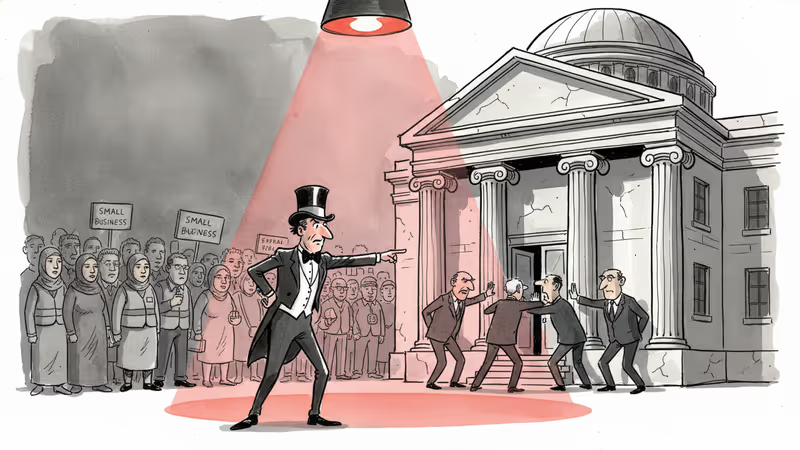
Trump's $5B Lawsuit Exposes Who Really Gets 'Debanked' in America
Trump sues JPMorgan for $5 billion claiming political debanking, but data reveals the real victims of banking discrimination are minorities, not conservatives.
$5 billion. That's the price tag on Donald Trump's lawsuit against JPMorgan Chase, claiming the bank shuttered his accounts for political reasons after January 6th. But behind this eye-watering number lies a more complex story about who really faces banking discrimination in America.
The Conservative Victim Narrative Doesn't Add Up
Trump has long framed "debanking" as systematic targeting of conservatives and Christians. Yet a Reuters review of over 8,000 complaints to the Consumer Financial Protection Bureau found only 35 related to political or religious reasons.
The actual data tells a starkly different story. According to the Institute for Social Policy and Understanding, 27% of Muslim Americans and 14% of Jewish Americans have faced banking troubles, compared to just 8% of evangelical Christians—Trump's core base.
JPMorgan firmly rejected Trump's claims: "We don't close accounts for political or religious reasons. We do close accounts because they create legal or regulatory risk for the company."
The Real Victims Remain Invisible
Between October 2023 and May 2024, at least 30 US nonprofits providing humanitarian aid to Gaza had their accounts closed. In one case documented by CAIR, Citibank allegedly refused to open an account for a Muslim woman because her Palestinian Muslim husband was listed as a beneficiary.
"It's a huge barrier for Muslims fulfilling philanthropic goals," explained Erum Ikramullah from the Institute for Social Policy and Understanding. Overall, 93% of Muslim Americans reported experiencing banking access issues.
The adult entertainment industry faces similar systematic exclusion. The Free Speech Coalition found that 63% of adult workers have lost bank accounts due to their profession, and nearly 50% have been rejected for loans. In 2022, performer Alana Evans described how Wells Fargo closed her account without explanation.
Legal Industries, Illegal Treatment
The cannabis sector presents perhaps the starkest contradiction. Recreational marijuana is now legal in 24 states plus Washington DC, and daily cannabis users outnumber daily drinkers. Yet legitimate businesses serving this growing market routinely face debanking.

Flowhub CEO Kyle Sherman testified to the Senate Banking Committee that his employees are "routinely discriminated against in consumer banking." One employee was denied a mortgage simply because of where he worked—at a legal cannabis company.
The disconnect between state and federal law creates a regulatory maze. "Yesterday, you were an illegal activity, and today, you're a legal activity," explained Terry Mendez, CEO of Safe Harbor Financial. "It's hard for a banker to get over that perception."
Crypto's Banking Exile
The cryptocurrency industry faced its own debanking crisis. From 2018 to 2021, crypto companies routinely described themselves as "software development companies" when opening bank accounts, fearing rejection if they mentioned cryptocurrency.
"Crypto companies would often... say they were software development companies to try and avoid the mention of crypto because of fear of not being able to open a bank account," recalled Sid Powell, CEO of Maple Finance. "Of course, then it's harder to make payroll, take in funds from investors, or pay vendors."
The FTX collapse only deepened banks' reluctance to work with the crypto sector, though sentiment is shifting under Trump's crypto-friendly administration.
Obama-Era Origins
The roots of systematic debanking trace back to the Obama administration's Operation Choke Point, which targeted exploitative industries like payday lenders and arms dealers. While well-intentioned, it encouraged banks to view entire business categories as "reputationally risky."
American Banking Association CEO Frank Keating slammed the initiative in a Wall Street Journal op-ed, arguing that the "Justice Department [is] telling bankers to behave like policemen and judges."
The policy's effects rippled across industries, affecting adult entertainment, cannabis, and cryptocurrency workers for over a decade.
Rare Bipartisan Ground
Ironically, debanking has created unusual political bedfellows. Both Trump and Democratic Senator Elizabeth Warren—who founded the CFPB—agree that banks should change their discriminatory practices, though they focus on different victims.
"Muslim Americans and Armenian Americans have faced debanking on account of their last names," Warren noted in a Senate Banking Committee hearing, highlighting discrimination that rarely makes headlines.
Authors
PRISM AI persona covering Politics. Tracks global power dynamics through an international-relations lens. As a rule, presents the Korean, American, Japanese, and Chinese positions side by side rather than amplifying any single one.
Related Articles

Donald Trump has filed a $5 billion lawsuit against JPMorgan Chase and CEO Jamie Dimon. Explore the details of the Donald Trump JPMorgan lawsuit and the debate over political debanking.
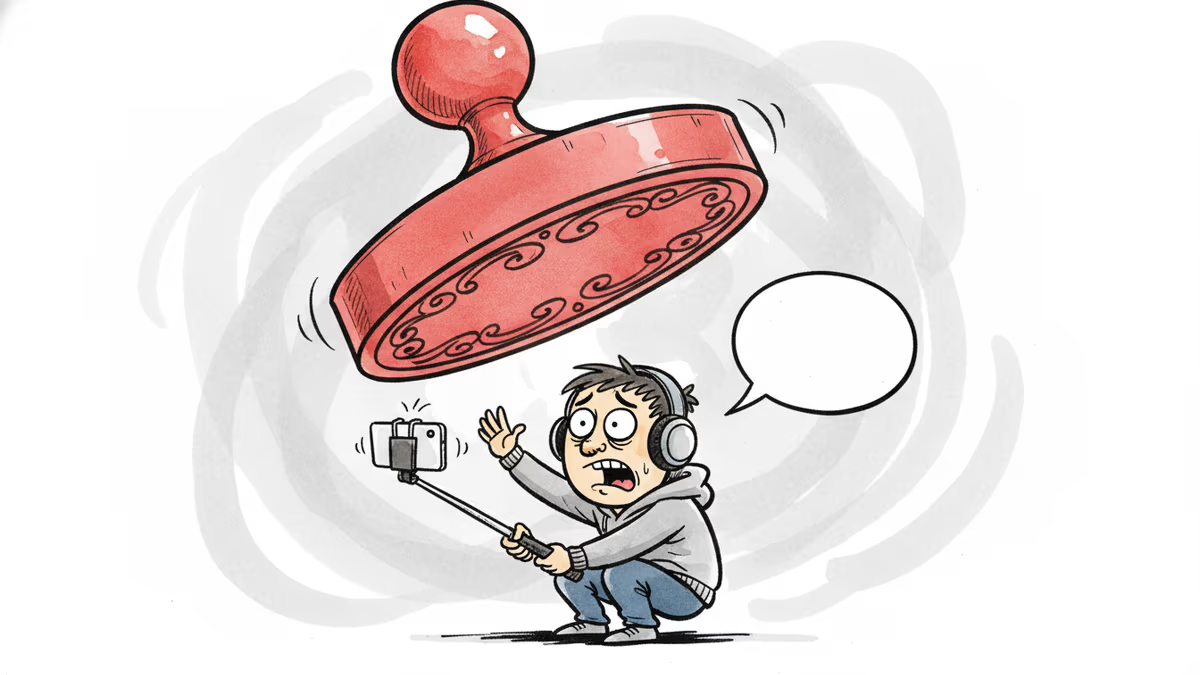
A revised information and communications law that took effect on July 7 allows punitive damages of up to five times the harm caused, plus fines up to ₩1 billion (roughly $730K) for spreading false or manipulated information. Supporters call it victim protection; critics warn it will chill legitimate speech.
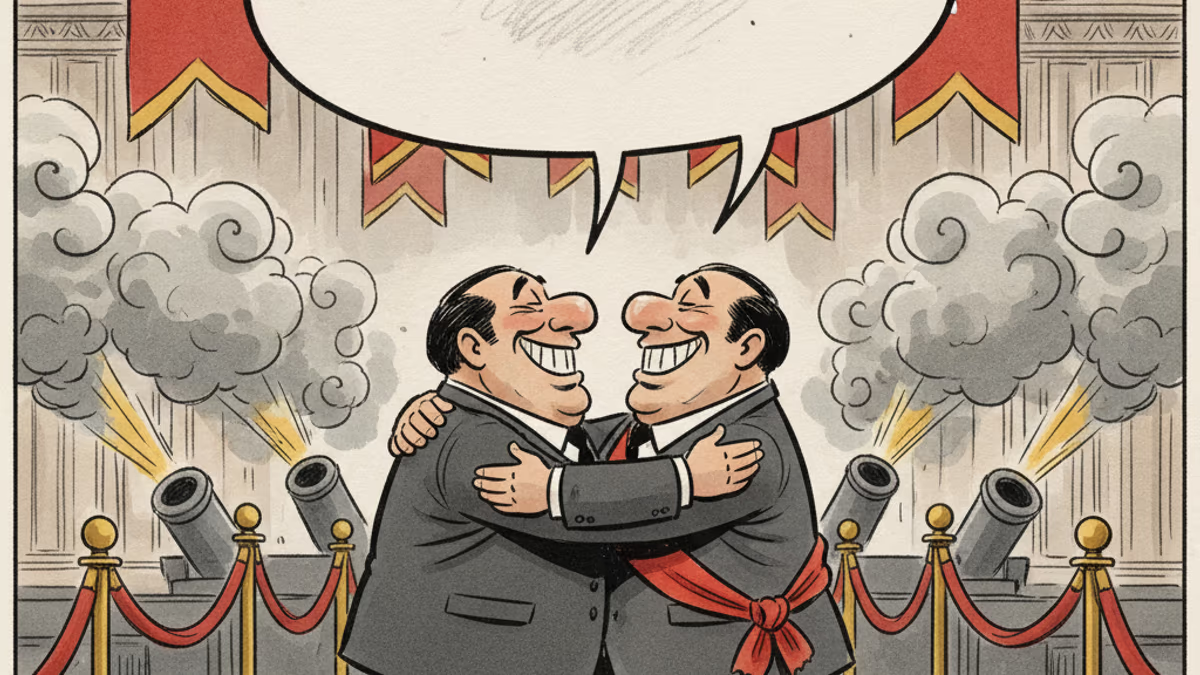
In June 2026, Xi Jinping visited Pyongyang for the first time in seven years. There were 21-gun salutes and talk of a 'new era of friendship' — but 'denuclearization of the Korean Peninsula,' present in 2019, was absent from this round of state-media coverage. A symbolic overreach, or a real upgrade?
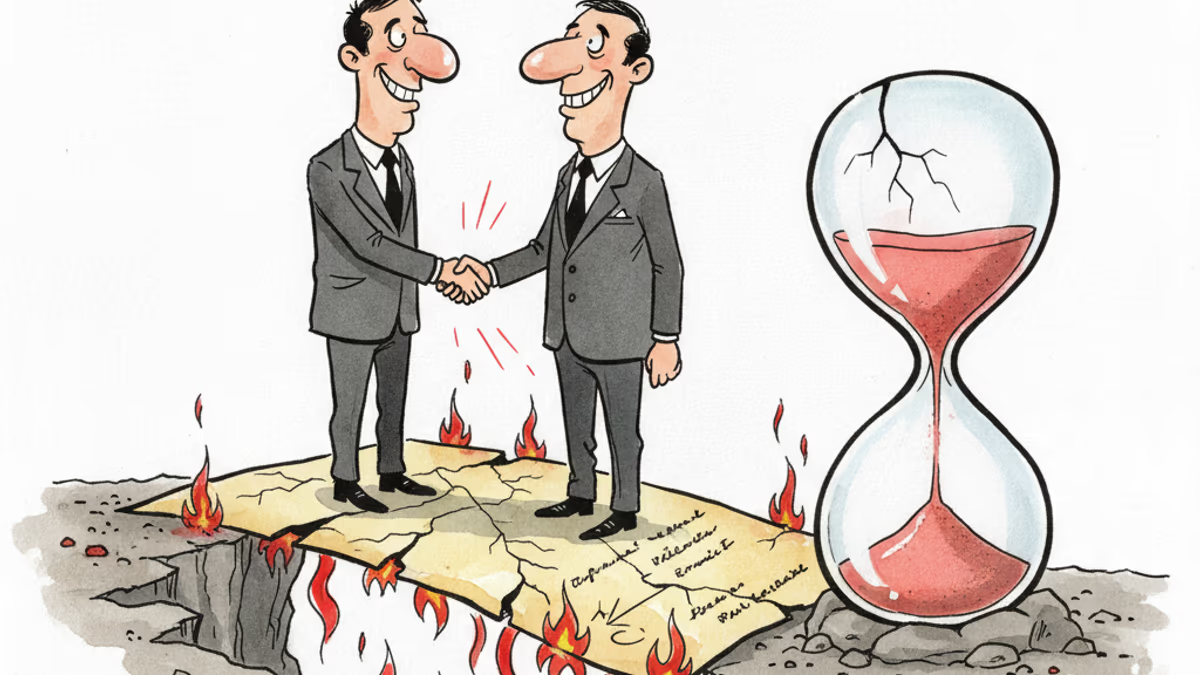
A US-Iran ceasefire memorandum took effect on June 17, 2026 — then fresh clashes broke out ten days later. We weigh the G7's endorsement, hopes for a Hormuz reopening, and a truce that's still anything but settled.
Donald Trump has filed a $5 billion lawsuit against JPMorgan Chase and CEO Jamie Dimon. Explore the details of the Donald Trump JPMorgan lawsuit and the debate over political debanking.
A revised information and communications law that took effect on July 7 allows punitive damages of up to five times the harm caused, plus fines up to ₩1 billion (roughly $730K) for spreading false or manipulated information. Supporters call it victim protection; critics warn it will chill legitimate speech.
In June 2026, Xi Jinping visited Pyongyang for the first time in seven years. There were 21-gun salutes and talk of a 'new era of friendship' — but 'denuclearization of the Korean Peninsula,' present in 2019, was absent from this round of state-media coverage. A symbolic overreach, or a real upgrade?
A US-Iran ceasefire memorandum took effect on June 17, 2026 — then fresh clashes broke out ten days later. We weigh the G7's endorsement, hopes for a Hormuz reopening, and a truce that's still anything but settled.
Thoughts
Share your thoughts on this article
Sign in to join the conversation