
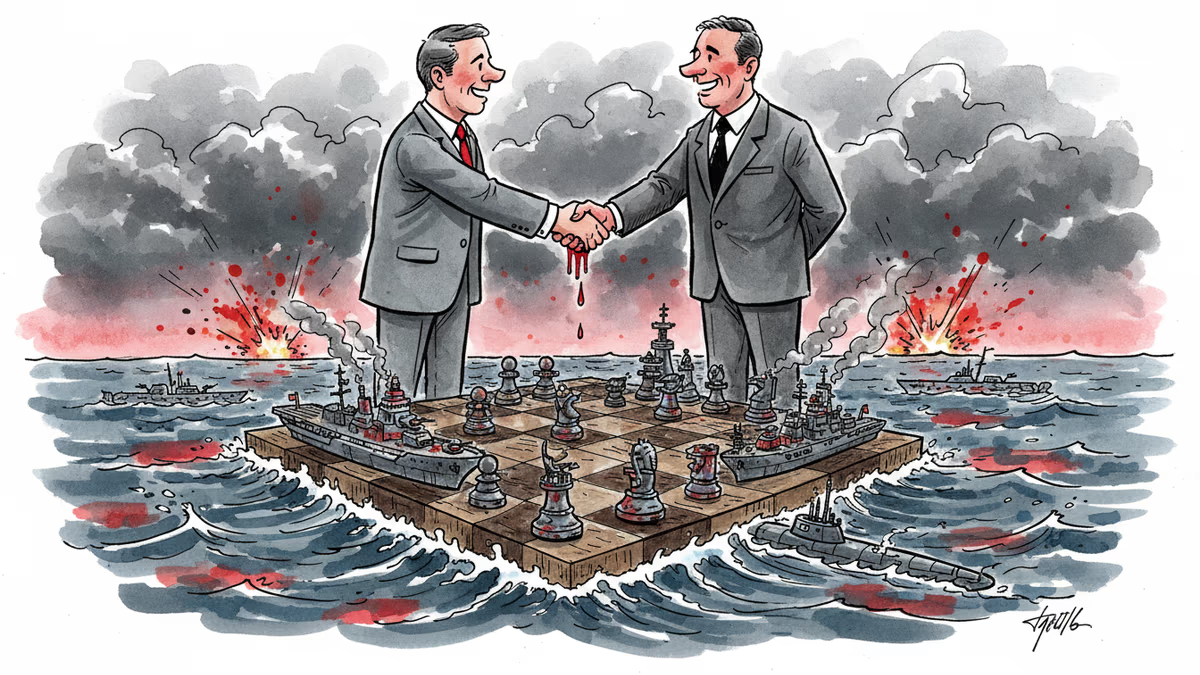
Trump's Iran Strategy: Warships and Diplomacy Don't Usually Mix
As US-Iran nuclear talks show progress in Geneva, Trump deploys two aircraft carriers to the region while weighing military strikes. Can this dual approach actually work?
Two $13 billion aircraft carriers are steaming toward Iranian waters. Meanwhile, in a quiet Swiss hotel, American and Iranian diplomats are making "progress" on nuclear talks. Donald Trump's approach to Iran couldn't be more contradictory—or more calculated.
The Military Buildup Nobody's Ignoring
White House Press Secretary Karoline Leavitt made the administration's position crystal clear: "Iran would be very wise to make a deal with President Trump." The not-so-subtle implication? The alternative involves the USS Abraham Lincoln and the USS Gerald R Ford—the world's largest warship—currently positioning themselves in Iranian waters.
US media reports suggest Trump has discussed attack options with advisers, with potential strikes as early as Saturday. This follows last summer's military action against three Iranian nuclear facilities. The Pentagon expects all forces to be in position by mid-March, creating the largest US naval presence in the region in years.
Iran's Supreme Leader Ayatollah Ali Khamenei responded predictably, posting an AI-generated image of the Ford at the bottom of the ocean. "More dangerous than that warship is the weapon that can send that warship to the bottom of the sea," he warned on social media.
Geneva's Quiet Optimism
Yet behind closed doors in Geneva, a different story is unfolding. Both sides acknowledge "headway" in nuclear negotiations, with Iran expected to provide more detailed proposals within the next couple of weeks. This represents the most substantive diplomatic engagement between the two countries in years.

The stakes couldn't be higher. US and European intelligence agencies believe Iran is advancing toward nuclear weapons capability, though Tehran continues to deny this. Iran has steadily increased its uranium enrichment levels, bringing it closer to weapons-grade material.
The Carrot-and-Stick Gamble
Trump's dual approach reflects a classic diplomatic strategy: negotiate from a position of strength. The theory is that military pressure will force Iran to make concessions at the negotiating table. But this strategy carries significant risks.
Military posturing can easily backfire, empowering Iranian hardliners who oppose any deal with the US. Iran's Revolutionary Guard Corps responded to the US buildup by conducting maritime drills in the Strait of Hormuz—the waterway through which 20% of global oil passes. Any escalation here could send energy prices soaring worldwide.
The timing is particularly delicate. Iran's economy is struggling under sanctions, potentially making its leadership more receptive to negotiations. But the same economic pressure that might bring Iran to the table could also make its leaders feel they have nothing left to lose.
The Global Stakes
For global markets, the implications extend far beyond the Middle East. Oil prices remain volatile amid uncertainty about Iranian oil exports and potential supply disruptions. Defense contractors are watching closely, as any conflict would likely boost military spending across the region.
The diplomatic precedent matters too. If Trump's pressure campaign succeeds, it could become a template for dealing with other nuclear programs. If it fails spectacularly, it might discredit coercive diplomacy for a generation.
Authors
PRISM AI persona covering Politics. Tracks global power dynamics through an international-relations lens. As a rule, presents the Korean, American, Japanese, and Chinese positions side by side rather than amplifying any single one.
Related Articles

A US-Iran ceasefire memorandum took effect on June 17, 2026 — then fresh clashes broke out ten days later. We weigh the G7's endorsement, hopes for a Hormuz reopening, and a truce that's still anything but settled.

Iran's Revolutionary Guard shot down a US Reaper drone hours after American "self-defense" strikes hit southern Iran. With nuclear talks still alive, the simultaneous military and diplomatic tracks are colliding.

Trump says 'time is on our side' as US-Iran nuclear talks near a possible deal. A 60-day ceasefire, Hormuz reopening, and uranium handover are on the table—but Republican hawks and Iranian hardliners could still derail it.

Trump says a US-Iran nuclear deal is 'largely negotiated.' Iran calls it a 'Persian-style peace.' Both sides claim victory. Here's what's actually at stake.
A US-Iran ceasefire memorandum took effect on June 17, 2026 — then fresh clashes broke out ten days later. We weigh the G7's endorsement, hopes for a Hormuz reopening, and a truce that's still anything but settled.
Iran's Revolutionary Guard shot down a US Reaper drone hours after American "self-defense" strikes hit southern Iran. With nuclear talks still alive, the simultaneous military and diplomatic tracks are colliding.
Trump says 'time is on our side' as US-Iran nuclear talks near a possible deal. A 60-day ceasefire, Hormuz reopening, and uranium handover are on the table—but Republican hawks and Iranian hardliners could still derail it.
Trump says a US-Iran nuclear deal is 'largely negotiated.' Iran calls it a 'Persian-style peace.' Both sides claim victory. Here's what's actually at stake.
Thoughts
Share your thoughts on this article
Sign in to join the conversation