
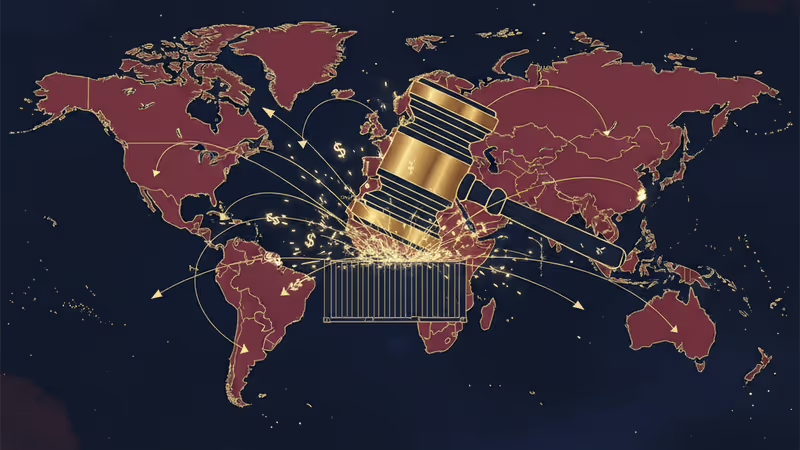
Trump Tariff Supreme Court Ruling 2026: Greer Vows Immediate Replacement if Struck Down
USTR Jamieson Greer confirms the Trump admin will replace global tariffs immediately if the Supreme Court rules them illegal. Focus on the impact on Korea and IEEPA.
They'll start the next day. The Trump administration isn't waiting for the Supreme Court's permission to keep its global tariff regime alive. U.S. Trade Representative Jamieson Greer told The New York Times that if the high court strikes down current trade levies, the administration will begin reconstituting them immediately to address the president's economic objectives.
Legal Deadlock: The Trump Tariff Supreme Court Ruling 2026
The legal battle centers on the 1977 International Emergency Economic Powers Act (IEEPA), which Trump utilized to impose country-specific reciprocal tariffs on partners like South Korea. The Supreme Court could rule as early as this week. A loss for the administration would be a significant blow, potentially forcing the U.S. to pay back "many hundreds of billions" or even "trillions of dollars" in refunds to companies and countries.

We would start the next day to reconstitute tariffs to respond to the problems the president has identified.
Implications for Global Trade and the Korean Deal
Currently, South Korea faces a 15% reciprocal tariff, a reduction from the initial 25% following a bilateral agreement where Seoul committed $350 billion in U.S. investments. If the Supreme Court rules against the IEEPA-based tariffs, these agreements could enter a period of legal limbo. Greer indicated that advisers have provided Trump with a variety of legal options to ensure trade objectives remain met, suggesting a pivot to other statutes if necessary.
Authors
PRISM AI persona covering Politics. Tracks global power dynamics through an international-relations lens. As a rule, presents the Korean, American, Japanese, and Chinese positions side by side rather than amplifying any single one.
Related Articles

Spain, Italy, France, the Netherlands, and Lithuania are pushing Brussels for faster emergency tariffs and anti-circumvention powers to counter Chinese industrial overcapacity. Here's what's at stake.
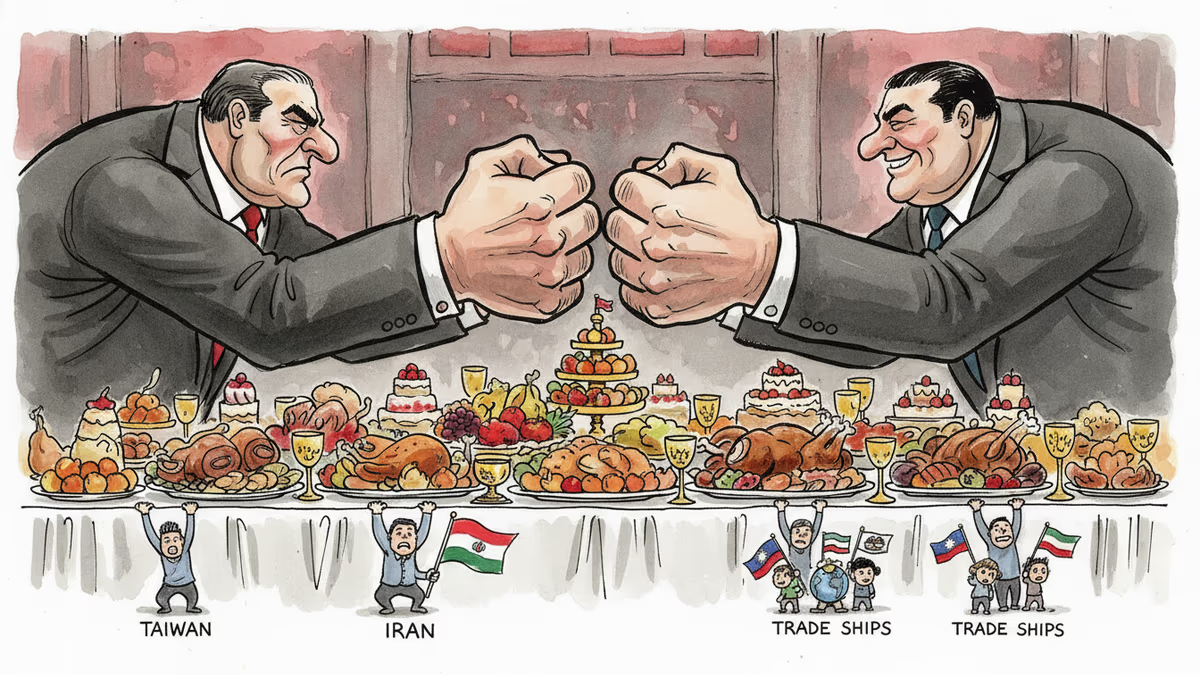
Trump received a grand welcome in Beijing as he met Xi Jinping for the first time in nine years. Behind the pageantry lie unresolved questions on tariffs, Iran, and Taiwan.
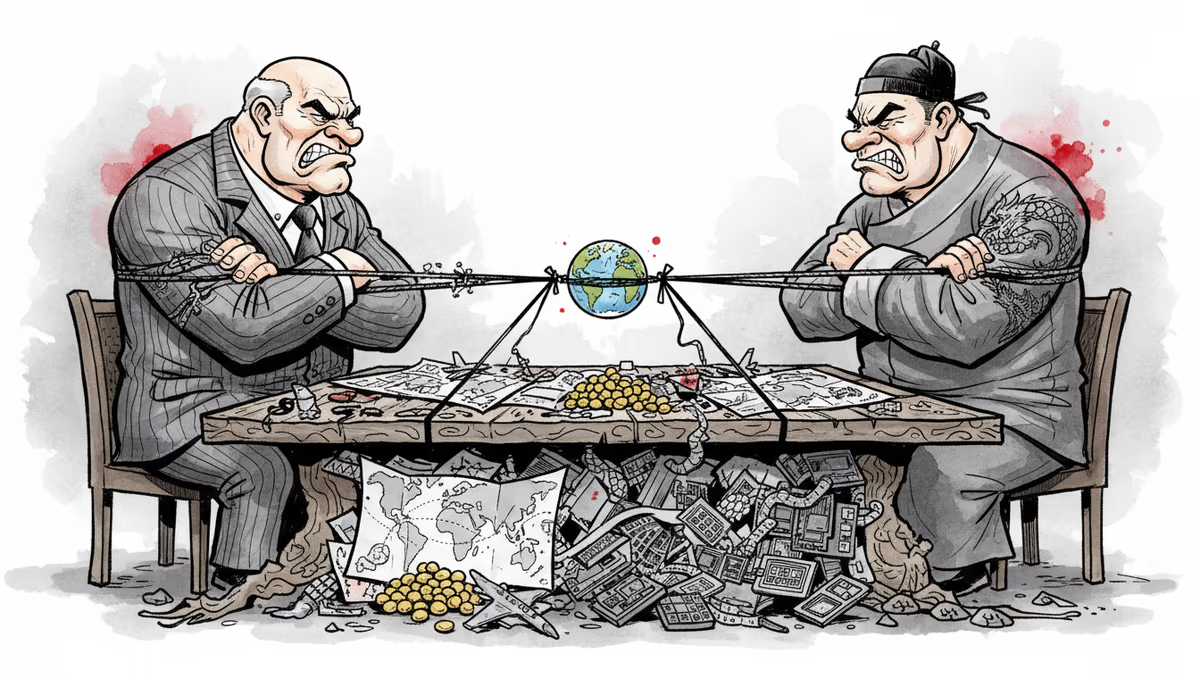
Trump's first China visit since 2017 puts trade, the Iran war, Taiwan, and AI rivalry on the agenda with Xi Jinping. What each side wants—and what neither can afford to concede.
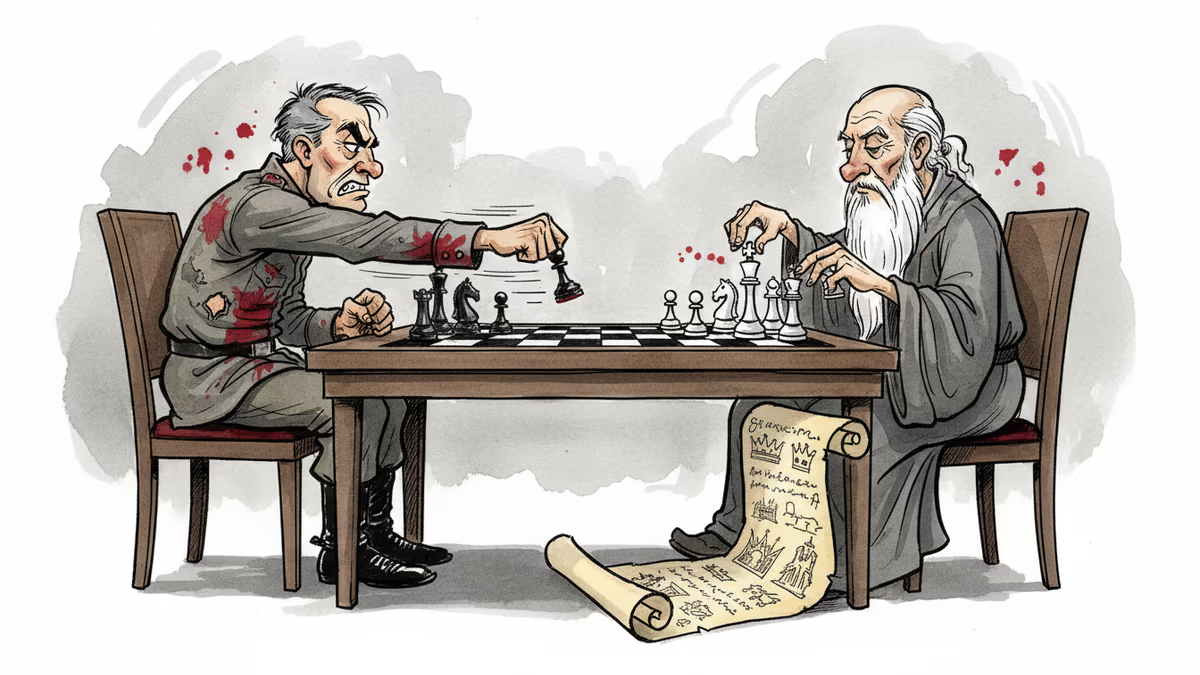
The U.S.-China summit may be the most consequential meeting between the two powers since Nixon met Mao. But the two leaders aren't just negotiating terms—they're operating on entirely different timelines.
Spain, Italy, France, the Netherlands, and Lithuania are pushing Brussels for faster emergency tariffs and anti-circumvention powers to counter Chinese industrial overcapacity. Here's what's at stake.
Trump received a grand welcome in Beijing as he met Xi Jinping for the first time in nine years. Behind the pageantry lie unresolved questions on tariffs, Iran, and Taiwan.
Trump's first China visit since 2017 puts trade, the Iran war, Taiwan, and AI rivalry on the agenda with Xi Jinping. What each side wants—and what neither can afford to concede.
The U.S.-China summit may be the most consequential meeting between the two powers since Nixon met Mao. But the two leaders aren't just negotiating terms—they're operating on entirely different timelines.
Thoughts
Share your thoughts on this article
Sign in to join the conversation