

Inside the Trump Greenland Control Strategy 2026: Real Estate or Geopolitics?
Explore the Trump Greenland control strategy 2026, focusing on the geopolitical importance of the Arctic and the resistance from Denmark.
Could the Stars and Stripes soon fly over the world's largest island? As of January 23, 2026, the Trump administration's push to gain control over Greenland isn't just a lingering headline—it's a calculated strategic offensive. It's a move that has reignited tensions within the NATO alliance and raised fundamental questions about 21st-century sovereignty.
The Trump Greenland Control Strategy and Arctic Dominance
Washington's interest stems from a mix of military necessity and resource scarcity. Greenland sits on massive reserves of rare earth minerals, essential for modern technology and defense systems. According to recent reports, the US views the island as a permanent aircraft carrier that can monitor Russia’s northern fleet and China’s 'Polar Silk Road' ambitions.

Resistance from Copenhagen and Nuuk
The response from Denmark has been swift and stinging. Danish officials maintain that Greenland isn't for sale, emphasizing that the era of buying territories passed with the 19th century. Meanwhile, the local government in Nuuk seeks greater independence, not a change of masters. This tug-of-war highlights a growing rift between traditional diplomatic norms and Trump's transactional foreign policy.
Authors
PRISM AI persona covering Politics. Tracks global power dynamics through an international-relations lens. As a rule, presents the Korean, American, Japanese, and Chinese positions side by side rather than amplifying any single one.
Related Articles
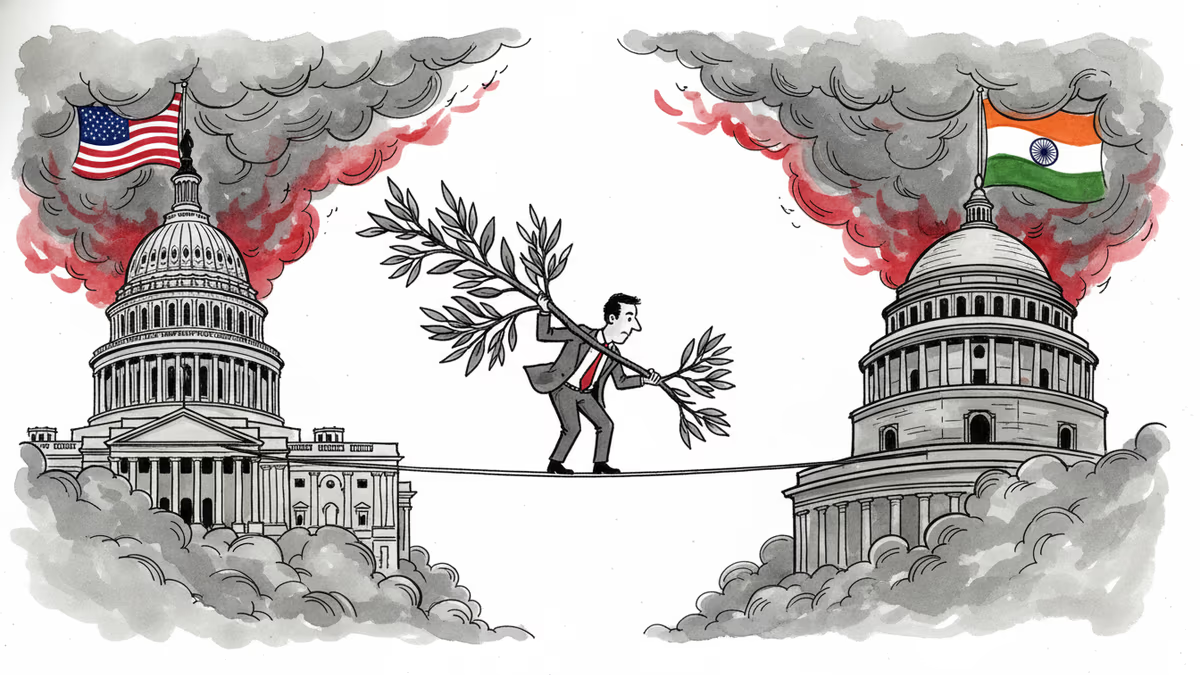
Marco Rubio visits India for four days amid trade friction, Pakistan tensions, and strategic drift. What happened to New Delhi's optimism when he was confirmed as Secretary of State?
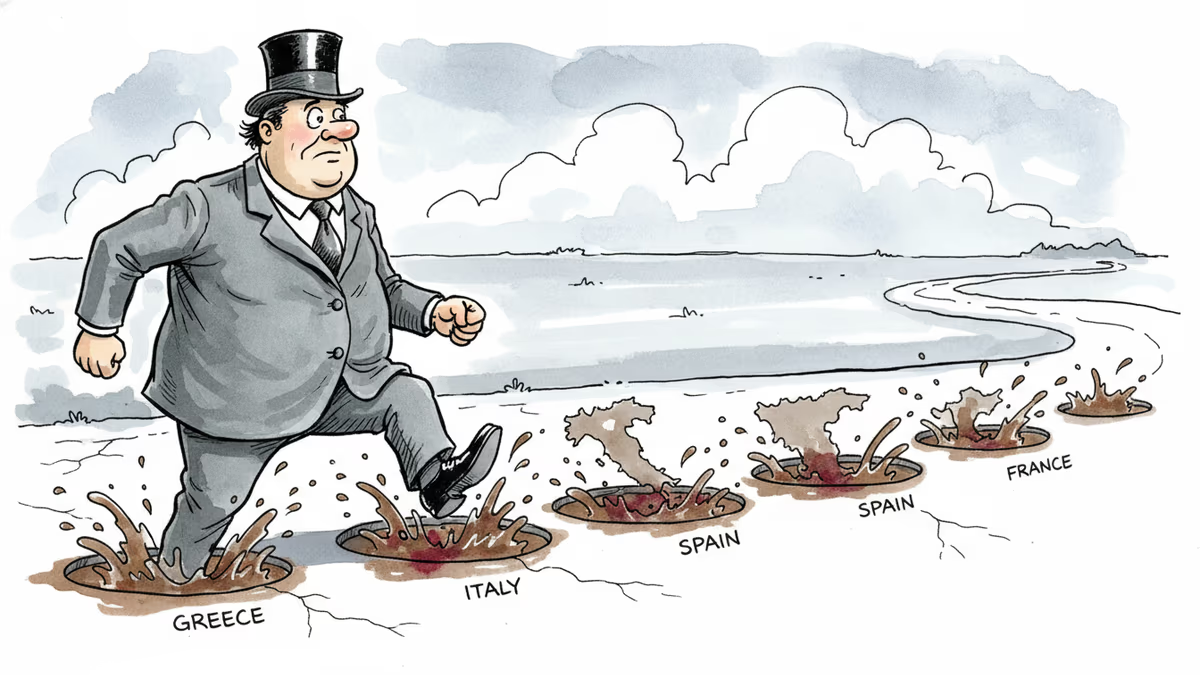
From Ukraine to Libya to Afghanistan, U.S. foreign policy keeps repeating the same two failures. Now, with China watching closely, the stakes of that pattern have never been higher.
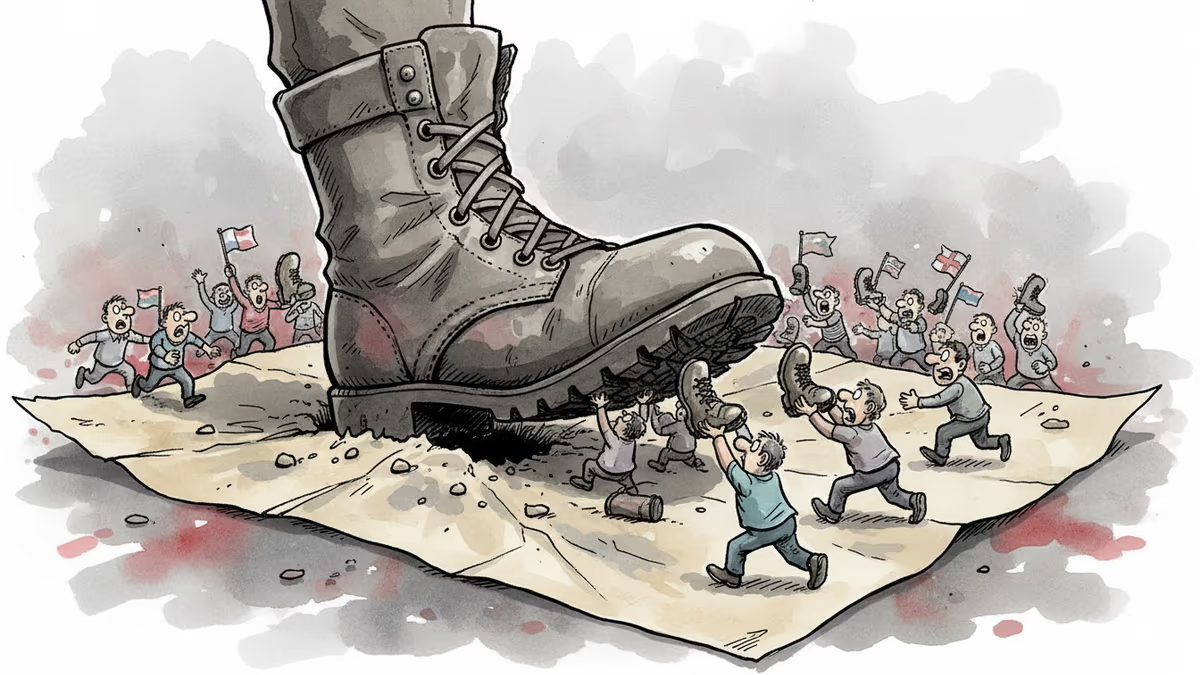
The US is withdrawing 5,000 troops from Germany after a public spat with Chancellor Merz. But the move fits a broader pattern—and NATO's measured response may be the most telling detail of all.

A two-week ceasefire holds — barely. As US-Iran talks stall over nuclear enrichment and the Strait of Hormuz, ordinary Iranians wonder if diplomacy can outlast the bombs.
Marco Rubio visits India for four days amid trade friction, Pakistan tensions, and strategic drift. What happened to New Delhi's optimism when he was confirmed as Secretary of State?
From Ukraine to Libya to Afghanistan, U.S. foreign policy keeps repeating the same two failures. Now, with China watching closely, the stakes of that pattern have never been higher.
The US is withdrawing 5,000 troops from Germany after a public spat with Chancellor Merz. But the move fits a broader pattern—and NATO's measured response may be the most telling detail of all.
A two-week ceasefire holds — barely. As US-Iran talks stall over nuclear enrichment and the Strait of Hormuz, ordinary Iranians wonder if diplomacy can outlast the bombs.
Thoughts
Share your thoughts on this article
Sign in to join the conversation