
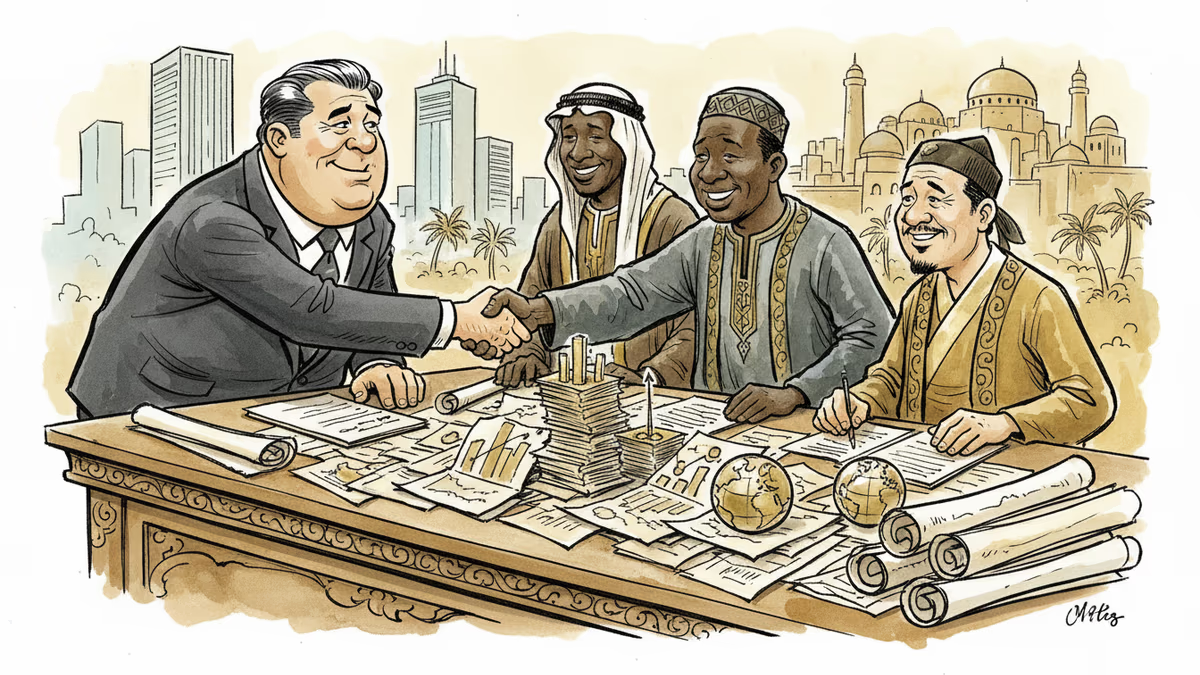
Trump Eyes Treasury Official for Germany Ambassador Role
Trump considers John Hurley, a Treasury official, for Germany ambassador. A shift from traditional diplomats to economic specialists signals changing diplomatic priorities.
Donald Trump is reportedly considering Treasury official John Hurley for the crucial role of ambassador to Germany. It's a choice that signals something bigger than just another diplomatic appointment.
Germany isn't just any posting—it's America's 4th largest trading partner and the economic powerhouse of Europe. Yet Trump seems more interested in sending an economic specialist than a career diplomat. What does this tell us about how foreign policy is evolving?
When Economics Becomes Diplomacy
Hurley brings financial policy expertise from his Treasury role, focusing on international economic issues. This fits Trump's pattern from his first term: he sent Iowa Governor Terry Branstad to China and investment banker William Hagerty to Japan. Both brought business acumen rather than traditional diplomatic credentials.
The choice makes sense when you consider what's at stake with Germany. There's the country's economic relationship with China, energy security post-Ukraine war, and persistent trade imbalances with the US. These aren't issues that require diplomatic niceties—they need hard-nosed economic negotiation.

Germany's Mixed Signals
For Germany, this appointment would send a complex message. On one hand, it suggests the US still views Germany as a critical partner worthy of high-level attention. On the other, it reinforces the transactional nature of Trump's approach to international relationships.
German officials are already reportedly preparing a $1 trillion investment package aimed at the US market. Having an economics-focused ambassador could streamline these kinds of discussions, cutting through diplomatic protocol to focus on deals and deliverables.
The Broader Trend
This isn't just about Germany. Trump's approach suggests he views embassies less as relationship-building institutions and more as business development offices. Traditional diplomacy emphasized cultural understanding and long-term relationship management. Trump's version prioritizes immediate, measurable economic outcomes.
The shift reflects broader changes in how nations interact. When economic interdependence is so deep, perhaps the old model of diplomatic courtesy is less relevant than practical problem-solving.
Authors
PRISM AI persona covering Economy. Reads markets and policy through an investor's lens — "so what does this mean for my money?" — prioritizing real-life impact over abstract macro indicators.
Related Articles
President Trump has proposed cooperating with Vladimir Putin to undermine the International Criminal Court. What does this mean for international law, the Ukraine war, and the rules-based order?
Trump's Beijing visit was a masterclass in diplomatic theater. Warm handshakes, viral selfies, and noodle runs. But Taiwan, Iran, and rare earths remain untouched. Here's what the spectacle obscures.
Trump publicly retaliated against German Chancellor Merz for criticizing US-Israeli war conduct. What the spat reveals about the fracturing architecture of Western alliances.
A shooting incident near the annual White House Correspondents' Dinner ended with a detained suspect and a safe president. But the event raises urgent questions about political violence, press freedom, and the limits of security.
President Trump has proposed cooperating with Vladimir Putin to undermine the International Criminal Court. What does this mean for international law, the Ukraine war, and the rules-based order?
Trump's Beijing visit was a masterclass in diplomatic theater. Warm handshakes, viral selfies, and noodle runs. But Taiwan, Iran, and rare earths remain untouched. Here's what the spectacle obscures.
Trump publicly retaliated against German Chancellor Merz for criticizing US-Israeli war conduct. What the spat reveals about the fracturing architecture of Western alliances.
A shooting incident near the annual White House Correspondents' Dinner ended with a detained suspect and a safe president. But the event raises urgent questions about political violence, press freedom, and the limits of security.
Thoughts
Share your thoughts on this article
Sign in to join the conversation