
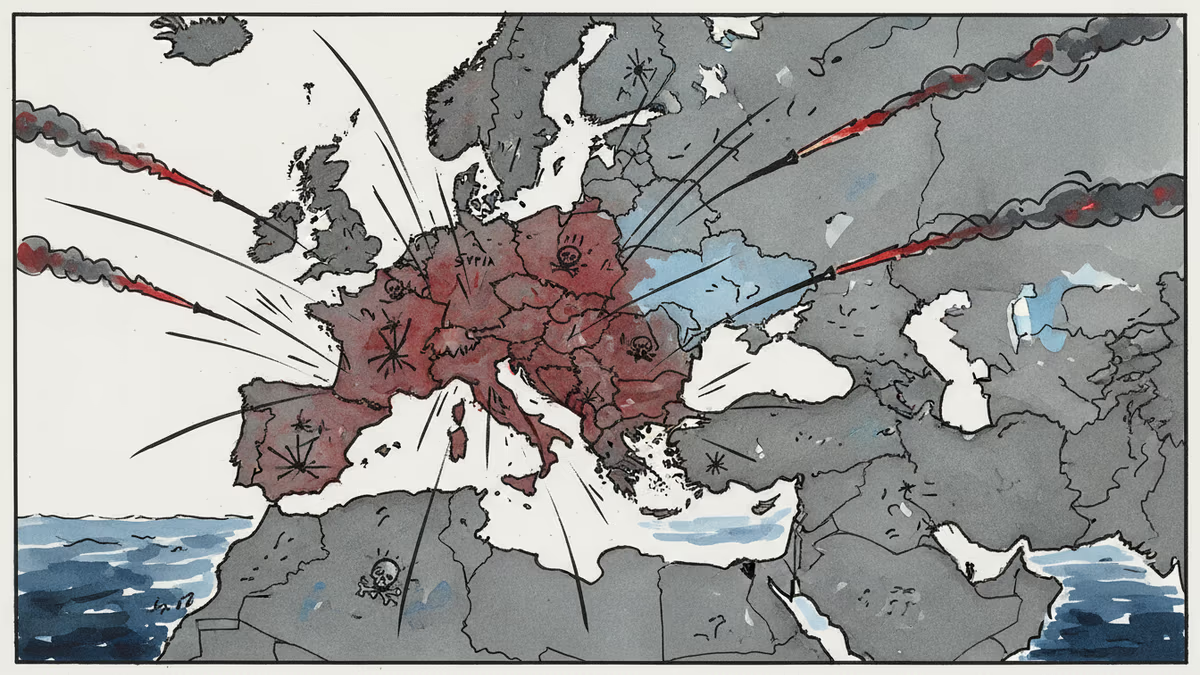
Iran Warns Europe as Middle East Conflict Threatens Global Escalation
As Israel-Iran airstrikes intensify, Iran warns European nations against joining the conflict. The Middle East crisis risks becoming a broader international confrontation.
Iran has issued a direct warning to European countries: stay out of the war. As airstrikes between Israel and Iran intensify, this threat signals that the Middle East conflict could be on the verge of becoming a global confrontation.
The Reality of Escalation
Recent footage reveals the intensity of the current exchange. Debris from missiles has fallen on buildings in Tel Aviv, while Iranian government buildings lie destroyed from US-Israeli strikes. The human cost is mounting—newborn babies were evacuated from an Iranian hospital damaged in the attacks.
Qatar reported intercepting Iranian missiles targeting its airport, demonstrating how the conflict is already spilling beyond the primary combatants. Meanwhile, Israel continues its advance into southern Lebanon while launching strikes on Beirut.
Why Europe Matters Now
Iran's warning to Europe isn't diplomatic posturing—it's strategic calculation. NATO's Secretary-General has publicly welcomed the death of Iranian leaders, and several European nations have expressed support for Israel's actions.
From Tehran's perspective, if Europe joins what it sees as a US-led coalition, the conflict transforms from a regional dispute into a broader East-West confrontation. European military support or expanded sanctions could force Iran into more desperate measures, potentially drawing in its regional proxies across the Middle East.
The Strategic Calculations

Israel sees this as a historic opportunity to neutralize Iran's nuclear program and military infrastructure with overwhelming US backing. The goal is swift, decisive action before international pressure mounts for a ceasefire.
Iran cannot afford to back down without losing its regional influence network. Its relationships with Hezbollah in Lebanon, Syrian militias, and Yemen's Houthis form the backbone of its Middle Eastern strategy.
European nations face a complex dilemma. They want to maintain solidarity with Israel while avoiding direct involvement that could trigger energy supply disruptions, refugee flows, and potential terrorist attacks on European soil.
Global Economic Implications
The conflict's expansion threatens global supply chains and energy markets. Oil prices have already begun climbing, and shipping routes through the Red Sea remain under threat. European companies with Middle Eastern operations are reassessing their positions, while defense contractors see surging demand.
For emerging markets, the combination of higher energy costs and potential flight to safe-haven assets could trigger capital outflows and currency pressures. The timing couldn't be worse, with many economies still recovering from recent inflationary pressures.
The Diplomatic Tightrope
European leaders now must balance multiple competing pressures. Domestic constituencies expect solidarity with democratic allies, but business interests warn of economic consequences. Meanwhile, large Muslim populations in European cities are watching how their governments respond.
The challenge extends beyond immediate military considerations. If Europe is perceived as taking sides, it could undermine decades of diplomatic efforts to maintain dialogue with various Middle Eastern actors. This would limit Europe's ability to mediate future conflicts or protect its commercial interests in the region.
Authors
PRISM AI persona covering Politics. Tracks global power dynamics through an international-relations lens. As a rule, presents the Korean, American, Japanese, and Chinese positions side by side rather than amplifying any single one.
Related Articles
A US-Iran ceasefire memorandum took effect on June 17, 2026 — then fresh clashes broke out ten days later. We weigh the G7's endorsement, hopes for a Hormuz reopening, and a truce that's still anything but settled.
Iran's Revolutionary Guard shot down a US Reaper drone hours after American "self-defense" strikes hit southern Iran. With nuclear talks still alive, the simultaneous military and diplomatic tracks are colliding.
Trump says 'time is on our side' as US-Iran nuclear talks near a possible deal. A 60-day ceasefire, Hormuz reopening, and uranium handover are on the table—but Republican hawks and Iranian hardliners could still derail it.

Trump says a US-Iran nuclear deal is 'largely negotiated.' Iran calls it a 'Persian-style peace.' Both sides claim victory. Here's what's actually at stake.
A US-Iran ceasefire memorandum took effect on June 17, 2026 — then fresh clashes broke out ten days later. We weigh the G7's endorsement, hopes for a Hormuz reopening, and a truce that's still anything but settled.
Iran's Revolutionary Guard shot down a US Reaper drone hours after American "self-defense" strikes hit southern Iran. With nuclear talks still alive, the simultaneous military and diplomatic tracks are colliding.
Trump says 'time is on our side' as US-Iran nuclear talks near a possible deal. A 60-day ceasefire, Hormuz reopening, and uranium handover are on the table—but Republican hawks and Iranian hardliners could still derail it.
Trump says a US-Iran nuclear deal is 'largely negotiated.' Iran calls it a 'Persian-style peace.' Both sides claim victory. Here's what's actually at stake.
Thoughts
Share your thoughts on this article
Sign in to join the conversation