

Donald Trump Peace Board Invitations 2026: Mass Outreach Stirs Governance Concerns
Analyzing the controversy surrounding Donald Trump's peace board invitations in 2026. Experts weigh in on the risks of inviting rival nations without a clear mandate.
It’s a massive guest list for a room filled with old grudges. Donald Trump’s latest initiative to form a global 'Peace Board' is casting an incredibly wide net, but the sheer volume of invitations is raising red flags across diplomatic circles as of January 20, 2026.
Donald Trump Peace Board Invitations: A Risky Diplomatic Gambit
While the exact number of leaders asked to join remains undisclosed, reports indicate a flood of invitations sent to nations that traditionally don't get along. According to sources cited by Mahmoud Illean, this inclusive strategy has sparked intense debate over whether the board is a tool for genuine reconciliation or merely a theatrical display of influence.

The inclusion of rival nations has led experts to question the board’s mandate. Without a clear framework, the process of reaching a consensus among countries with deeply conflicting interests seems nearly impossible. Critics argue that the more voices added to the table, the harder it becomes to hear the signal through the noise.
The Fog of Global Decision-Making
At the heart of the controversy is the board's decision-making process. Diplomats are concerned that the lack of a defined hierarchy or voting mechanism will lead to a perpetual stalemate. For a body intended to foster peace, the potential for internal friction remains its biggest hurdle.
This content is AI-generated based on source articles. While we strive for accuracy, errors may occur. We recommend verifying with the original source.
Related Articles
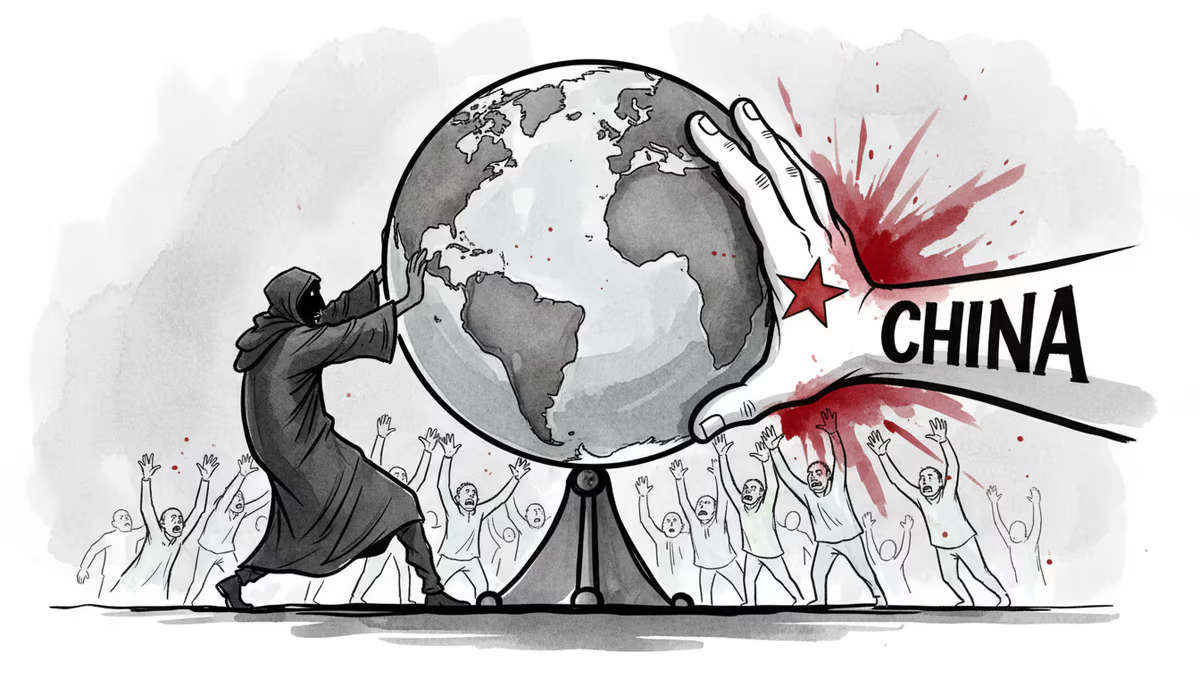
China's top diplomat rejected US-China co-leadership and called for a multipolar world anchored in the UN. What does Beijing's vision actually mean—and who benefits?

Newly released Epstein documents reveal extensive connections with African political elites and a failed $150M Israeli surveillance deal with Ivory Coast

Trump's planned March visit to Beijing faces mounting challenges as China employs delaying tactics while domestic political constraints limit the president's negotiating power. An analysis of shifting US-China dynamics.

Trump administration confirms openness to 'unconditional dialogue' with North Korea after Kim Jong-un's conditional overture. Analyzing the strategic calculations behind the diplomatic signals.
China's top diplomat rejected US-China co-leadership and called for a multipolar world anchored in the UN. What does Beijing's vision actually mean—and who benefits?
Newly released Epstein documents reveal extensive connections with African political elites and a failed $150M Israeli surveillance deal with Ivory Coast
Trump's planned March visit to Beijing faces mounting challenges as China employs delaying tactics while domestic political constraints limit the president's negotiating power. An analysis of shifting US-China dynamics.
Trump administration confirms openness to 'unconditional dialogue' with North Korea after Kim Jong-un's conditional overture. Analyzing the strategic calculations behind the diplomatic signals.
Thoughts
Share your thoughts on this article
Sign in to join the conversation