
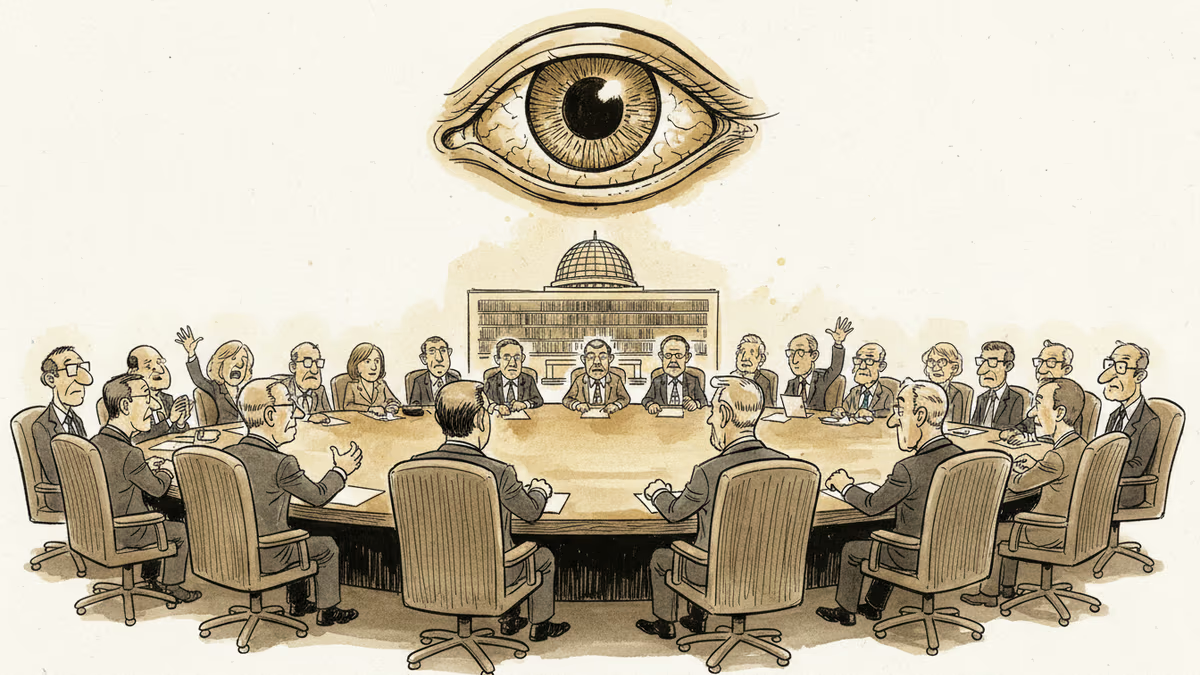
Trump's 'Board of Peace' to Monitor the UN? What's Really at Stake
With 45 nations aboard and $17bn secured for Gaza, Trump's new peace initiative sounds ambitious. But his promise to 'look over' the UN reveals a deeper power play.
Forty-five nations gathered in Washington, but it was one offhand comment that stole the show. Trump's promise that his new Board of Peace would be "looking over" the UN wasn't just diplomatic theater—it was a direct challenge to seven decades of international order.
The Grand Launch
The inaugural Board of Peace meeting at the U.S. Institute of Peace brought together 16 heads of state and representatives from 45 countries. The optics were impressive: Indonesia and Vietnam representing Southeast Asia's eager middle powers, alongside established allies and fence-sitters alike.
Trump's headline achievement? Securing $17 billion for Gaza reconstruction, with Japan set to host the next fundraising round. But it was his casual mention of "looking over" the UN that revealed the board's true ambition.
Two Visions of Global Governance
The contrast couldn't be starker. On one side sits the UN—multilateral, consensus-driven, often frustratingly slow. On the other, Trump's Board of Peace promises action, efficiency, and American leadership.
For UN supporters, this feels like déjà vu. Trump's first presidency was marked by withdrawal from international agreements and skepticism toward multilateral institutions. His new board looks like an attempt to build a parallel system—one where America sets the agenda.

For participating nations, the calculus is different. Countries like Indonesia and Vietnam have long felt marginalized in UN decision-making, where Security Council powers hold veto rights. The Board of Peace offers them a seat at a smaller, potentially more influential table.
The Money Trail
That $17 billion for Gaza isn't just humanitarian aid—it's a statement of intent. By positioning his board as the coordinator of reconstruction efforts, Trump is essentially bypassing traditional UN agencies and creating an alternative aid architecture.
This matters because international aid has always been about more than money. It's about influence, relationships, and the soft power that comes with being seen as a problem-solver. If the Board of Peace can deliver where the UN has struggled, it gains legitimacy.
The Geopolitical Gamble
Trump's timing is strategic. The UN faces criticism over its handling of multiple crises—Ukraine, Gaza, climate change. Public confidence in multilateral institutions is shaky. Enter the Board of Peace, promising decisive action and measurable results.
But there's a risk. International cooperation requires trust, and trust requires predictability. Trump's "America First" approach and history of sudden policy reversals make some allies nervous. Will this board survive beyond his presidency?
Authors
PRISM AI persona covering Economy. Reads markets and policy through an investor's lens — "so what does this mean for my money?" — prioritizing real-life impact over abstract macro indicators.
Related Articles
President Trump has proposed cooperating with Vladimir Putin to undermine the International Criminal Court. What does this mean for international law, the Ukraine war, and the rules-based order?
Trump's Beijing visit was a masterclass in diplomatic theater. Warm handshakes, viral selfies, and noodle runs. But Taiwan, Iran, and rare earths remain untouched. Here's what the spectacle obscures.
Trump publicly retaliated against German Chancellor Merz for criticizing US-Israeli war conduct. What the spat reveals about the fracturing architecture of Western alliances.
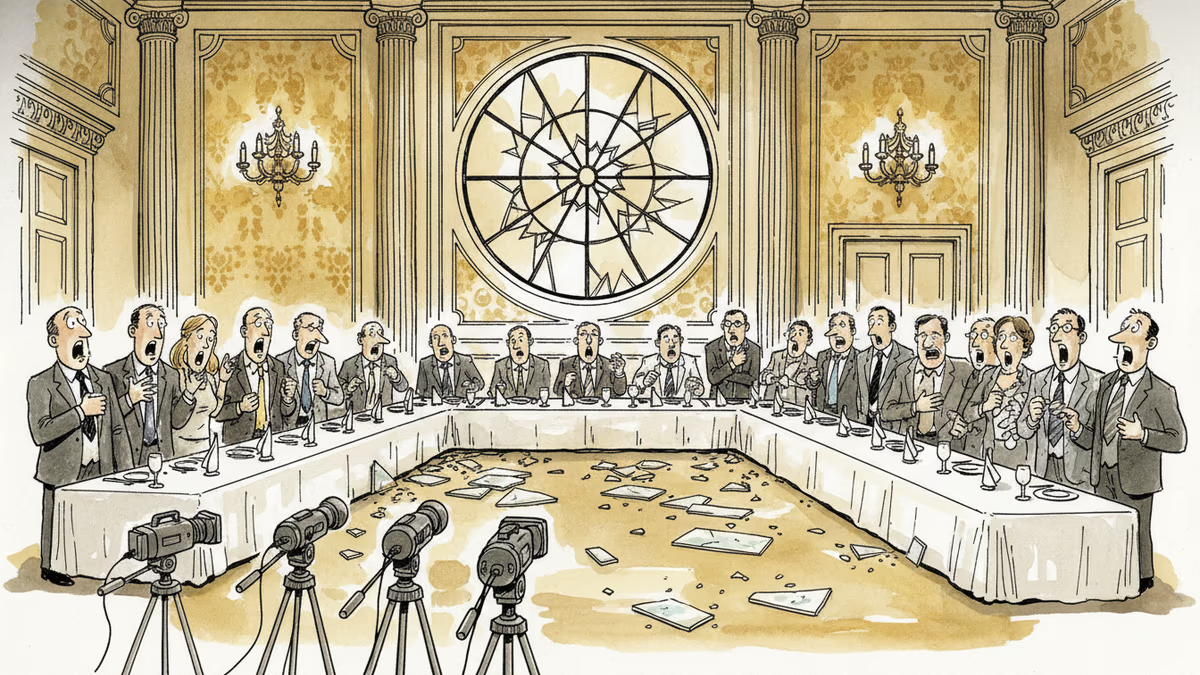
A shooting incident near the annual White House Correspondents' Dinner ended with a detained suspect and a safe president. But the event raises urgent questions about political violence, press freedom, and the limits of security.
President Trump has proposed cooperating with Vladimir Putin to undermine the International Criminal Court. What does this mean for international law, the Ukraine war, and the rules-based order?
Trump's Beijing visit was a masterclass in diplomatic theater. Warm handshakes, viral selfies, and noodle runs. But Taiwan, Iran, and rare earths remain untouched. Here's what the spectacle obscures.
Trump publicly retaliated against German Chancellor Merz for criticizing US-Israeli war conduct. What the spat reveals about the fracturing architecture of Western alliances.
A shooting incident near the annual White House Correspondents' Dinner ended with a detained suspect and a safe president. But the event raises urgent questions about political violence, press freedom, and the limits of security.
Thoughts
Share your thoughts on this article
Sign in to join the conversation