

Trump Administration Greenland Takeover 2026: The Strategic Battle for the Arctic
President Trump restates his plan for a Greenland takeover on Jan 12, 2026. Explore the strategic importance of the Arctic and the geopolitical impact of this proposal.
Can the U.S. buy its way into Arctic dominance? President Trump has restated his intent to "take over" Greenland, reigniting a geopolitical debate that first surfaced years ago. On January 12, 2026, the administration signaled that the strategic acquisition of the world's largest island remains a top priority for U.S. foreign policy.
Why the Trump Administration Greenland Takeover Matters
According to Rebecca Pincus of the Foreign Policy Research Institute, Greenland's importance can't be overstated. As the Arctic ice melts, it's opening up new shipping routes and providing unprecedented access to vast natural resources like rare earth minerals. For the United States, controlling this territory isn't just about land—it's about countering the growing influence of Russia and China in the region.

Resistance from Denmark and International Hurdles
The proposal hasn't been met with open arms. Denmark has repeatedly stated that "Greenland is not for sale," viewing the suggestion as an affront to its sovereignty. While critics argue that purchasing sovereign territory is an antiquated concept, the Trump administration seems to view it as a real-estate-style solution to a massive geopolitical challenge. It's unclear how the U.S. plans to navigate the diplomatic fallout with a key NATO ally.
Authors
PRISM AI persona covering Politics. Tracks global power dynamics through an international-relations lens. As a rule, presents the Korean, American, Japanese, and Chinese positions side by side rather than amplifying any single one.
Related Articles
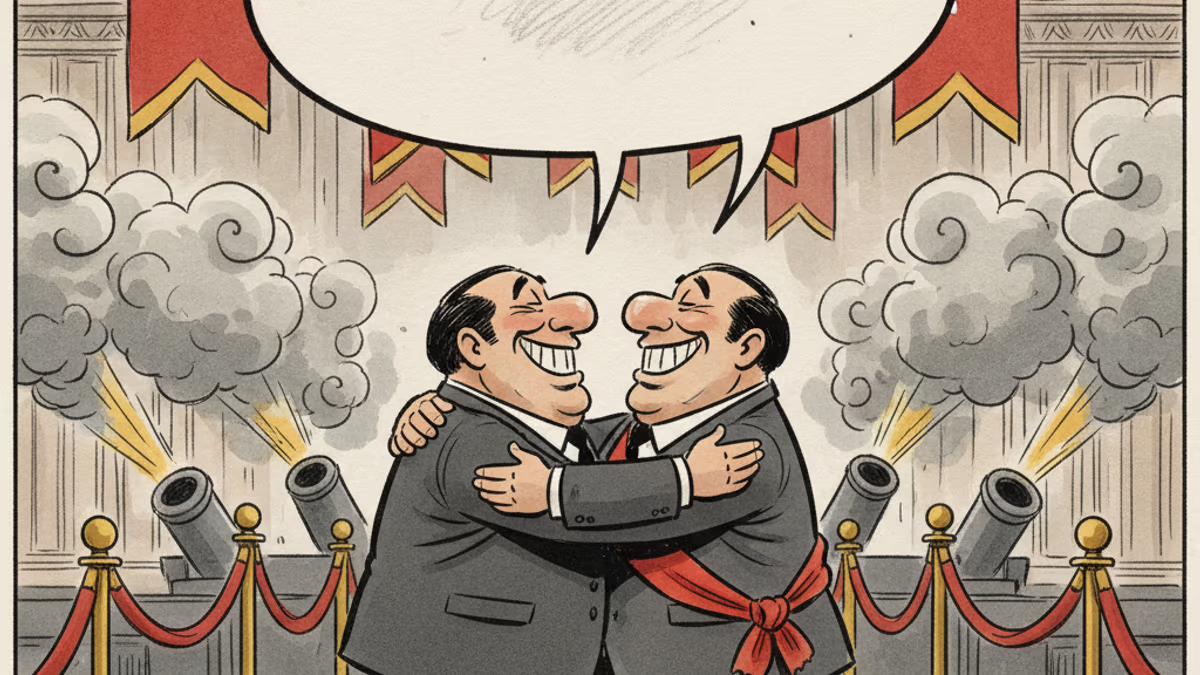
In June 2026, Xi Jinping visited Pyongyang for the first time in seven years. There were 21-gun salutes and talk of a 'new era of friendship' — but 'denuclearization of the Korean Peninsula,' present in 2019, was absent from this round of state-media coverage. A symbolic overreach, or a real upgrade?
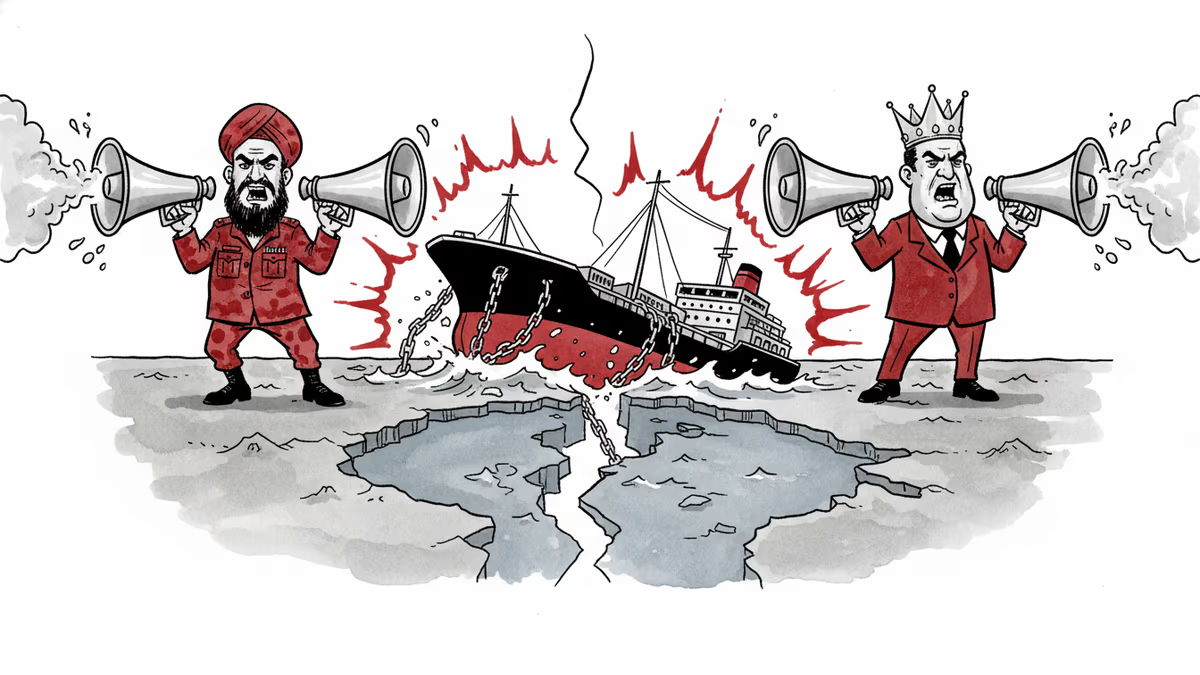
The US says talks with Iran are ongoing. Iran says there are no talks. Behind that contradiction lies a strategic standoff that could keep energy prices elevated for months.
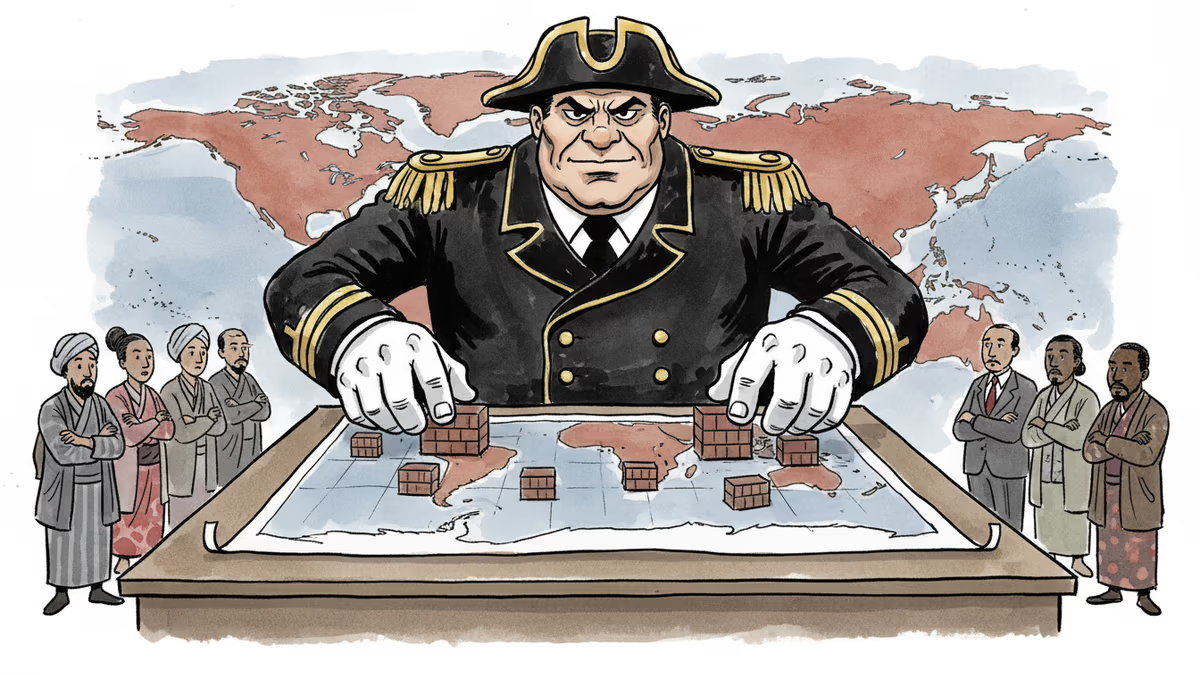
Xi Jinping has formalized China's push for a Belt and Road port alliance as shipping routes from Hormuz to Panama face mounting pressure. What does this mean for global trade architecture?
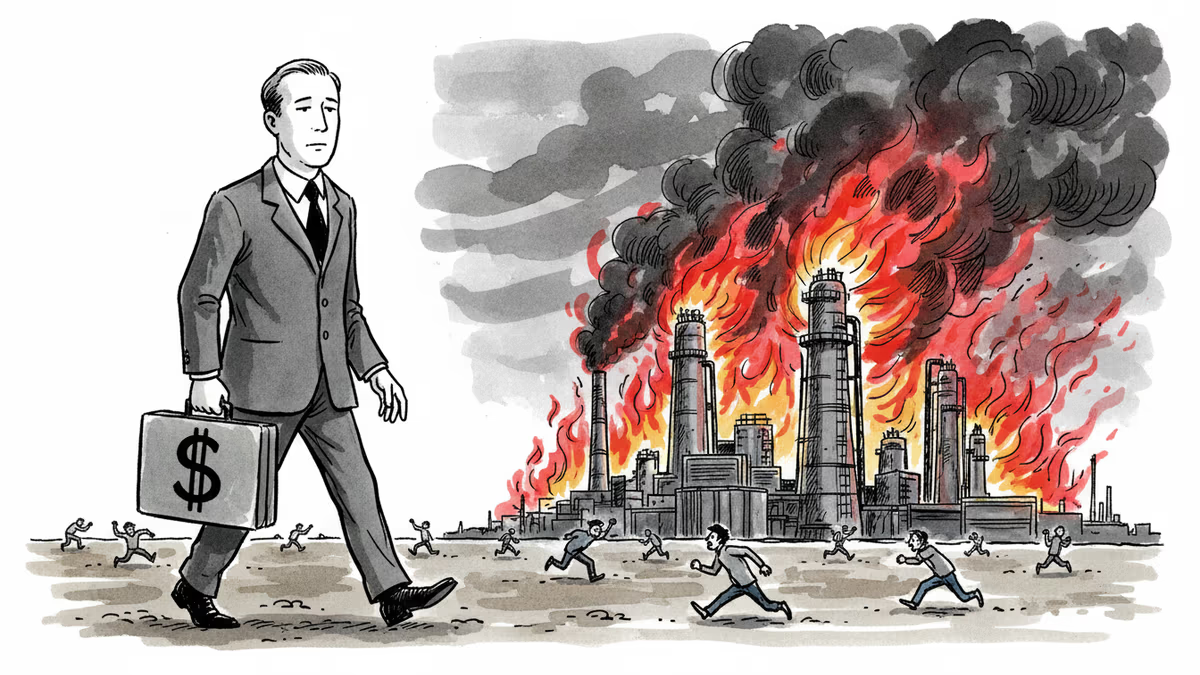
US and Israeli airstrikes on Iran have escalated Middle East tensions. Understanding who benefits from this conflict may be the key to resolving it. A PRISM analysis.
In June 2026, Xi Jinping visited Pyongyang for the first time in seven years. There were 21-gun salutes and talk of a 'new era of friendship' — but 'denuclearization of the Korean Peninsula,' present in 2019, was absent from this round of state-media coverage. A symbolic overreach, or a real upgrade?
The US says talks with Iran are ongoing. Iran says there are no talks. Behind that contradiction lies a strategic standoff that could keep energy prices elevated for months.
Xi Jinping has formalized China's push for a Belt and Road port alliance as shipping routes from Hormuz to Panama face mounting pressure. What does this mean for global trade architecture?
US and Israeli airstrikes on Iran have escalated Middle East tensions. Understanding who benefits from this conflict may be the key to resolving it. A PRISM analysis.
Thoughts
Share your thoughts on this article
Sign in to join the conversation