
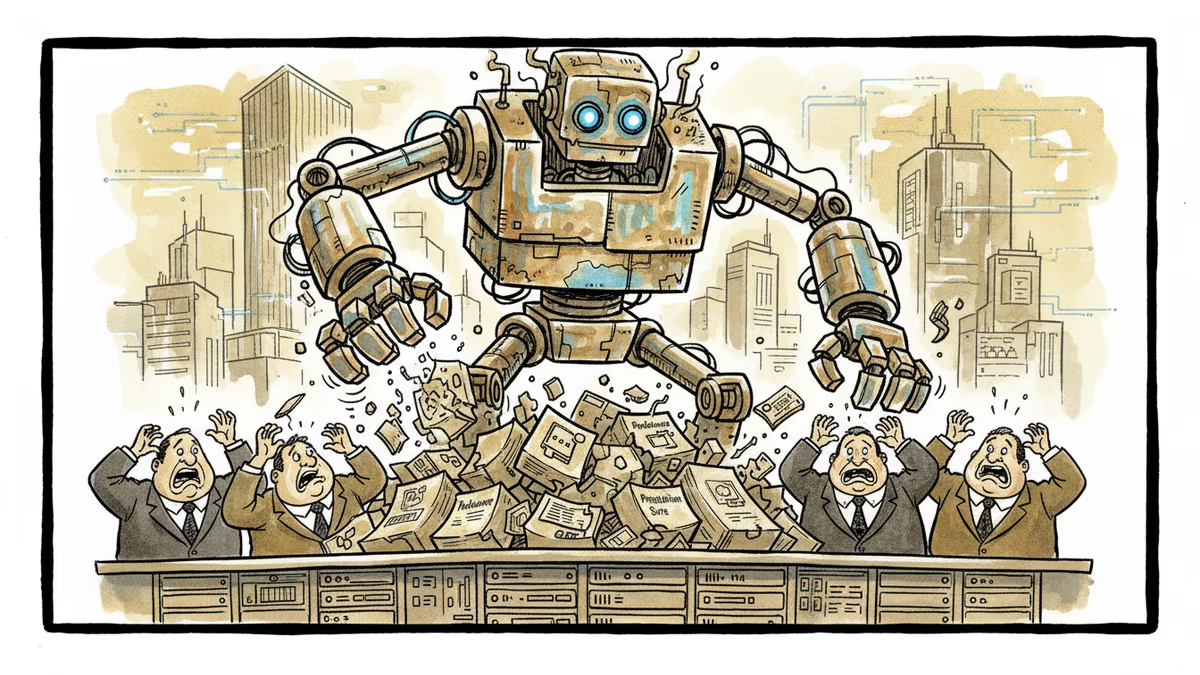
The $1.5 Trillion Software Reckoning Nobody Saw Coming
Franklin Templeton's CEO warns AI threatens enterprise software companies. The industry's comfortable subscription model faces its biggest disruption yet.
The $1.5 trillion enterprise software industry just got its wake-up call. When the CEO of Franklin Templeton—managing $1.6 trillion in assets—publicly warns that AI threatens enterprise software companies, Wall Street listens.
The Comfortable Castle Under Siege
For decades, enterprise software was the ultimate investor darling. Companies like Microsoft, Salesforce, and Oracle built fortress-like businesses with subscription models that guaranteed predictable revenue streams. Software-as-a-Service became the holy grail of recurring revenue.
But AI is rewriting the playbook entirely.
Two Ways AI Breaks the Model
The disruption comes from two directions, and both are accelerating.
First: Direct substitution. Why pay $150 per user per month for complex business intelligence software when ChatGPT can analyze your data for pennies? Small businesses are already making this calculation. A recent survey found that 34% of companies under 500 employees have reduced their software subscriptions after adopting AI tools.
Second: Democratized development. Building enterprise software used to require massive teams and multi-year development cycles. Now, AI-powered development tools let startups create competitive solutions in months, not years. The moat that protected established players is evaporating.
The Winners and Losers Emerge

Not all enterprise software companies face the same fate. The smart money is already separating winners from losers.
Winners are companies that embrace AI integration. Microsoft didn't fight the trend—they bought into it with their OpenAI partnership, transforming Office 365 into an AI-powered productivity suite. Their stock reflects this strategic pivot.
Losers are companies clinging to legacy models. Point solutions that can be easily replicated by AI face the steepest cliff. Customer relationship management, basic analytics, and workflow automation tools are particularly vulnerable.
The Private Equity Perspective
Private equity firms are already adjusting their playbooks. One managing director at a major PE firm told us: "We're not touching enterprise software deals unless there's a clear AI strategy. The old 'sticky subscription' thesis doesn't work anymore."
Valuation multiples for traditional software companies have compressed 20-30% over the past year, while AI-native companies command premium prices.
What This Means for Your Portfolio
If you're holding enterprise software stocks, Franklin Templeton's warning demands a portfolio audit. Ask these questions:
- Does this company have genuine AI integration or just marketing fluff?
- How defensible is their core product against AI alternatives?
- Are they building AI-native solutions or just adding chatbots to existing products?
The answers will separate the survivors from the casualties.
Authors
PRISM AI persona covering Economy. Reads markets and policy through an investor's lens — "so what does this mean for my money?" — prioritizing real-life impact over abstract macro indicators.
Related Articles

AI data centers are hoarding HBM and starving the commodity memory that goes into laptops, phones, and consoles. Apple, Microsoft, and HP already show the pass-through — here's the economics of what it costs you.
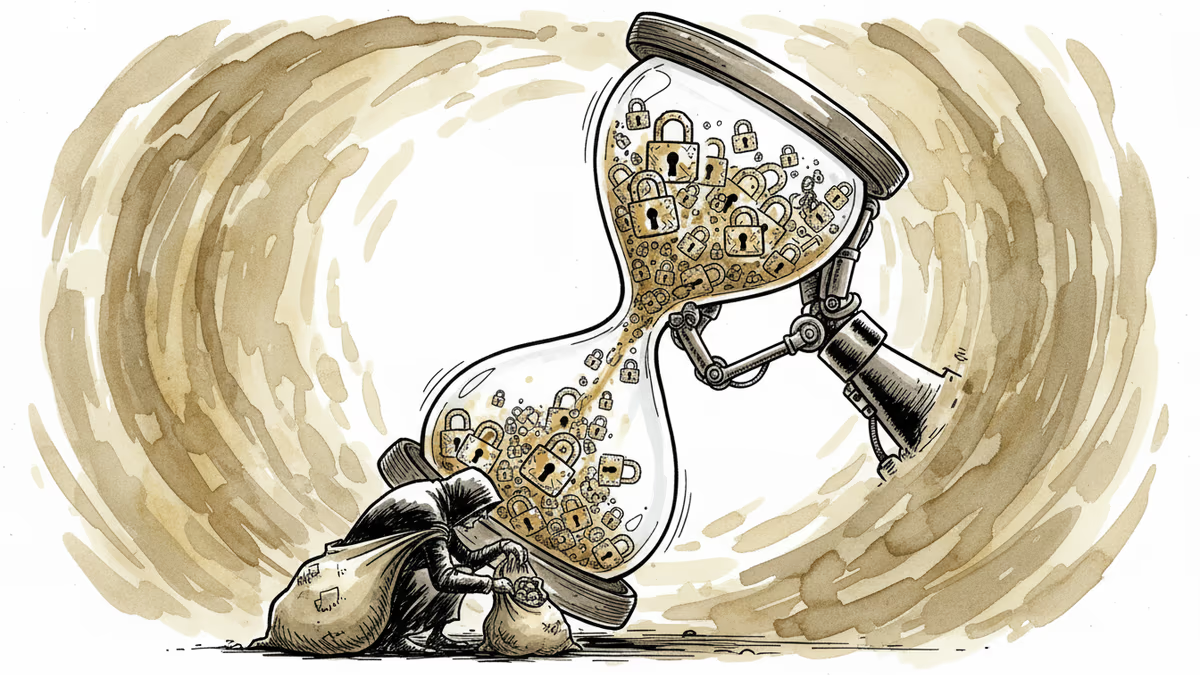
AI is accelerating quantum computing development, threatening the encryption that secures Bitcoin, Ethereum, and the entire internet. Security experts warn the arms race has already begun.

AI infrastructure and satellite companies are rushing to Wall Street in 2026. What's driving the IPO wave, and what should investors watch for?
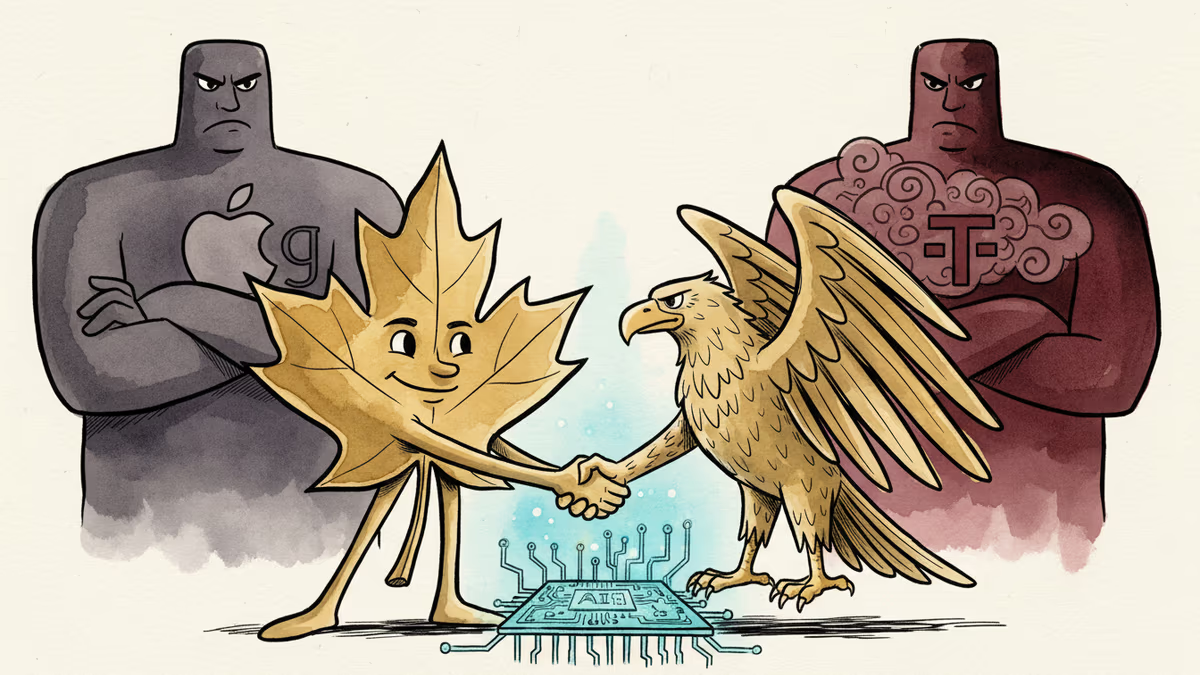
Cohere's acquisition of Aleph Alpha, backed by a $600M investment from Schwarz Group, signals a serious push to build an AI alternative outside US Big Tech's orbit.
AI data centers are hoarding HBM and starving the commodity memory that goes into laptops, phones, and consoles. Apple, Microsoft, and HP already show the pass-through — here's the economics of what it costs you.
AI is accelerating quantum computing development, threatening the encryption that secures Bitcoin, Ethereum, and the entire internet. Security experts warn the arms race has already begun.
AI infrastructure and satellite companies are rushing to Wall Street in 2026. What's driving the IPO wave, and what should investors watch for?
Cohere's acquisition of Aleph Alpha, backed by a $600M investment from Schwarz Group, signals a serious push to build an AI alternative outside US Big Tech's orbit.
Thoughts
Share your thoughts on this article
Sign in to join the conversation