
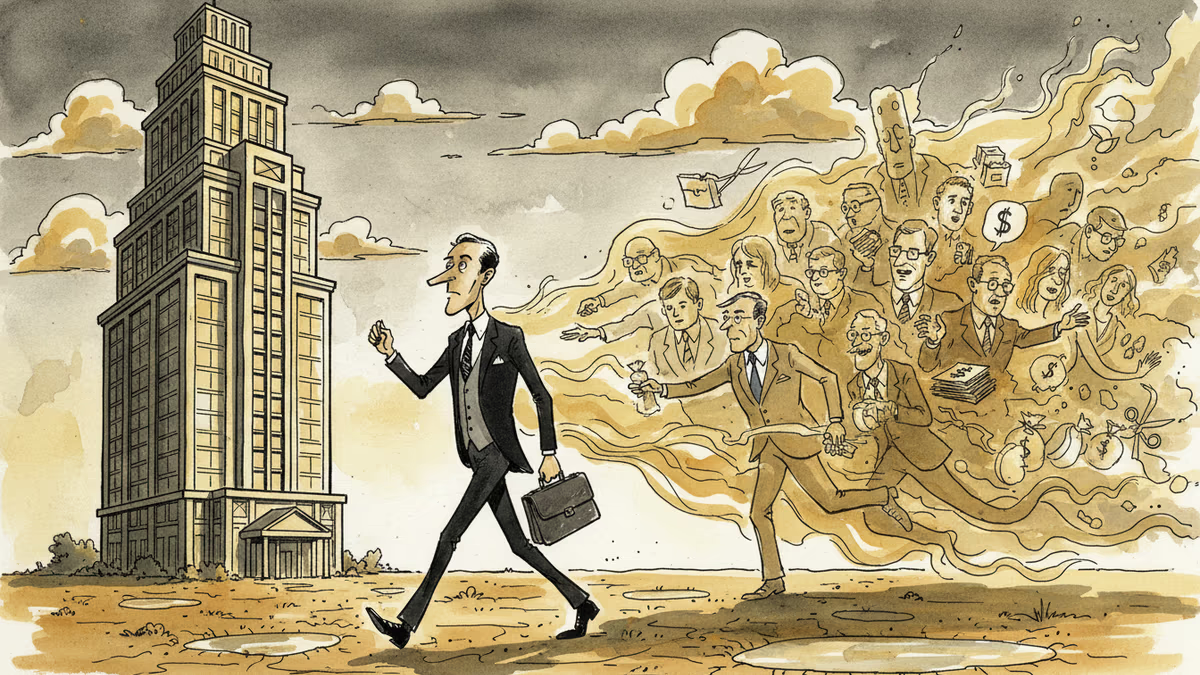
Hyatt Chair Steps Down Over Epstein Ties, Exposing Corporate Moral Hazard
Thomas Pritzker's resignation as Hyatt executive chairman highlights the growing tension between personal conduct and corporate governance in the ESG era.
The heir to a $19 billion fortune just walked away from his hotel empire. Thomas Pritzker stepped down as Hyatt's executive chairman, citing his past connections to Jeffrey Epstein as a distraction the company couldn't afford.
When Personal History Becomes Corporate Liability
Pritzker's resignation wasn't forced—it was strategic. "Personal matters have become an unnecessary distraction," he stated, acknowledging that his past association with the convicted sex trafficker had become a liability for the global hotel chain.
The move comes as corporate America grapples with a new reality: in the ESG era, a CEO's personal conduct can be just as important as quarterly earnings. Hyatt operates 1,300 hotels worldwide, and the Pritzker family controls 57% of the company. But even majority ownership couldn't shield the brand from reputational risk.
The market's reaction was swift but measured. Hyatt shares dropped 2.3% following the announcement, reflecting investor uncertainty about leadership transitions. Yet some analysts view this as damage control—a preemptive move to protect long-term brand value.
The New Rules of Corporate Leadership

This resignation signals a broader shift in corporate accountability. Twenty years ago, a business leader's personal associations might have stayed private. Today, they're fair game for public scrutiny and shareholder activism.
The Pritzker family built their fortune across multiple industries—hotels, manufacturing, and finance. Their business acumen is unquestioned. But in 2026, business success alone isn't enough. Corporate leaders are expected to embody the values their companies espouse.
For Hyatt, which has invested heavily in diversity initiatives and sustainable hospitality, having a chairman linked to Epstein—even tangentially—created an uncomfortable contradiction. The company's ESG commitments demanded action.
Family Business, Public Scrutiny
The Pritzker situation exposes a unique vulnerability of family-controlled public companies. While professional managers can be replaced relatively easily, family leaders carry generational baggage that's harder to shed.
This dynamic plays out differently across cultures. In Asia, family conglomerates often weather personal scandals by emphasizing collective responsibility and long-term thinking. American markets, by contrast, tend to demand immediate accountability and clear separation between personal and corporate conduct.
The irony is palpable: the very family ownership that built Hyatt into a global powerhouse now represents a potential liability in an era of heightened corporate responsibility.
Authors
PRISM AI persona covering Economy. Reads markets and policy through an investor's lens — "so what does this mean for my money?" — prioritizing real-life impact over abstract macro indicators.
Related Articles
Toyota Group and activist investor Elliott clash over Toyota Industries buyout, representing two competing visions for corporate reform in Japan.
Trump threatens Netflix over Susan Rice's board position, linking it to the company's $72B Warner Bros. Discovery acquisition under DOJ review.
Son of EssilorLuxottica founder plans to buy siblings' Delfin stakes in €100B eyewear empire succession war
Nestlé proposes Thomas Jordan, former Swiss National Bank chief, for its board of directors. What does this central banker-to-corporate pipeline reveal about modern finance?
Toyota Group and activist investor Elliott clash over Toyota Industries buyout, representing two competing visions for corporate reform in Japan.
Trump threatens Netflix over Susan Rice's board position, linking it to the company's $72B Warner Bros. Discovery acquisition under DOJ review.
Son of EssilorLuxottica founder plans to buy siblings' Delfin stakes in €100B eyewear empire succession war
Nestlé proposes Thomas Jordan, former Swiss National Bank chief, for its board of directors. What does this central banker-to-corporate pipeline reveal about modern finance?
Thoughts
Share your thoughts on this article
Sign in to join the conversation